Category: digital marketing

  • What are Ethical Issues in Digital Marketing: Addressing Privacy, Consent, and Online Behavior

    Digital marketing has become an integral part of the modern business. It allows companies to reach their target audience. It allows companies to reach their target audience more effectively and efficiently than ever before. However, the rapid evolution of ethical issues in digital marketing has brought with it a host of ethical concerns related to privacy, consent, and online behavior.

    In this blog, we will discuss the ethical implications of digital marketing practices and discuss how brands can address these concerns while maintaining their online presence and engagement.


    The Landscape of Ethical Issues in Digital Marketing

    Digital marketing encompasses a broad range of strategies, including social media marketing, email campaigns, search engine optimization (SEO), content marketing, and more. These strategies leverage digital platforms to reach and engage audiences on a global scale. However, the digital landscape also raises complex ethical dilemmas that demand thoughtful consideration.
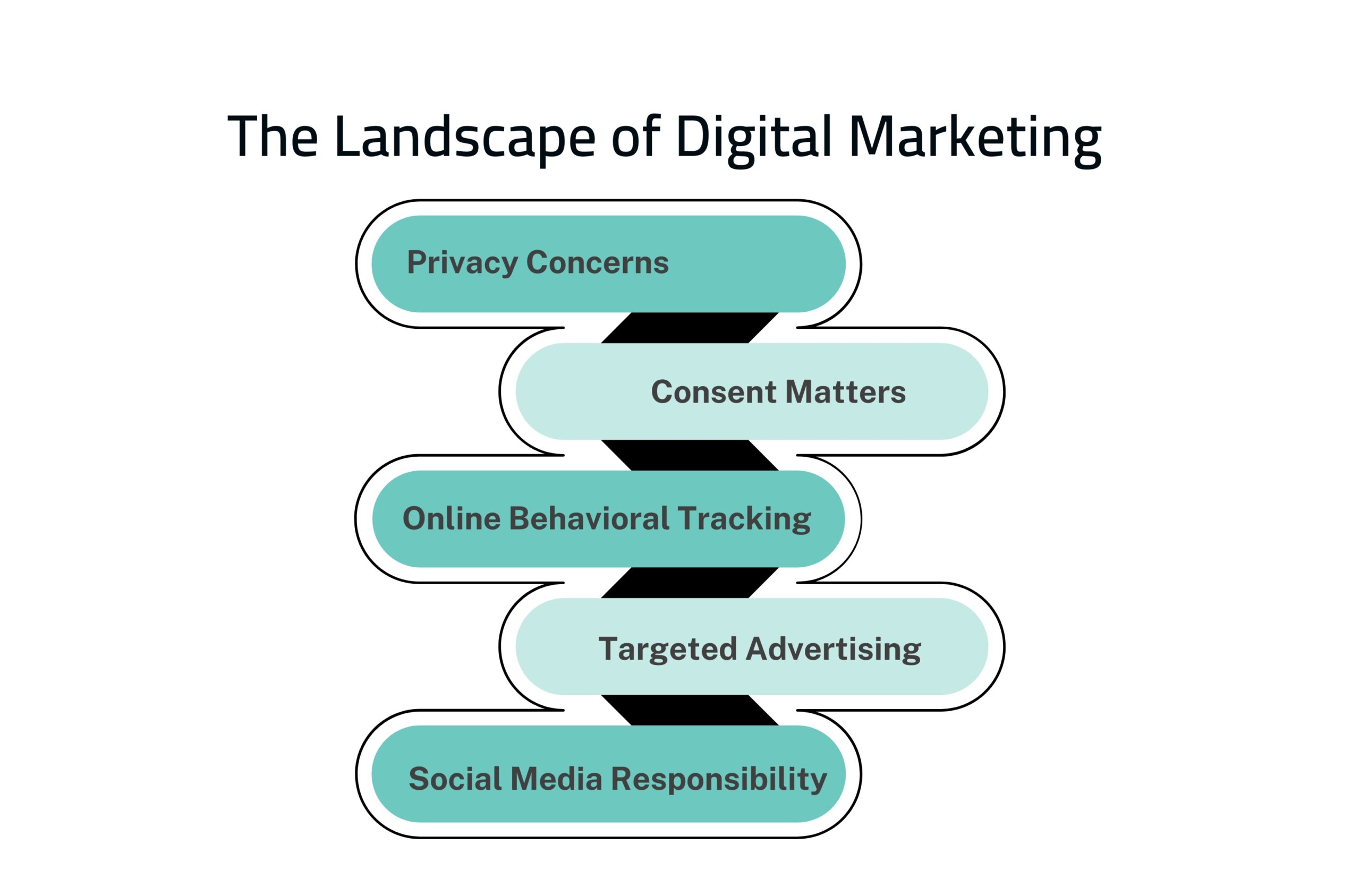
     

    Ethical Issues in Digital Marketing


    Privacy Concerns

    Issue: One of the foremost ethical concerns in digital marketing is the handling of user data and personal information. The massive amounts of data collected online can potentially be misused or exploited, leading to privacy breaches and unauthorized access to personal details.

    Solution: Brands must prioritize data security and respect user privacy. Implementing robust security measures, obtaining explicit consent before collecting data, and transparently communicating how the data will be used can help build trust with consumers.


    Consent Matters for Ethical Issues in Digital Marketing

    Issue: Obtaining informed consent from users before collecting their data is a fundamental ethical principle. However, the complex language often used in privacy policies and terms of service agreements can make it difficult for users to fully understand what they’re agreeing to 

    Solution: Brands should present information in clear and concise language that users can easily understand. Consent should be given voluntarily and without coercion. Implementing “opt-in” mechanisms instead of “opt-out” options empowers users to make conscious choices about their data.


    Online Behavioral Tracking

    Issue: Tracking user behavior online allows brands to tailor their marketing efforts, but it also raises concerns about invasions of privacy and the potential for creating filter bubbles that limit exposure to diverse perspectives.

    Solution: Brands should be transparent about the tracking practices they employ. Providing users with options to control tracking settings and offering an explanation of how tracked data is used can help mitigate concerns.


    Targeted Advertising

    Issue: While targeted advertising can be effective, there’s a fine line personalization and manipulation. Overstepping this line can result in brands exploiting user vulnerabilities or using personal information for discriminatory purposes.

    Solution: Brands should exercise caution when using personal data for advertising. Ensuring that targeting is based on user preferences rather than sensitive personal attributes and providing an option to opt out of targeted advertising can uphold ethical standards.


    Social Media Responsibility

    Issue: Social media platforms are powerful tools for communication, but they also have the potential to spread misinformation, amplify hate speech, and foster online harassment.

    Solution: Brands must use their social media presence responsibly. Taking a stance against hate speech, monitoring comments, and fostering a positive online environment can contribute to a more ethical digital space.


    Balancing Profits and Ethics

    Issue: The pressure to drive profits can sometimes lead to unethical practices, such as clickbait headlines, misleading advertisements, or the exploitation of user data.

    Solution: Brands should adopt a long-term perspective that recognizes the importance of building trust and maintaining a positive brand image. Prioritizing ethical considerations can lead to sustainable success and a loyal customer base.


    The Role of Regulation

    Issue: As the digital landscape evolves, regulations and laws surrounding digital marketing ethics are also changing. Brands must keep up with these changes to ensure compliance.

    Solution: Brands should stay informed about relevant laws and regulations in their jurisdictions. Taking a proactive approach to compliance demonstrates a commitment to ethical behavior.


    Ethical Consumers

    Issue: Users often lack a comprehensive understanding of how their data is collected, shared, and used in digital marketing efforts.

    Solution: Brands can play a role in educating consumers about digital marketing practices, data collection, and privacy concerns. Providing clear explanations and resources can empower users to make informed decisions.


    Conclusion

    In digital marketing, ethical considerations must remain at the forefront of decision-making. Addressing privacy concerns, obtaining informed consent, promoting responsible online behavior, and navigating the fine line between personalization and manipulation are critical steps for brands seeking to build trust and maintain a positive online presence.

    By placing ethics at the core of their digital marketing strategies, brands can contribute to a more transparent, respectful, ensuring the long-term success of both their marketing efforts and their reputation.


    Frequently Asked Questions (FAQs)


    1. What are the main privacy concerns in digital marketing?

    Privacy concerns in digital marketing revolve around the collection and use of user data without clear consent, data breaches, and the creation of detailed user profiles for targeted advertising.


    1. How can digital marketers address privacy concerns?

    Marketers can address privacy concerns by being transparent about data collection, providing clear privacy policies, allowing users to opt out of data tracking, and complying with data protection laws like GDPR and CCPS.


    1. What is misleading content in digital marketing?

    Misleading content includes false advertising, fake reviews, and exaggerated claims that can deceive consumers and damage trust in digital marketing.


    1. How do consumers protect their privacy in digital marketing?

    Consumers can protect their privacy by being cautious about sharing personal information, using privacy settings, and supporting organizations that advocate for digital privacy rights.


    1. How can misleading content be combated in digital marketing?

    Marketers should ensure the accuracy and truthfulness of their content. User-generated content and reviews should be monitored for authenticity, and regulatory bodies should enforce penalties for deceptive advertising.


    1. How can digital marketers obtain ethical consent from users?

    Marketers can obtain ethical consent by using clear and concise language, offering granular opt-in choices, and implementing double opt-in processes to enhance user trust.
  • What Role Does User Experience Play in E-Commerce Success?

    In the world of e-commerce, where countless options compete for consumer’s attention, the significance of user experience in E-commerce (UX) cannot be overstated. A seamless and enjoyable online shopping journey can make all the difference between a one-time visitor and a loyal customer. This article delves into the pivotal role that user experience plays in e-commerce success, exploring its impact on customer satisfaction, conversion rates, and brand loyalty.


    Defining User Experience in E-commerce

    User experience refers to the overall satisfaction and impression a user gains while interacting with a website or digital platform. In the context of e-commerce, UX encompasses every aspect of the online shopping process, from the initial website visit to the final purchase. It encompasses design, navigation, speed, responsiveness, product information, checkout process, and post-purchase support.


    The Impact of User Experience in E-commerce Success


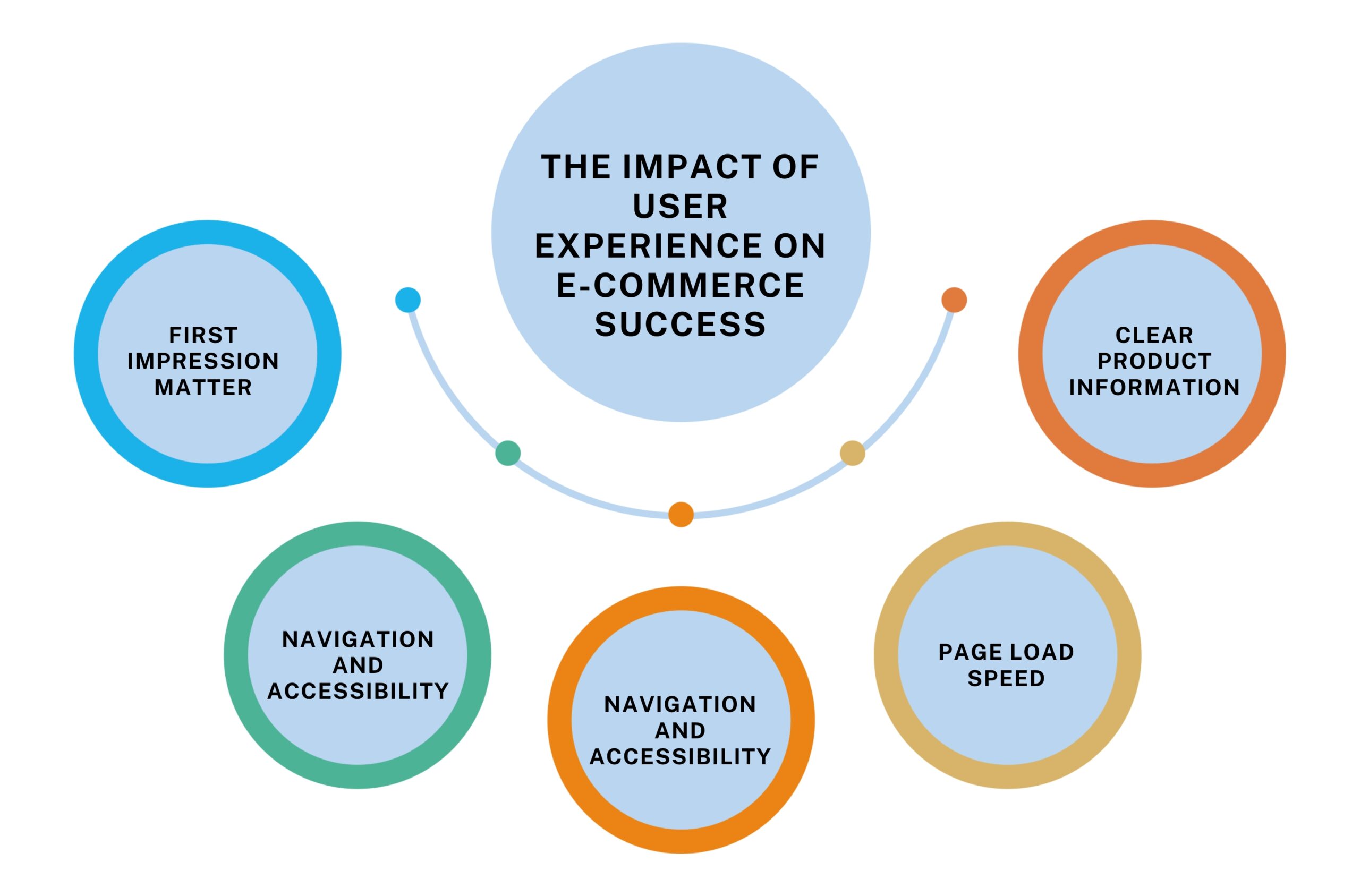
    User Experience in E-Commerce.


    1. First Impression Matter: User Experience in E-commerce Success

    First impressions are often formed within seconds. A visually appealing and well-organized website immediately captures visitors’ attention and encourages them to explore further. A cluttered or confusing interface, on the other hand, can lead to high bounce rates and lost opportunities.


    2. Navigation and Accessibility: 

    Smooth navigation is crucial for guiding users through the site effortlessly. Intuitive menus, clear categorization, and effective search functionalities ensure that customers can find what they’re looking for quickly. A frustrating navigation experience can frustrate visitors, causing them to abandon the site in favor of competitors.


    3. Mobile Responsiveness:

    With mobile devices accounting for a significant portion of online traffic, mobile responsiveness is non-negotiable. Websites that are not optimized for mobile devices can lead to frustration and a subpar shopping experience, ultimately impacting conversion rates.


    4. Page Load Speed for User Experience in E-commerce

    Slow-loading pages are a major turn-off for online shoppers. In an era of instant gratification, delays in page loading can result in abandoned carts and missed sales opportunities. Optimizing page load speed enhances both user satisfaction and search engine rankings.


    5. Clear Product Information: 

    Detailed and accurate product information is essential for informed purchasing decisions. High-quality images, comprehensive descriptions, pricing details, and availability status provide users with the confidence to make a purchase.


    6. Seamless Checkout Process for User Experience in E-commerce

    The checkout process should be streamlined and frictionless. Lengthy forms, mandatory account creation, and unexpected fees can lead to cart abandonment. Offering guest checkout options, multiple payment methods, and clear shipping details contribute to a positive checkout experience.


    7. Personalization and Recommendations:

    User experience is enhanced when customers feel that a website understands their preferences. Personalized product recommendations based on browsing history and previous purchases can lead to increased cross-selling and upselling opportunities.


    8. Trust and Security: 

    Earning customer trust is paramount in e-commerce. Displaying security badges, using secure payment gateways, and offering transparent privacy policies reassure users that their personal and financial information is safe.


    9. Post-Purchase Support: 

    User experience doesn’t end with the purchase. Efficient order tracking, timely delivery, and responsive customer support contribute to a positive overall experience. Addressing post-purchase concerns promptly can turn customers into brand advocates.


    The Link between User Experience and Conversion Rates


    A seamless user experience directly influences conversion rates, which is the percentage of website visitors who complete a desired action, such as making a purchase. An enhanced UX increases the likelihood of visitors becoming paying customers. Intuitive navigation, clear calls to action, and a user-friendly checkout process all contribute to a smoother conversion journey.

    Furthermore, a positive user experience can decrease the rate of experience can decrease the rate of cart abandonment. Shopping cart abandonment occurs when users add items to their cart but do not complete the purchase. Factors such as unexpected fees, complex checkout procedures, and security concerns can lead to cart abandonment. By addressing these issues and ensuring a frictionless checkout experience, e-commerce businesses can recover potentially lost sales.


    Building Brand Loyalty through Exceptional User Experience


    User experience has a profound impact on brand loyalty. Customers who have a positive experience are more likely to return for future purchases and recommend the brand to others. Word-of-mouth referrals, positive online reviews, and social media mentions can all be attributed to a satisfying user experience. In contrast, negative reviews, damage a brand’s reputation and deter potential customers.

    Repeat customers are valuable assets for e-commerce business. Not only do they contribute to recurring revenues, but they also have a higher average order value and are more likely to explore other products offered by the brand. By consistently delivering exceptional user experiences, businesses can foster lasting relationships with customers and build a loyal customer base.


    Continuous Improvement and Adaptation


    User experience is not a static concept. It requires continuous monitoring, analysis, and adaptation to changing consumer behaviors and preferences. E-commerce businesses should gather user feedback, track metrics such as bounce rates and conversion rates, and implement changes based on insights gained. Regular updates to the website’s design, functionality, and features ensure that the user experience remains aligned with evolving expectations.


    Conclusion:User Experience in E-commerce

    User experience stands as a cornerstone of e-commerce success. From the initial website visit to the final checkout, every interaction shapes a customer’s perception of a brand. By prioritizing elements such as responsive design, intuitive navigation, informative product details, and seamless checkout processes, e-commerce businesses can create a positive, memorable, and trust-building experience. 

    This, in turn, leads to improved conversion rates, higher customer satisfaction, enhanced brand loyalty, and sustained business growth in the competitive world of online retail. 


    Frequently Asked Questions (FAQs)


    1. What is user experience (UX) in e-commerce?

    User experience in e-commerce refers to the overall quality of a customer’s interactions with an online store. It encompasses website design, navigation, ease of use, and how customers feel while browsing and making purchases.


    1. How does user experience impact e-commerce success?

    A positive user experience is critical for e-commerce success because it directly influences customer satisfaction, conversion rates, and brand loyalty. An excellent UX can lead to higher sales and repeat.


    1. How can I improve the user experience on my e-commerce website?

    To enhance UX, focus on mobile optimization, provide detailed product information, streamline the checkout process, offer multiple payment options, and ensure your website is easy to navigate. Regularly seek feedback from customers for continuous improvement.


    1. How can customer reviews and ratings influence e-commerce user experience?

    Customer reviews and ratings provide social proof and help shoppers make informed decisions. Positive reviews build trust, while negative reviews can provide insights for improvement. Encourage customers to leave honest feedback. 

  • Voice Search Optimization: Your Path to SEO Success

    [vc_row][vc_column][vc_column_text css=””]Today, voice search SEO has emerged as a transformative trend in the field of search engine optimization (SEO). The rise of virtual assistants like Siri, Google Assistant, and Alexa has led to a significant shift in how users interact with search engines. As more and more people turn to voice-activated devices, understanding and implementing effective voice search SEO strategies has become crucial for businesses and content creators.


    What is Voice Search SEO?

    Voice Search SEO, also known as Voice Search Optimization, refers to the practice of optimizing online content to improve its visibility and ranking in voice-activated search results. With the increasing prevalence of voice-activated devices and virtual assistants like Siri, Google Assistant, and Alexa, users are now performing searches by speaking their queries instead of typing them.

    Voice search SEO involves tailoring your content to align with the way people naturally speak when asking questions verbally. This often involves focusing on longer, more conversational queries, also known as long-tail keywords. These keywords reflect the way people naturally phrase their questions and requests when using voice search.

    How to Optimize Content for Voice Search

    To optimize your content for voice search, start using natural and conversational language in your content. People usually speak differently than they type in search engines, add long tail keywords and question based phrases like ‘what is’, ‘how to’, which is’ in your headings/content. Design your content with headings, short and easily readable paragraphs, and bullet points.

    Add FAQ and local business schema for better understanding the content to the search engines. Make sure your Local Business Listing is accurate and well optimized for voice search. Ensure your website is mobile friendly and  loads fast.


    How Voice Search Works?

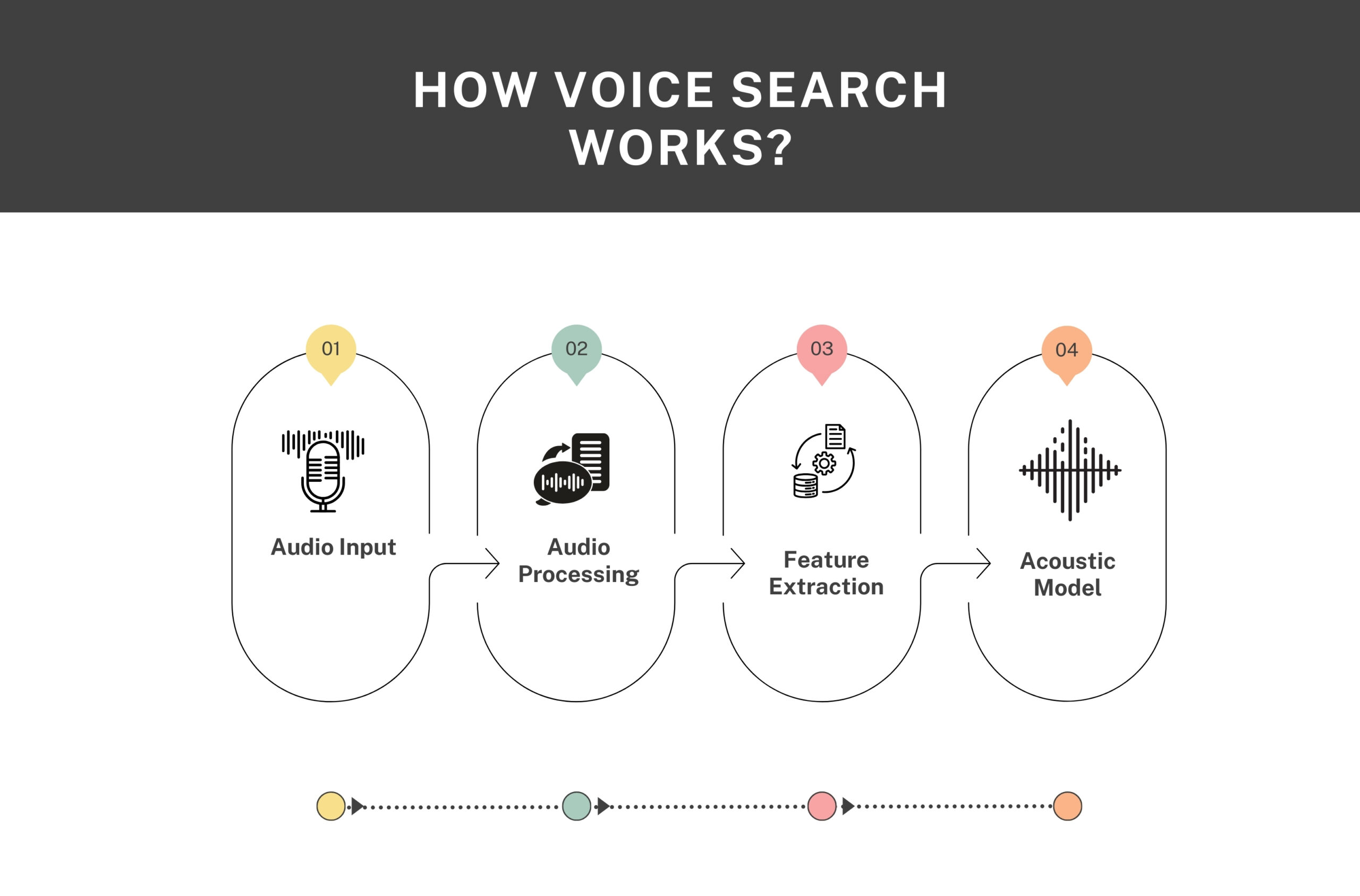
    Voice search uses speech recognition technology to convert spoken language into text. Here’s a simplified overview of how it works:

    1. Audio Input: When you speak into a device, such as a smartphone or smart speaker, your voice is captured as an audio signal.
    1. Audio Processing: The audio signal is then pre-processed to remove background noise, normalize volume, and enhance the clarity of the speech.
    1. Feature Extraction: The processed audio is analyzed to extract relevant features, such as frequency patterns and spectral information, which are unique to different spoken sounds.
    1. Acoustic Model: These extracted features are compared to a vast database known as an acoustic model. This model contains patterns for different phonemes, syllabi, and words in various languages.
    1. Speech Recognition: The acoustic model predicts the most likely sequence of phonemes or words that match the input features. This is essentially the transcription of the spoken words into text.
    1. Language Model: The recognized text is then passed to a language model, which helps predict the most likely words and phrases based on the context of the sentence. This improves accuracy, especially in cases of ambiguous or unclear speech.
    1. Candidate Phrases: The system generates a list of possible phrases or sentences that could match the spoken input, along with their respective probabilities.
    1. Ranking and Selection: The system ranks the candidate phrases by probability and selects the most likely one. This is the final output of the voice search process.


    How Voice Search Works

    The Technical Aspect of Voice Search SEO

    While content remains paramount, the technical aspects of your website also play a crucial role. Page speed, mobile-friendliness, and structured data markup are essential factors that influence voice search SEO. Mobile optimization is especially important since most voice searches are conducted on smartphones. 

    Moreover, structuring your content with headers and subheadings can make it more scannable and understandable for search engines. Remember, virtual assistants are looking for clear, concise answers, so organizing your content logically can increase the chances of your information being selected for voice responses.


    The Road Ahead

    As technology continues to evolve, voice search is poised to become even more integral to our daily lives. Voice-activated devices are becoming smarter and more sophisticated, allowing for more natural and nuanced interactions. Consequently, voice search SEO will continue to evolve, demanding a dynamic and adaptive approach.

    Content creators and businesses must stay attuned to emerging trends and changing user behaviors. Regularly updating and refreshing content to match evolving voice search patterns is crucial. Additionally, voice commerce, where users make purchases through voice commands, is an emerging field that offers exciting possibilities for businesses to explore.


    Conclusion

    Voice search SEO is not just a trend; it’s a prototype that demands a fresh perspective on content creation and optimization. With users relying on voice-activated devices for quick and accurate information, businesses that adapt their SEO strategies to accommodate this shift will undoubtedly stay ahead of the curve. 

    By creating conversational, context-rich, and locally optimized content, while also attending to technical SEO aspects, businesses and content creators can position themselves for success in this new era of search. The journey towards mastering voice search SEO may be challenging, but it’s a journey worth undertaking to unlock the full potential of this transformative technology.


    Frequently Asked Questions (FAQs)

    [/vc_column_text][vc_toggle title=”What are some best practices for voice search optimization?” css=””]Best practices include creating conversational content, using natural language, targeting long-tail keywords, optimizing for mobile, and providing concise, direct answers to common questions.[/vc_toggle][vc_toggle title=”Why is Voice search optimization important?” css=””]Voice search is becoming increasingly popular, and optimizing for it ensures your content is discoverable to users who prefer hands-free search methods, potentially increasing your website’s traffic and engagement.[/vc_toggle][vc_toggle title=”What is voice search optimization?” css=””]Voice search optimization involves optimizing your website or content to make it more accessible and relevant to users who perform searches using voice-activated devices or voice assistants like Siri, Google Assistant, or Alexa.[/vc_toggle][vc_toggle title=”What are the emerging trends in voice search optimization?” css=””]Emerging trends include the integration of voice search in smart home devices, improvements in natural language processing, and more personalized voice responses based on user preferences.[/vc_toggle][vc_toggle title=”Is voice search optimization suitable for all types of businesses?” css=””]Voice search optimization can benefit a wide range of businesses, but its relevance may vary depending on the industry and target audience. Businesses with local or informational content can particularly benefit.[/vc_toggle][vc_toggle title=”Can voice search optimization benefit e-commerce businesses?” css=””]E-commerce sites can optimize product listings, provide concise product descriptions, and use schema markup to enhance their chances of being recommended in voice search results.[/vc_toggle][/vc_column][/vc_row]

  • The Power of Conversational Content: How to Engage Customers through Words

    In online communication, one trend stands out for its ability to captivate and engage audiences: conversational content. As traditional marketing strategies give way to more personalized and interactive approaches, businesses are discovering the remarkable potential of crafting content that resonates with users as if they were engaged in a genuine conversation.


    What is a Conversational Content?

    Conversational content refers to digital content that is designed and written in a way that mirrors natural human conversation. It involves using a more casual and approachable tone to engage the audience as if they were participating in a real conversation. This type of content often involves addressing the reader directly, asking questions, and using language that is relatable and easy to understand.

    Conversational content can be found in various forms such as blog posts, social media updates, email marketing campaigns, chatbot interactions, and even website copy. The goal of conversational content is to create a sense of authenticity and connection between the brand or content creator and the audience. It aims to capture the way people communicate in everyday life, fostering a more relatable and engaging experience.


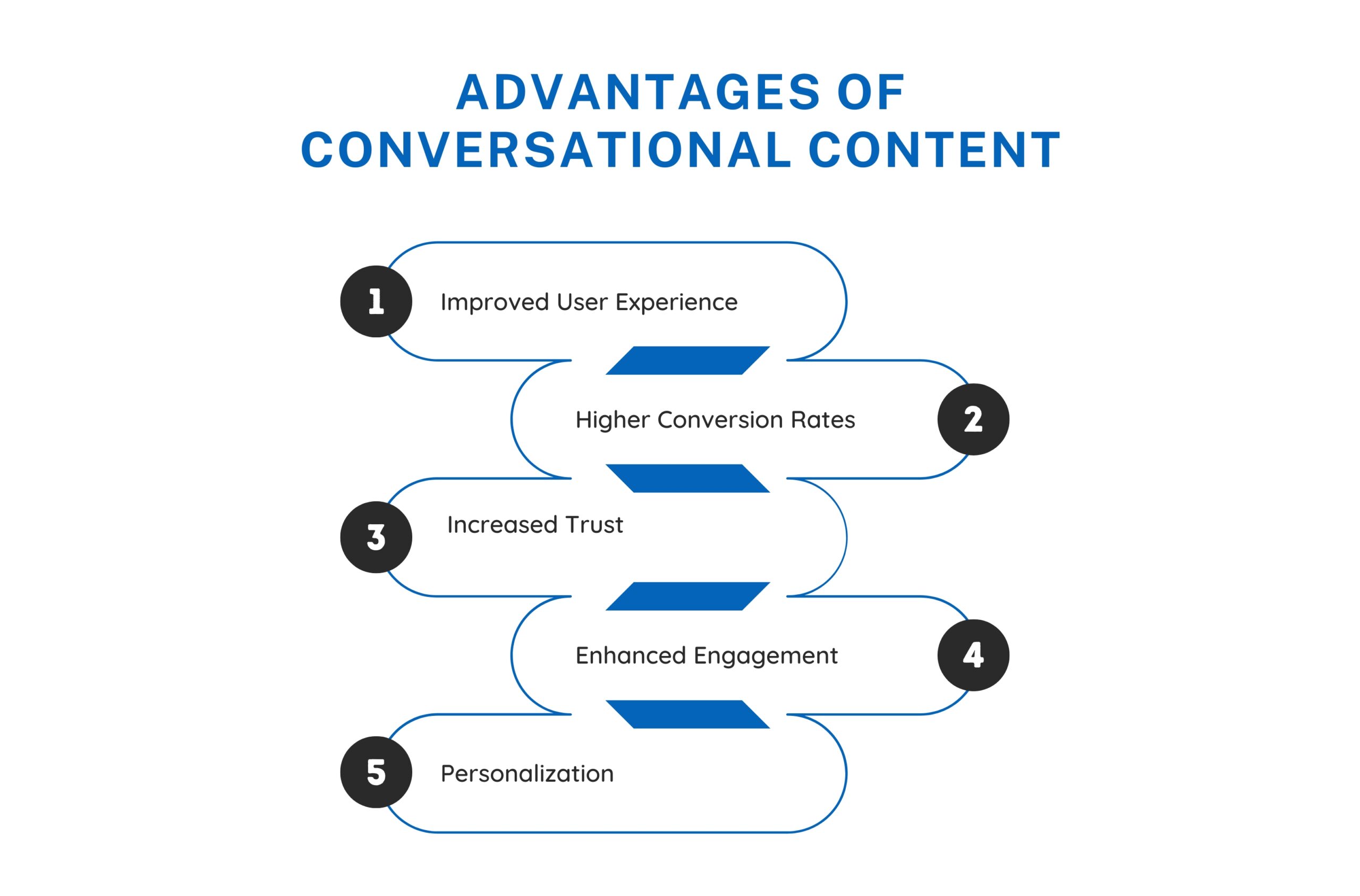
    Advantages of Conversational Content


    Conversational Content

    1. Improved User Experience:

    Conversational content can provide immediate answers to users’ questions, helping them to find the information they need quickly. This can enhance the overall user experience, making it more efficient and satisfying.

    2. Higher Conversion Rates:

    When users feel like they are having a genuine conversation with the brand, they are more likely to be influenced by the content and take desired actions, such as making a purchase or signing up for a service.

    3. Increased Trust:

    A conversational approach creates an impression that the brand is genuinely interested in engaging with its audience. This transparency and responsiveness contribute to building trust and credibility.

    4. Enhanced Engagement:

    Conversational content encourages users to actively participate and respond, leading to higher levels of engagement. When content feels like a dialogue, users are more likely to comment, share, and interact with the brand.

    5. Personalization: 

    Conversational content allows brands to tailor messages to specific audience segments or individual users. This personalization helps create content that is more relevant to the reader’s interests and needs.


    The Shift Towards Conversational Content

    The rise of social media, messaging apps, and voice-activated devices has transformed the way people communicate. This shift is not just about the tools we use but also about the way we engage. Businesses are recognizing that adopting a conversational tone in their content can establish a more authentic and relatable connection with their target audience.

    Conversational content encompasses various formats, from blog posts and social media updates to email marketing and chatbots. It’s about crafting content that feels less like a sales pitch and more like a friendly dialogue.


    Engagement through Interaction

    Traditional one-way communication is giving way to interactive experiences, and conversational content is at the forefront of this shift. Polls, quizzes, surveys, and interactive videos are all examples of content that encourages users to participate actively. By involving users in a conversation rather than simply delivering information, brands can create a more memorable and impactful experience.

    Interactive content not only boosts engagement but also provides valuable insights into user preferences and behaviors. This data can inform future content strategies and help tailor offerings to better match audience needs.


    Addressing User Needs through Conversations

    Conversational content is not just about being chatty; it’s about listening to your audience and addressing their needs. Social media platforms and comment sections offer avenues for users to voice their opinions, ask questions, and seek assistance. Brands that actively engage in these conversations showcase their commitment to customer satisfaction.

    Additionally, leveraging conversational AI, such as chatbots, can enhance user experiences. Chatbots can provide instant responses to common queries, guide users through processes, and even offer product recommendations. This immediate assistance not only improves user satisfaction but also contributes to the brand’s reputation for excellent customer service.


    Challenges and Considerations

    While the benefits of conversational content are evident, it’s important to approach this strategy with care. Achieving a conversational tone that doesn’t come across as forced or insincere can be challenging. Striking the right balance between casual conversations and maintaining a professional image is key.

    Furthermore, as AI-driven chatbots become more prevalent, it’s essential to ensure that the user experience remains positive. While chatbots can handle routine queries, they should seamlessly transition to human support when a situation demands it.


    Conclusion

    Conversational content is more than a trend; it’s a paradigm shift in how brands engage with their audiences. By infusing a human touch, fostering authentic connections, and embracing interactive experiences, businesses can create meaningful conversations that resonate with users. 

    The power of conversation will remain at the heart of successful content strategies, forging stronger bonds between brands and their valued customers.


    Frequently Asked Questions (FAQs)


    1. What is Conversational Content?


    Conversational content refers to written or spoken material designed to engage and interact with an audience in a natural, conversation-like manner. It often aims to mimic human conversation through text or speech.


    2. What type of content can be considered conversational?


    Conversational content can take various forms, including chatbots, social media posts, blog article written in a conversational tone, podcasts, and interactive videos.


    3. How does conversational content differ from traditional content?


    Traditional content tends to be more formal and one-sided, while conversational content is interactive, and informal, and often invites audience participation or responses.


    4. What are the benefits of using conversational content in customer support?


    Conversational content in customer support can provide quicker and more personalized assistance, reduce customer frustration, and offer a more human touch to the support experience.


    5. What are some tools and platforms for creating conversational content?


    Tools like chatbot platforms, social media management tools, and content management systems (CMS) often include features for creating and managing conversational content.


    6. What’s the future of conversational content?


    The future likely involves even more sophisticated AI-driven interactions, seamless integrations across platforms, and increased personalization to enhance user experiences.

  • Data Privacy in Marketing: How to Stay Safe & Compliant

    [vc_row][vc_column][vc_column_text css=””]Data privacy in marketing refers to the customer data protection. It is a protection of an individual’s personal information or data, ensuring that it is collected, processed, stored, and used in a way that respects their rights and maintains confidentiality. It involves controlling access to personal data, determining how that data is used, and safeguarding it against unauthorized access or misuse. 

    Data privacy in marketing is essential for building customer trust and complying with personal data laws like GDPR. With increasing concerns over digital marketing ethics and misuse of customer data, businesses must adopt strong privacy practices.

    Data privacy is a fundamental aspect of maintaining individuals’ autonomy over their personal information and preventing its misuse for purposes they haven’t consented to. It encompasses legal, ethical, and technical considerations to ensure that individuals’ sensitive information remains secure and is handled responsibly and transparently.

    What is Data Privacy in Marketing?

    Data privacy in marketing refers to how companies collect, manage, and protect personal information from customers while running digital campaigns. This includes name, email, phone number, IP addresses, or any other behavioral data used for personalized ads or targeting. Companies want user’s data for their business purpose like selling their products and services.

    Why is Customer Data Protection Important?

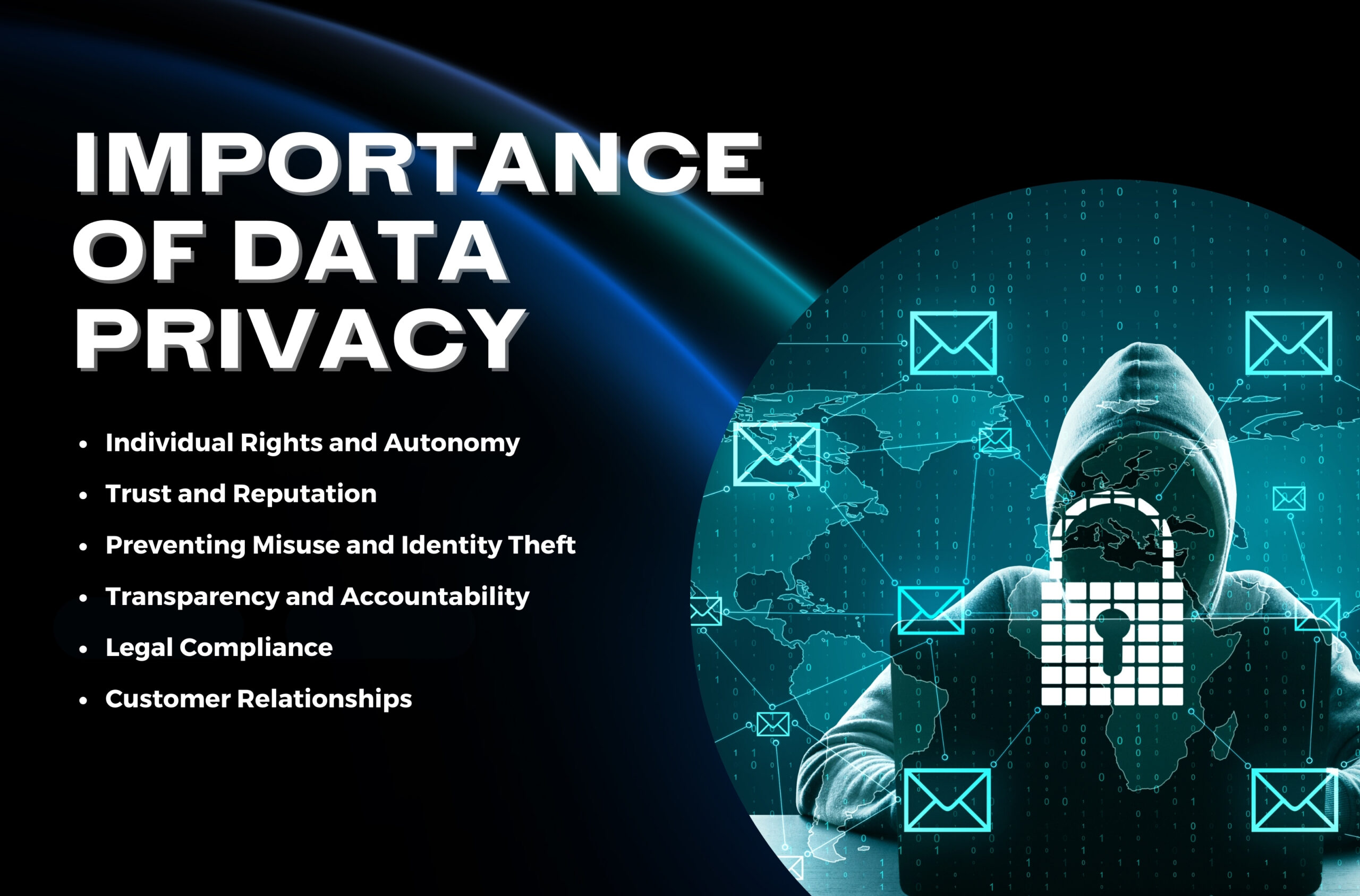
    Illustration of data privacy importance with secure padlock and network security graphics

    Data privacy is important for several reasons:

    1. Individual Rights and Autonomy:

    Data privacy is a fundamental human right. It empowers individuals to have control over their personal information, allowing them to make informed decisions about how their data is collected, used, and shared.

    2. Trust and Reputation: 

    Businesses that prioritize data privacy build trust with their customers. When individuals believe their data is handled responsibly, they are more likely to engage with and support those organizations, leading to a positive brand reputation.

    3. Preventing Misuse and Identity Theft: 

    Personal data can be misused for various purposes, including identity theft, financial fraud, and cybercrime. Strong data privacy measures help prevent such malicious activities and protect individuals from harm.

    4. Transparency and Accountability: 

    Demonstrating transparency in data handling practices helps organizations be accountable for their actions. When data practices are clear, individuals can hold organizations responsible for any mishandling.

    5. Legal Compliance:

    Many regions have stringent data protection laws, such as the General Data Protection Regulation (GDPR) in the EU or the California Consumer Privacy Act (CCPA) in the US. Organizations that don’t comply with these laws can face severe legal penalties.

    6.Customer Relationships:

    Respecting data privacy enhances customer relationships. When individuals feel that their privacy is respected, they are more likely to provide accurate information and engage more willingly with marketing and other interactions.

    Challenges in Data Privacy

    1. Consent and Transparency: Obtaining informed consent from users for data collection and usage is a challenge. Businesses must communicate clearly about what data is collected, and how it will be used, and provide users with the choice to opt out.
    1. Data Breaches: Cybersecurity threats loom large. A data breach can expose sensitive customer information, resulting in financial loss and reputational damage.
    1. Third-Party Sharing: Keeping up with evolving marketing data regulations is tough. Many marketing efforts involve sharing data with third-party partners. Ensuring these partners adhere to the same privacy standards can be complex.
    2. Global Regulations: Data privacy laws such as GDPR and CCPA have a global impact. Businesses must navigate a complex web of regulations when dealing with international customers.

    Best Practices to Improve Data Privacy in Marketing

    1. Transparency: Be upfront about data collection practices. Display clear cookie policies and privacy notices. Maintain a clear and concise privacy policy that outlines data usage, sharing practices, and user rights.
    1. Minimal Data Collection: Collect only the data necessary for your marketing objectives. Avoid gathering excessive information that isn’t relevant to your campaigns.
    1. Secure Storage: Invest in robust cybersecurity measures to protect stored data from breaches. Encryption and regular security audits are essential.
    1. Anonymization: Whenever possible, use anonymized data for analysis and decision-making. This way, individual identities remain protected.
    1. User Control: Provide users with the ability to manage their preferences and the data they share. Make it easy for them to opt out of data collection.
    2. Consent Mechanisms: Implement clear and easily understandable consent mechanisms. Obtain explicit consent before collecting sensitive information. Use explicit opt-in consent forms.
    3. digital Marketing Ethics: Educate your marketing and data handling teams about data privacy best practices. Everyone involved should understand their role in maintaining privacy.
    4. GDPR Compliance: Partner only with GDPR-compliant platforms and ad networks

    The Significance of Data Privacy in Marketing


    Data is the lifeblood of modern marketing. It enables companies to craft tailored campaigns, deliver relevant content, and anticipate customer needs. However, the misuse of personal data can erode trust and damage a brand’s reputation. Respecting data privacy isn’t just a legal obligation; it’s a fundamental aspect of ethical business conduct.

    The Path Forward

    1. Ethical Culture: Foster an organizational culture that values and prioritizes data privacy. This commitment should come from the top down.
    1. Continuous Compliance: Stay informed about evolving data privacy regulations. Regularly update your practices to remain compliant with new laws.
    1. Data Protection Officer (DPO): Appoint a DPO responsible for overseeing data privacy practices and ensuring alignment with regulations.
    1. Innovation and Privacy: As technology advances, find innovative ways to deliver personalized experiences without compromising privacy. Explore techniques like differential privacy.

    Legal Compliance: GDPR & Indian Laws

    • General Data Protection Regulation (GDPR): It is mandatory for global businesses.
    • India’s DPDP Act: DPDP isapplicable to all Indian firms handling user data.
    • California Consumer Privacy Act (CCPA): CCPA is apply if you deal with the  US consumers.

    Non-compliance with data policy can lead to fines up to ₹250 crore in India and €20 million in the EU.

    Conclusion

    Data privacy in marketing is no longer a niche concern – it’s an integral aspect of responsible marketing. Businesses that prioritize data privacy not only comply with legal requirements but also earn the trust and loyalty of their customers. By adopting transparent practices, minimizing data collection, and continually educating their teams, companies can navigate the complex landscape of data privacy in marketing. As the digital landscape evolves, maintaining ethical data privacy practices will be an ongoing journey, essential for building lasting customer relationships in a data-driven world.

    Frequently Asked Questions (FAQs)

    [/vc_column_text][vc_toggle title=”Why is Data Privacy important in marketing?” css=””]It protects user data, avoids legal issues, and builds brand trust. Data privacy is crucial in marketing to build trust with customers, comply with legal requirements, and protect individuals’ sensitive information from misuse or data breaches.[/vc_toggle][vc_toggle title=”What is the role of a privacy policy in marketing?” css=””]A privacy policy is a legal document that outlines how a company collects, uses, and protects personal data. It’s essential in marketing to inform customers about data practices.[/vc_toggle][vc_toggle title=”Is data privacy only a legal issue?” css=””]No. It’s also about ethics, brand image, and customer loyalty.[/vc_toggle][vc_toggle title=”What is data privacy in marketing?” css=””]Data privacy in marketing refers to the responsible and ethical handling of personal information collected from individuals during marketing activities. It involves ensuring that individuals’ data is used, stored, and protected in compliance with relevant privacy laws and regulations.[/vc_toggle][vc_toggle title=”Is it possible to personalize marketing while respecting data privacy?” css=””]Yes, it is possible. You can personalize marketing efforts by using anonymized data or obtaining explicit consent from individuals to use their data for personalization.[/vc_toggle][vc_toggle title=”What is GDPR in digital marketing?” css=””]GDPR ensures users give consent before data is collected or used in any form.[/vc_toggle][/vc_column][/vc_row]

  • Building Brand Loyalty through Ethical Customer Relationships

    Today, when consumers have excess options at their fingertips, building brand loyalty has become a topmost goal for companies. While various strategies can be employed to achieve this, one approach that has gained significant traction is fostering ethical customer relationships. This involves establishing connections with consumers based on transparency, trust, and shared values, ultimately leading to lasting brand loyalty.


    What is Brand Loyalty?


    Brand loyalty refers to the strong attachment and allegiance that customers develop toward a particular brand. It’s a measure of how consistently and repeatedly customers choose a specific brand’s products or services over those of competitors, often regardless of price or convenience. Brand-loyal customers tend to have a positive emotional connection to the brand and believe that it aligns with their values, preferences, and needs.

    This loyalty goes beyond mere repeat purchases; it involves a deeper sense of trust, satisfaction, and affinity for the brand. Brand-loyal customers are more likely to recommend the brand to others, defend it against criticism, and remain loyal even when faced with competitive offerings.


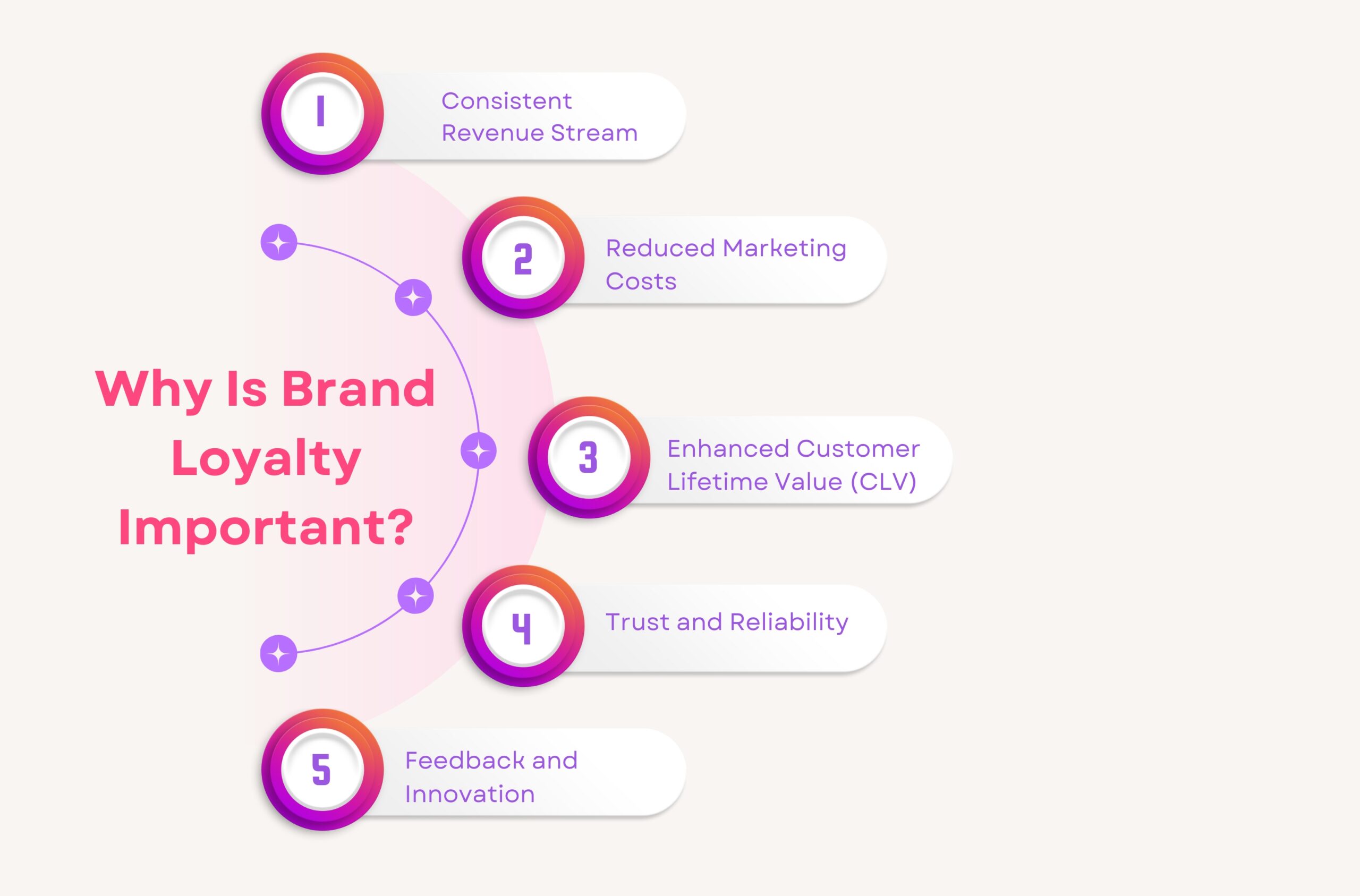
    Why Is Brand Loyalty Important?


    Brand Loyalty


    Brand loyalty is important for businesses due to several reasons:

    1. Consistent Revenue Stream:

    Brand-loyal customers consistently choose a particular brand over competitors. This reliable customer base provides a steady stream of revenue, which is vital for a company’s financial stability and growth. It helps in forecasting sales and managing inventory effectively.


    2. Reduced Marketing Costs:

    Acquiring new customers is often more expensive than retaining existing ones. Brand loyalty minimizes the need for extensive marketing efforts, as loyal customers tend to need less persuasion and are more likely to make repeat purchases.


    3. Enhanced Customer Lifetime Value (CLV):

    Loyal Customers tend to stay with a brand for an extended period, increasing their lifetime values. They not only make repeat purchases but are also more likely to explore other products or services offered by the brand. This can significantly boost the overall CLV.


    4. Trust and Reliability:

    Brand loyalty signifies a strong bond of trust between the customer and the brand. Customers have confidence in the quality, consistency, and reliability of the brand’s products or services. This trust minimizes the perceived risk of trying out new products, leading to more sales.


    5. Feedback and Innovation:

    Loyal customers often provide valuable feedback, enabling the brand to improve its products or services based on customer preferences. This feedback loop aids in innovation and staying ahead of changing market trends.


    6. Global Expansion:

    For companies looking to expand globally, a strong brand loyalty customer base provides a solid foundation. International customers who are familiar with and trust the brand are more likely to embrace its offerings in new markets.


    How to Build Brand Loyalty?

    1. Know Your Audience

    Understanding your target audience is the foundation of building brand loyalty. Conduct thorough market research to identify their needs, preferences, and pain points. Create customer personas to gain insights into their motivations and behaviors. The better you know your audience, the more effectively you can tailor your offerings to meet their expectations.


    2. Consistency is Key

    Consistency in quality and brand loyalty is very important. Ensure that your products or services consistently meet or exceed customer expectations. A reliable and positive experience with your brand at every touchpoint is essential to foster trust.


    3. Exceptional Customer Service

    Outstanding customer service is a cornerstone of brand loyalty. Respond promptly to inquiries, resolve issues efficiently, and go the extra mile to make customers feel valued. A positive service experience can turn a one-time buyer into a lifelong customer.


    4. Share Your Brand Story

    Every brand has a story, and sharing it can build a deep emotional connection with customers. Be transparent about your brand’s journey, values, and mission. A compelling narrative can help customers relate to your brand on a personal level.


    5. Engage on Social Media:

    Social media platforms provide a direct line of communication with your audience. Actively engage with customers by responding to comments and messages. Share user-generated content and create compelling, shareable content that aligns with your brand.


    6. Collect and Act on Feedback

    Actively seek feedback from customers and use it to make improvements. Show that you value their opinions and are committed to enhancing their experience. Feedback is invaluable for fine-tuning your offerings.


    7. Transparency and Trust

    Build trust by being transparent about your business practices, including pricing, sourcing, and ethical considerations. Trust is a fundamental element of brand loyalty, and customers appreciate honesty.


    8. Long-Term Perspectives:

    Building brand loyalty is a long-term endeavor. Be patient and committed to nurturing relationships over time. Remember that loyal customers become your brand advocates, helping you attract new customers and sustain business growth.


    Conclusion

    Brand loyalty requires a deep understanding of your audience, consistency in quality and branding, exceptional customer service, and a commitment to building lasting relationships. By implementing these strategies, you can cultivate brand loyalty that will contribute to your business’s success and sustainability. Ethical customer relationships offer a powerful strategy for creating lasting connections based on transparency, trust, and shared values.  


    Frequently Asked Questions (FAQs)


    1. What roles does customer feedback play in ethical relationship building?

    Customer feedback is essential for improving products and services. Actively seeking and acting on customer satisfaction, which can build loyalty.


    1. What is ethical customer relationship building?

    Ethical customer relationship building involves establishing and nurturing connections with customers based on honesty, transparency, and fairness. It focuses on building trust and loyalty through ethical business practices.


    1. How does transparency contribute to brand loyalty?

    Transparency in pricing, policies, and business practices builds trust with customers. When they know what to expect, they are more likely to remain loyal to a brand.


    1. How can companies balance ethical practices with profitability?

    Ethical practices can lead to long-term profitability by building trust and loyalty. While there may be short-term costs, the benefits of customer loyalty and a positive reputation can outweigh them over time.

  • Content Management System (CMS) v/s Custom Development

    In web development, choosing between a Content Management System (CMS) or opting for Custom Development is the first thing you will need to do after getting an idea for your website. Both approaches offer distinct advantages and challenges, and the choice hinges on factors ranging from project scope and budget to scalability and control. In this blog, we are going to explore the world of CMS and Custom Development, examining the benefits and considerations associated with each path.


    Understanding Content Management Systems (CMS)

    A Content Management System is a pre-built platform that enables users to create, manage, and publish digital content without the need for extensive coding skills. CMS solutions like WordPress, Joomla, and Drupal provide a user-friendly interface, offering a range of templates and plugins that facilitate website design and functionality. This approach is particularly suitable for small to medium-sized businesses, bloggers, and individuals seeking a straightforward way to establish an online presence.


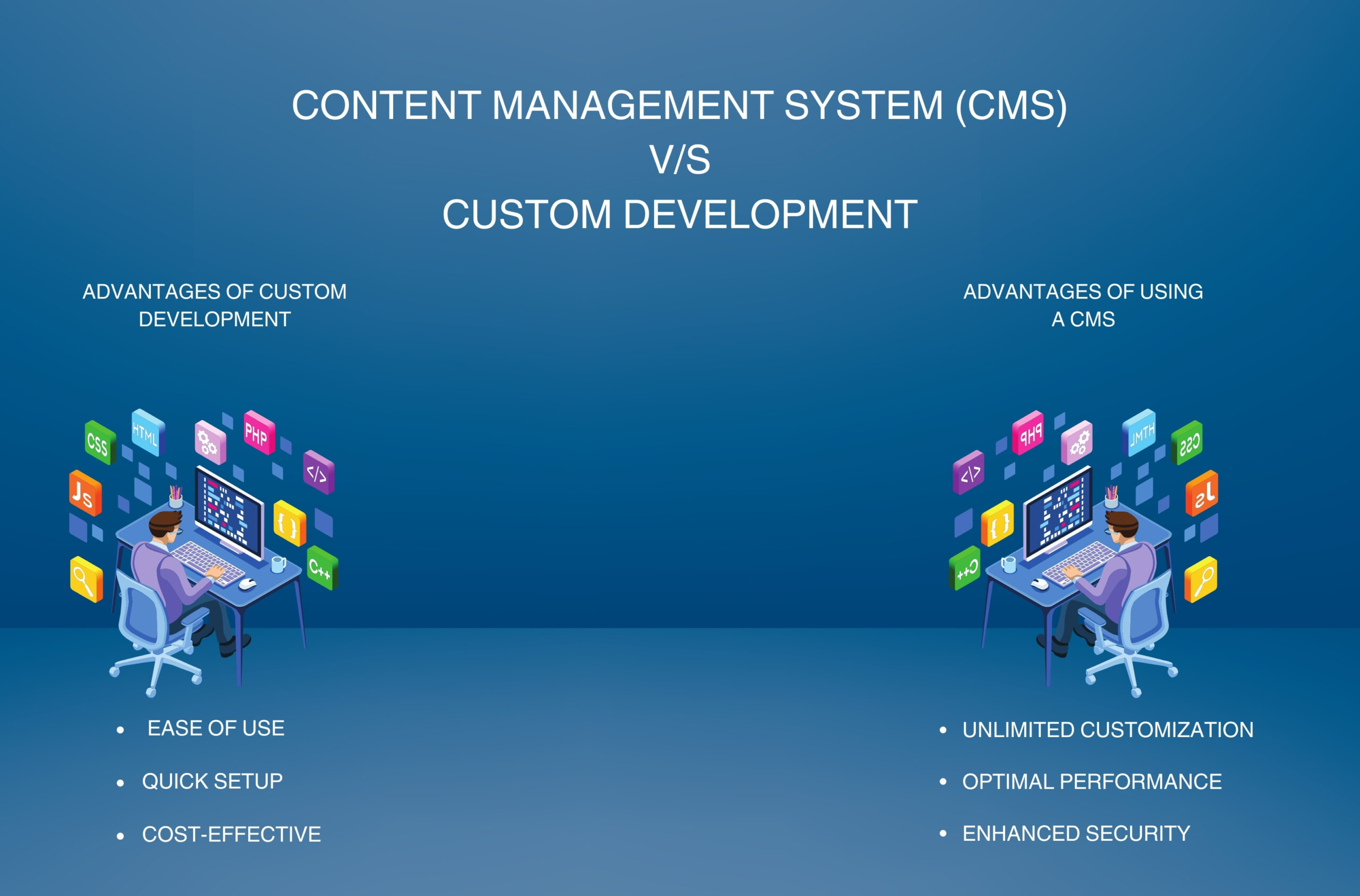
    Advantages of Using a CMS

    1. Ease of Use: CMS platforms offer intuitive interfaces that allow users to create and manage content without diving into complex coding.
    1. Quick Setup: With pre-designed templates and plugins, a website can be up and running within hours, reducing the time required for development.
    1. Cost-Effective: For simpler projects, CMS solutions can be more budget-friendly than custom development, as they eliminate the need for extensive coding and design work.
    1. Large Community and Support: Popular CMS platforms boast large user communities, providing a wealth of online resources, tutorials, and forums for troubleshooting and guidance.
    1. Scalability: While initially designed for small projects, many CMS solutions offer scalability through the addition of plugins and extensions as the website’s needs evolve.

    Content Management System

    Considerations When Using a CMS

    1. Limited Customization: While templates and plugins offer flexibility, they may not cater to every unique design or functionality requirement.
    1. Security Concerns: CMS websites can be vulnerable to security breaches, as cyber attackers target widely-used platforms. Regular updates and security measures are essential.
    1. Performance and Bloat: CMS platforms can become sluggish and bloated as additional plugins and features are added impacting website performance.


    Understanding Custom Development

    Custom development involves building a website from scratch, tailoring every aspect to meet specific business needs and goals. This approach offers the highest degree of flexibility, enabling the incorporation of intricate designs and complex functionalities. It’s a favored choice for larger enterprises, e-commerce platforms, and projects that demand a unique user experience. 


    Advantages of Custom Development

    1. Unlimited Customization: With custom development, every aspect of the website can be tailored to the specific requirements, resulting in a truly unique online presence.
    1. Optimal Performance: Custom-built websites are optimized for performance, ensuring faster loading times and a seamless user experience.
    1. Scalability and Future-Proofing: Custom websites are built to scale, accommodating increased traffic and functionality over time without the limitations of pre-set templates.
    1. Enhanced Security: By avoiding the vulnerabilities associated with widely-used CMS platforms, custom websites can be more resistant to cyber threats.
    1. Long-Term Cost-Efficiency: While the upfront costs may be higher, custom development can save money in the long run by reducing the need for ongoing plugin updates and modifications.


    Considerations When Opting for Custom Development:

    1. Time and Resources: Custom development requires a significant investment of time and skilled resources, delaying the launch compared to using a CMS.
    1. Higher Initial Costs: Building a website from scratch involves higher initial costs compared to utilizing existing CMS platforms.
    1. Maintenance and Updates: Custom websites necessitate ongoing maintenance and updates to ensure optimal performance and security.


    Choosing the Right Path: Factors to Consider

    The decision between CMS and Custom development hinges on various factors:

    1. Project Complexity: For a straightforward website with basic features, a CMS may suffice. However, complex projects with intricate requirements often demand custom development.
    1. Budget: While CMS solutions are generally more budget-friendly upfront, custom development can yield long-term cost benefits and a higher return on investment.
    1. Timeframe: If speed is of the essence, CMS platforms offer quicker setup and deployment takes longer but offers tailored solutions.
    1. Scalability: If a website is anticipated to grow significantly in terms of traffic and features, custom development may be better equipped to handle such scalability.
    1. Control and Ownership: Custom development provides complete control over every aspect of the websites, whereas, CMS solutions may come with limitations.


    Conclusion

    In web development, the choice between a Content Management System and Custom Development is not easy. It depends on the nature of the project, the budget, and the desired level of customization and control. CMS platforms offer convenience, while custom development offers unparalleled flexibility and performance. As businesses and individuals embark on their web development journey, a thorough consideration of these factors will guide them toward the path that aligns best with their unique needs and goals.


    Frequently Asked Questions (FAQs)


    1. When should I opt for Custom Development?

    Custom development is ideal when you have unique and complex requirements that cannot be fulfilled by off-the-shelter CMS solutions. It’s suitable for large-scale applications, e-commerce platforms, or any project requiring highly customized functionality.


    1. Why should I use a CMS?

    You should consider using a CMS when you need a website with relativity standard features and want a user-friendly interface for non-technical users to manage content easily. It’s great for blogs, small business websites, and content-heavy sites.


    1. Do CMS platforms offer security?

    CMS platforms provide security features, but it’s essential to keep them updates to prevent vulnerabilities. Custom development allows for more control over security measures.


    1. What are the advantages of Custom Development?
    • Tailored to unique business needs.
    • Full control over design and functionality.
    • Better performance optimization.
    • Enhanced security customization.
    • Scalability as per requirements.
  • Front-End vs. Back-End Development: What’s the Difference?

    Websites consist of two parts: the front end vs. Back end development. While they might sound self-explanatory, understanding the nuances of their roles and the technologies they involve is essential for anyone looking to dive into the world of programming and development. In this blog, we will discuss the differences between Front-End and Back-End Development.


    What Is Front-End vs. Back-end Development?

    Front-end development, often referred to as client-side development, is the practice of creating the user interface and user experience that end-users interact with directly. It involves designing and implementing the visual aspects of websites and applications, including layout, colors, typography, buttons, and interactive elements.

    Front-end developers are responsible for bringing to life the designs created by UX/UI designers. They use technologies like HTML (Hypertext Markup Language), CSS (Cascading Style Sheets), and JavaScript to build responsive and visually appealing interfaces. HTML structures the content, CSS styles it and JavaScript adds interactivity and dynamic behavior.

    Modern front-end development has evolved significantly with the advent of various frameworks and libraries. Frameworks like React, Angular, and Vue.js provide developers with tools to efficiently manage complex user interfaces and update components without reloading the entire page. These tools facilitate the creation of Single Page Applications (SPAs), where content updates occur seamlessly.


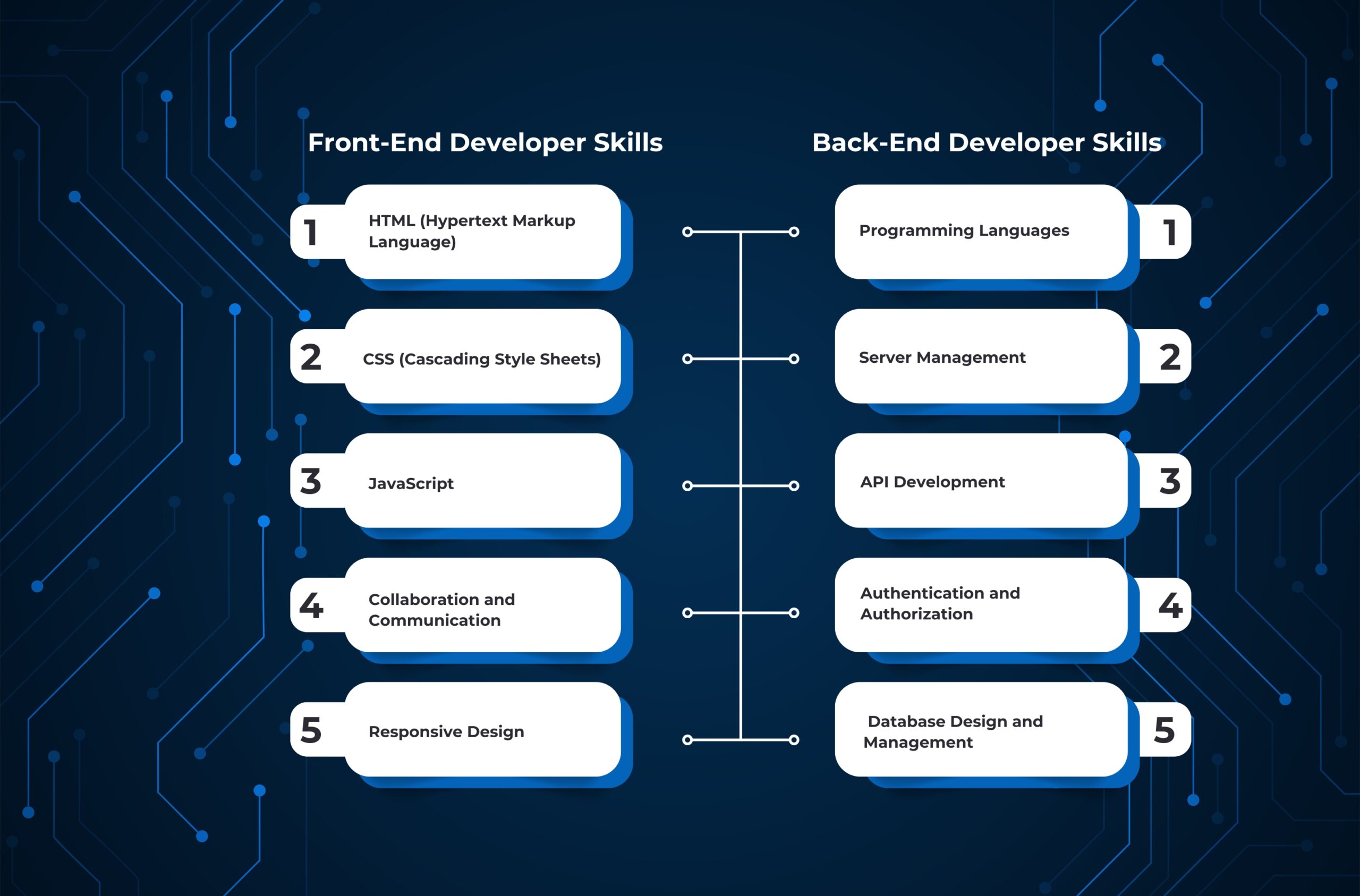
    Front-End Developer Skills:

    Front-end developers play a crucial role in creating visually appealing and user-friendly interfaces for websites and applications. To excel in this role, they need a combination of technical skills, design sensibilities, and the ability to work collaboratively. Here are some essential skills for front-end developers:


    1. HTML (Hypertext Markup Language)

    Proficiency in HTML is a fundamental skill for front-end developers. They should be able to create structured content and understand semantic HTML to ensure proper accessibility and SEO.


    2. CSS (Cascading Style Sheets):

    Strong knowledge of CSS is essential for styling web content. Front-end developers should understand layout techniques, responsiveness, and how to use CSS pre-processors like Sass.


    3. JavaScript:

    A solid grasp of JavaScript is crucial for adding interactivity and dynamic behavior to web pages. Knowledge of ES6+ features, DOM manipulation, and asynchronous programming is important.


    4. Collaboration and Communication:

    Front-end developers often collaborate with designers, back-end developers, and other team members. Strong communication skills and the ability to work in a team are crucial.


    5. Responsive Design:

    Front-end developers need to ensure that websites and applications work well on various devices and screen sizes. They should be familiar with responsive design principles and media queries.


    6. Cross-Browser Compatibility:

    Ensuring that web pages function correctly across different browsers is a key responsibility. Front-end developers should be familiar with browser compatibility issues and how to address them.


    Front-End vs. Back-End

    What is Back-End Development?

    Back-end development, on the other hand, focuses on the server side of applications. It involves building and maintaining the servers, databases, and application logic that operates behind the scenes. Back-end developers handle data storage, retrieval, and manipulation, as well as managing user authentication and the overall application functionality.

    While users interact with the front end, the back end ensures that the right is delivered to the front end and that user inputs are processed correctly. It involves working with databases like MySQL, PostgreSQL, or NoSQL options like MongoDB. Back-end developers also use programming languages like Python, Ruby, Java, PHP, and frameworks like Ruby on Rails, Django, or Node.js to create the necessary logic.

    Security is a significant concern in back-end development. Developers need to protect user data, prevent unauthorized access, and secure communication between the front-end and back-end components. This involves implementing encryption, and authentication protocols, and adhering to best practices to safeguard sensitive information.


    Back-End Developer Skills:

    Back-end developers are responsible for creating and maintaining the server-side logic, databases, and infrastructure that power websites and applications. To succeed in this role, they need a combination of programming skills, database management knowledge, and an understanding of server architecture. Here are some essential skills for back-end developers:


    1. Programming Languages:

    Back-end developers often work with languages like Python, Ruby, Java, PHP, Node.js, and C#. Proficiency in at least one of these languages is crucial for implementing server-side logic.


    2. Server Management:

    Understanding how to set up, configure, and manage servers is essential. Familiarity with server technologies like Apache, Nginx, and deployment platforms like Heroku or AWS is beneficial.


    3. API Development:

    Back-end developers often create APIs (Application Programming Interfaces) to allow communication between the front-end and back-end components. Understanding API design principles and RESTful architecture is important.


    4. Authentication and Authorization:

    Back-end developers should know how to implement user authentication and authorization mechanisms to control access to different parts of an application.


    5. Database Design and Management:

    Designing efficient database structures and managing data consistency, indexing, and migrations are critical skills for back-end developers.


    6. Command Line Usage:

    Proficiency in using the command line is important for tasks like server management, database operations, and running scripts.


    Collaboration and Communication

    Front-end and back-end developers need to collaborate closely to ensure a seamless user experience. Communication between these teams is crucial to align designs, functionality, and data flow. Front-end developers rely on back-end APIs (Application Programming Interfaces) to fetch and update data from the server, while back-end developers depend on the front-end to provide a user-friendly interface for end-users.


    Full-Stack Developers: Bridging the Gap

    In recent years, the term “full-stack developer” has gained prominence. Full-stack developers are proficient in both front-end and back-end development, allowing them to work on all layers of an application. They have a comprehensive understanding of how different components interact and can effectively switch between working on the user interface and the server-side logic.


    Conclusion

    Front-end and back-end development are two sides of the same coin, working together to create the digital experiences we interact with daily. Front-end developers focus on designing user interfaces and ensuring an enjoyable user experience, while back-end developers handle server-side logic, data management, and security.

    Collaboration and communication between these two teams are essential for building successful applications. Whether you’re drawn to the visual aspects of front end or the logic-driven back end, both areas offer exciting opportunities for individuals passionate about creating innovative digital solutions.

  • Web Security: Protecting Against Common Threats

    Today, when businesses, individuals, and governments rely heavily on the internet, web security has become a foremost concern. With the exponential growth of online activities, the risks of cyber threats and attacks have also intensified. From data breaches to malware infections, the digital landscape is riddled with potential vulnerabilities.


    What is Web Security?


    Web security, also known as cybersecurity or web application security, refers to the practice of protecting websites, web applications, and the data type they handle from various threats, attacks, and vulnerabilities that could compromise their integrity, confidentiality, and availability. 

    As businesses and individuals increasingly rely on the internet for various activities, web security becomes paramount to ensure the safety of sensitive information, prevent unauthorized access, and maintain the overall trustworthiness of online interactions.

    Web security encompasses a wide range of techniques, practices, and technologies aimed at identifying, preventing, and mitigating potential risks associated with online platforms.


    Understanding Web Threats


    Cyber threats come in various forms, each with the potential to wreak havoc on websites and compromise sensitive data. Understanding these threats is the first step toward implementing robust security measures.


    1. Malware Attacks: Malicious software, or malware, is designed to infiltrate systems, steal information, and disrupt operations. Examples include viruses, worms, Trojans, and ransomware.


    1. Phishing Attacks: Phishing involves tricking users into revealing sensitive information, such as login credentials or financial details, by posing as a legitimate entity through emails or websites.


    1. Cross-Site Scripting (XSS): This attack injects malicious scripts into websites, which then execute in the users’ browser. It allows attackers to steal data or perform actions on behalf of users without their consent.


    1. SQL Injection: In an SQL injection attack, attackers manipulate input fields to inject malicious SQL code into a website’s database, potentially exposing sensitive information.


    1. Distributed Denial of Service (DDoS): A DDoS attack floods a website with an overwhelming volume of traffic, rendering it unavailable to legitimate users and disrupting operations.


    1. Cross-Site Request Forgery (CRSF): Attackers trick users into performing unwanted actions without their knowledge, such as making unauthorized transactions or changing settings.


    1. Brute Force Attacks: In a brute force attack, attackers systematically try different combinations of passwords until they find the correct one, gaining unauthorized access to accounts.


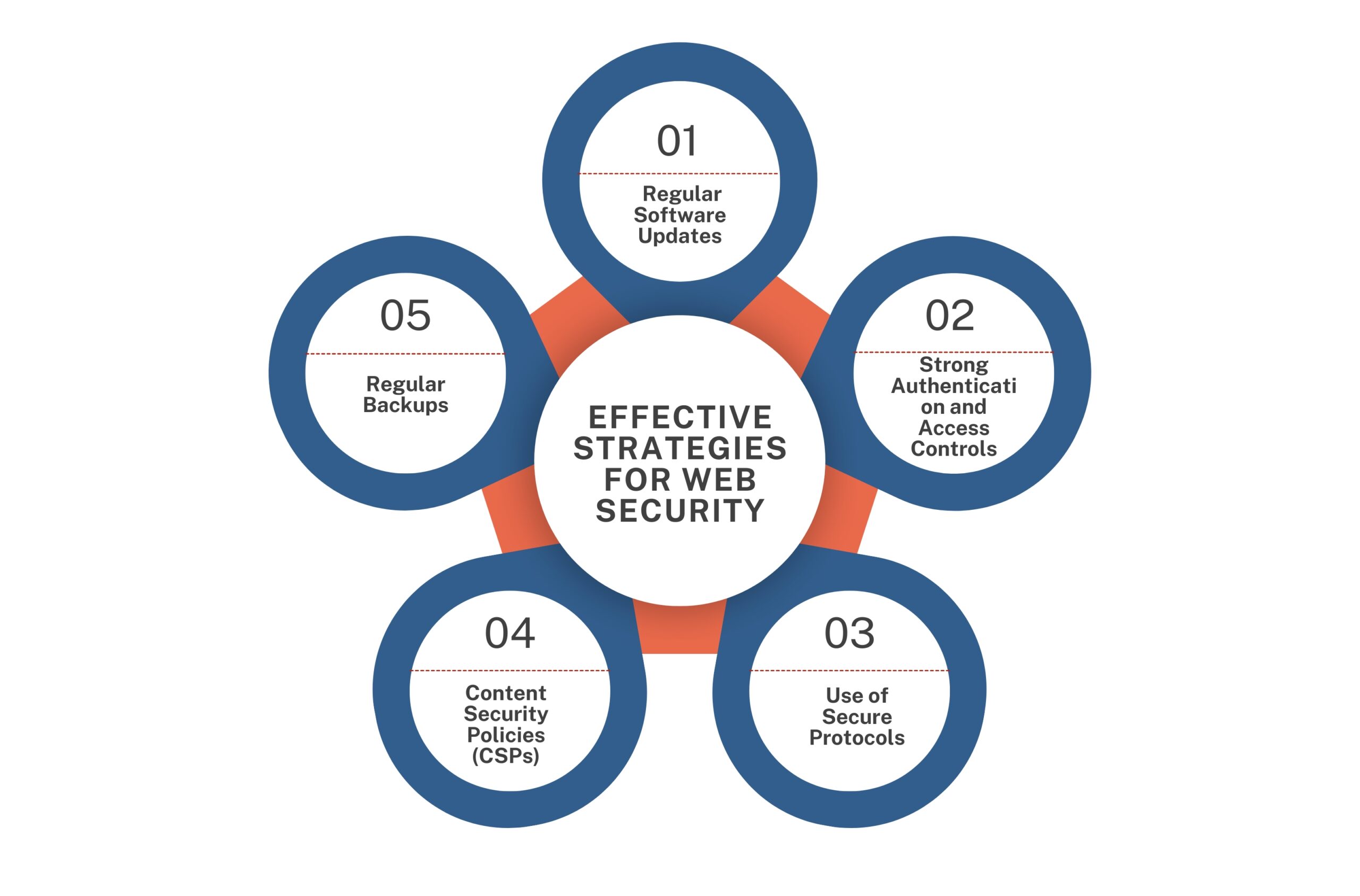
    Effective Strategies for Web Security


    Web Security

    1. Regular Software Updates: Keeping all software, including web server software and content management systems, up to date is crucial. Updates often include security patches that address known vulnerabilities.


    1. Strong Authentication and Access Controls: Implement multi-factor authentication (MFA) and role-based access controls to ensure that only authorized users can access sensitive areas of a website.


    1. Use of Secure Protocols: Utilize HTTPS (Hypertext Transfer Protocol Secure) to encrypt data transmitted between users and the website. SSL/TLS certificates validate the authenticity of the website and protect against eavesdropping.


    1. Security Audits and Vulnerability Scans: Regularly conduct security audits and vulnerability scans to identify weaknesses in your website’s code and infrastructure, allowing you to address them before they are exploited.


    1. Web Application Firewalls (WAFs): Implement WAFs to filter out malicious traffic and protect against common attacks like XSS and SQL injection. WAFs provide an additional layer of defense beyond traditional firewalls.


    1. Content Security Policies (CSPs): CSPs define which sources of content are trusted and can be executed on a website. They help prevent XSS attacks by limiting the sources of executable scripts.


    1. Regular Backups: Perform regular backups of your website’s data and files. This ensures that, in the event of an attack or data loss, you can restore your website to a previous state.


    1. User Input Validation: Validate and sanitize all user input to prevent malicious code from being injected into your website’s forms and fields.


    1. Employee Training: Educate your staff about security best practices, including recognizing phishing emails and avoiding risky online behavior. 


    1. Incident Response Plan: Develop a comprehensive incident response plan outlining the steps to take in case of a security breach. This minimizes damage and helps you recover quickly.


    1. Third-Party Integrations: Be cautious when integrating third-party scripts and plugins. Only use reputable sources, as malicious code in third-party components can compromise your website. 


    1. Limit Server Privileges: Restrict the privileges of users and applications on your server. This prevents potential attackers from gaining unauthorized access to critical resources.


    Conclusion


    From small business websites to large e-commerce platforms, no online entity is immune to the threats that lurk in cyberspace. Implementing a comprehensive security strategy that encompasses regular updates, user training, encryption, and proactive monitoring is essential to safeguarding against common threats. 

    By staying vigilant and proactive, website owners and administrators can mitigate risks, protect sensitive data, and provide users with a safe and secure online experience. Remember, the price of complacency in web security far outweighs the cost of investing in robust protective measures.


    Frequently Asked Questions (FAQs)


    1. What are the best practices for web application security?

    Best practices include regular security assessments, patch management, user education, implementing the principle of least privilege, and staying updates in security vulnerabilities.


    1. Why is web security important?

    Web security is crucial to safeguard sensitive data, maintain user trust, and prevent financial losses. It helps protect against cyberattacks and ensures the confidentiality, integrity, and availability of web resources.


    1. How can I stay updated on the latest web security threats and trends?

    To stay informed, follow security blogs, subscribe to security newsletters, participate in web security forums, and consider attending security conferences or webinars.


    1. Should I use HTTPS for my website?

    Yes, HTTPS encrypts data transmitted between the user’s browser and your server, protecting it from eavesdropping and tampering. It also improves search engine ranking and user trust.

  • Smart Segmentation Strategies for Success: Targeting the Right Audience

    In the era of customer-centricity, segmentation strategies play a vital role in helping businesses target the right audience with precision. The days of one-size-fits-everyone marketing are gone. That is where segmentation strategies come into play. By dividing your target market into distinct segments based on shared characteristics, behaviors, or preferences, businesses can tailor their marketing efforts to resonate with each group more efficiently. 


    In this blog, we will explore the significance of segmentation strategies, the importance of segmentation and explore various methods for targeting the right audience. 


    What are Segmentation Strategies?


    Segmentation in marketing is the process of dividing a broader target market into smaller, more homogeneous groups or segments based on shared characteristics, behaviors, or preferences. It allows businesses to tailor their marketing efforts to specific groups for more effective communication and product/service delivery.


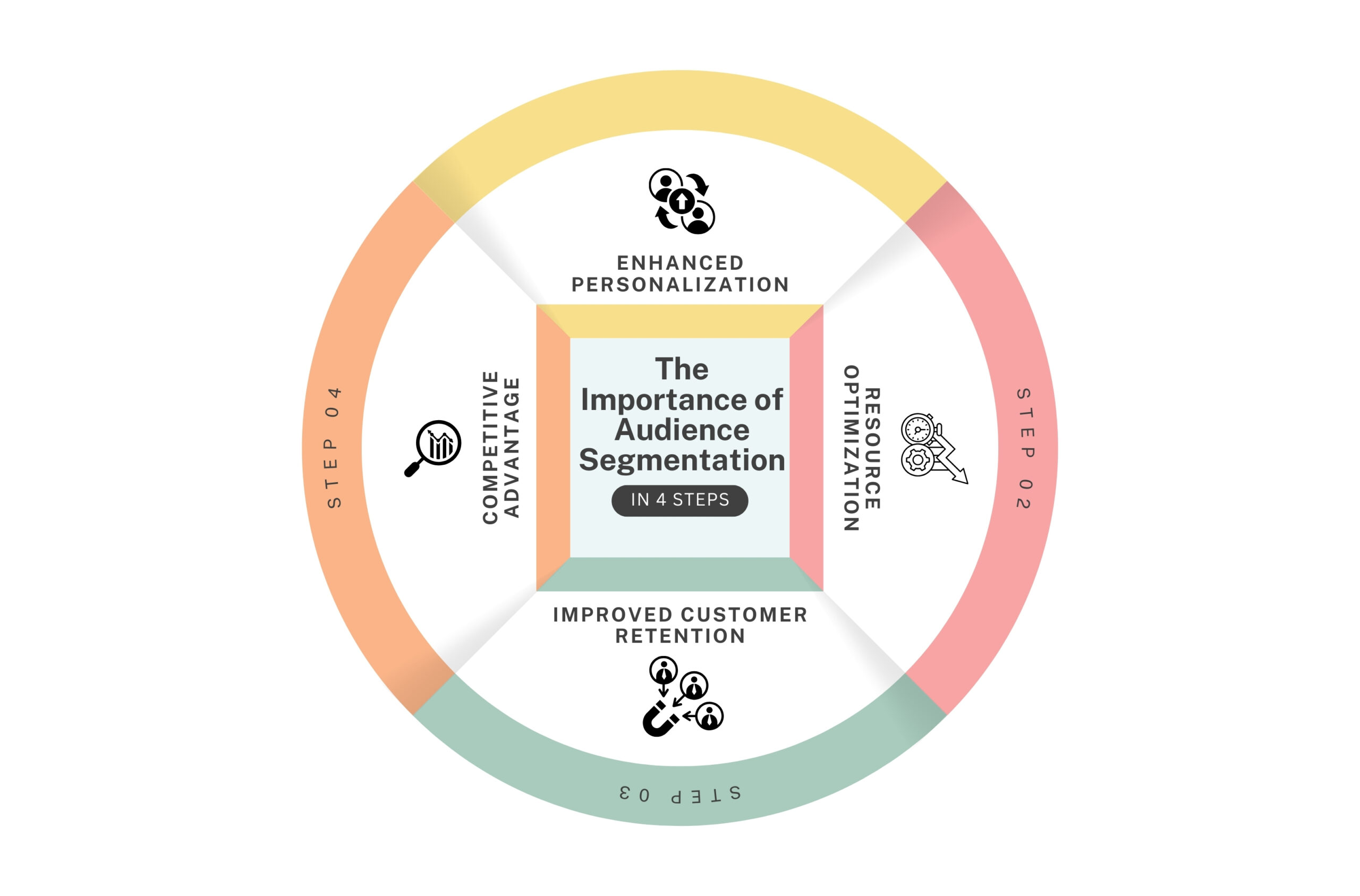
    The Importance of Audience Segmentation


    Audience segmentation is the foundation of modern marketing. It allows businesses to move away from generic marketing messages and connect with customers on a deeper level. By recognizing that not all consumers have the same needs, interests, and motivations, companies can create tailored campaigns that increase engagement and drive conversions.


    segmentation strategies


    1. Enhanced Personalization:


    Segmentation enables businesses to craft messages and offers that are highly relevant to specific customer groups. When customers feel that a brand understands their unique preferences, they are more likely to engage and convert.


    2. Resource Optimization:


    Precise segmentation helps allocate resources effectively. Instead of spreading marketing efforts thin across a broad audience, businesses can concentrate on segments with the highest potential, maximizing their return on investment.


    3. Improved Customer Retention:


    Segment-specific strategies foster stronger customer loyalty. When customers perceive that a brand caters to their specific needs, they are more likely to remain loyal and recommend the brand to others.


    Effective Segmentation Strategies Method


    1. Demographic Segmentation: 


    This involves dividing the market based on demographic factors like age, gender, income, education, and occupation. It provides a basic understanding of who your customers are and allows you to customize messaging accordingly. For instance, a skincare brand might target different age groups with products designed for specific skin concerns.


    2. Psychographic Segmentation:


    This method categorizes customers based on their lifestyles, interests, values, and personality traits. Understanding psychographics helps in creating marketing campaigns that resonate with customers’ emotions and aspirations. An adventure travel company could tailor its offerings differently for thrill-seekers compared to those seeking relaxation.


    3. Behavioral Segmentation:


    Segmentation based on consumer behavior provides insights into how customers interact with a product or service. It considers factors like usage frequency, brand loyalty, purchasing patterns, and response to promotions. An e-commerce platform could target frequent shoppers with loyalty rewards and infrequent shoppers with special discounts.


    4. Geographic Segmentation:


    Dividing the market by geographical location can be especially useful for businesses with location-specific products or services. It allows tailoring marketing messages to regional preferences and cultural nuances.


    5. B2B Segmentation:


    Business-to-business segmentation focuses on identifying specific industries, company sizes, and job roles. This is crucial for companies selling products or services primarily to other businesses. Tailoring solutions to address the unique challenges faced by different industries enhances the chances of success.


    Choosing the Right Segmentation Strategies


    Selecting the appropriate segmentation strategy depends on the nature of your business and your marketing goals. Often, a combination of strategies provides a more comprehensive understanding of your audience. For instance, an electronics manufacturer could utilize demographic segmentation to target different age groups, while also using behavioral segmentation to target tech enthusiasts who frequently upgrade their devices.


    Segmentation Challenges to Overcome


    While segmentation offers numerous benefits, it’s not without challenges:


    1. Data Collection: Gathering accurate and comprehensive data for effective segmentation can be challenging. Companies need to balance obtaining relevant information with respecting customer privacy.


    1. Segment Overlap: Sometimes, customers may fall into multiple segments. Managing overlapping segments requires careful consideration to avoid contradictory messaging.


    1. Constant Adaptation: Consumer preferences evolve. Businesses need to continuously update and refine their segmentation strategies to stay relevant.


    1. Small Market Segments: Some segments might be too narrow to be profitable. Businesses must assess whether the effort required to target a tiny segment justifies the potential returns.


    Conclusion


    In marketing segmentation, understanding your audience is essential for success. By understanding the distinct needs, behaviors, and preferences of different customer groups, companies can craft tailored marketing campaigns that resonate and drive results.


    Through demographic, psychographic, behavioral, geographic, and B2B segmentation, businesses can gain a competitive edge and foster lasting customer relationships. While segmentation does come with its challenges, the rewards in terms of improved personalization, resource optimization, and customer retention make it an indispensable tool in the modern marketer’s toolkit. 


    Frequently Asked Questions (FAQs)


    1. Can segmentation strategies be used in digital marketing?

    Absolutely, Digital marketing offers advanced tools and data analytics that make segmentation strategies highly effective. Businesses can use customer data, website behavior, and online transactions to segment their audience and deliver personalized content is offered through channels like email, social media, and online advertising.


    1. How do I choose the right segmentation method for my business?

    Choosing the right segmentation method depends on your business goals, product or service, and available data. It’s often effective to combine multiple segmentation methods for a more comprehensive view of your audience. Conduct market research and analyze customer data to determine the most relevant segmentation criteria.


    1. Why is segmentation important in marketing?

    Segmentation is crucial in marketing because it helps businesses:

    • Improve marketing efficiency by targeting the right audience.


    • Build stronger customer relationships through personalized communication.


    • Enhance product development by aligning offerings with customer needs.