Author: admin

  • The Psychology Behind Personalized Content: Why it Resonate With Audiences?

    In the era of information overload, capturing the attention of audiences has become an intricate art. Content creators are constantly seeking ways to connect with their target audience on a deeper level. Enter personalized content – an approach that goes beyond one-size-fits-all messaging. The allure of personalized content lies in its ability to tap into human psychology, creating a powerful resonance with individuals.

    This article explores the psychology behind personalized content and uncovers why it has become a cornerstone of effective communication in the digital age.


    Understanding Personalization

    Personalized content is about tailoring messages, recommendations, and experiences to suit the unique preferences and needs of individual consumers. Thanks to advances in technology and data analytics, brands now have the tools to curate content that speaks directly to each person, increasing engagement, brand loyalty, and ultimately, conversion rates.


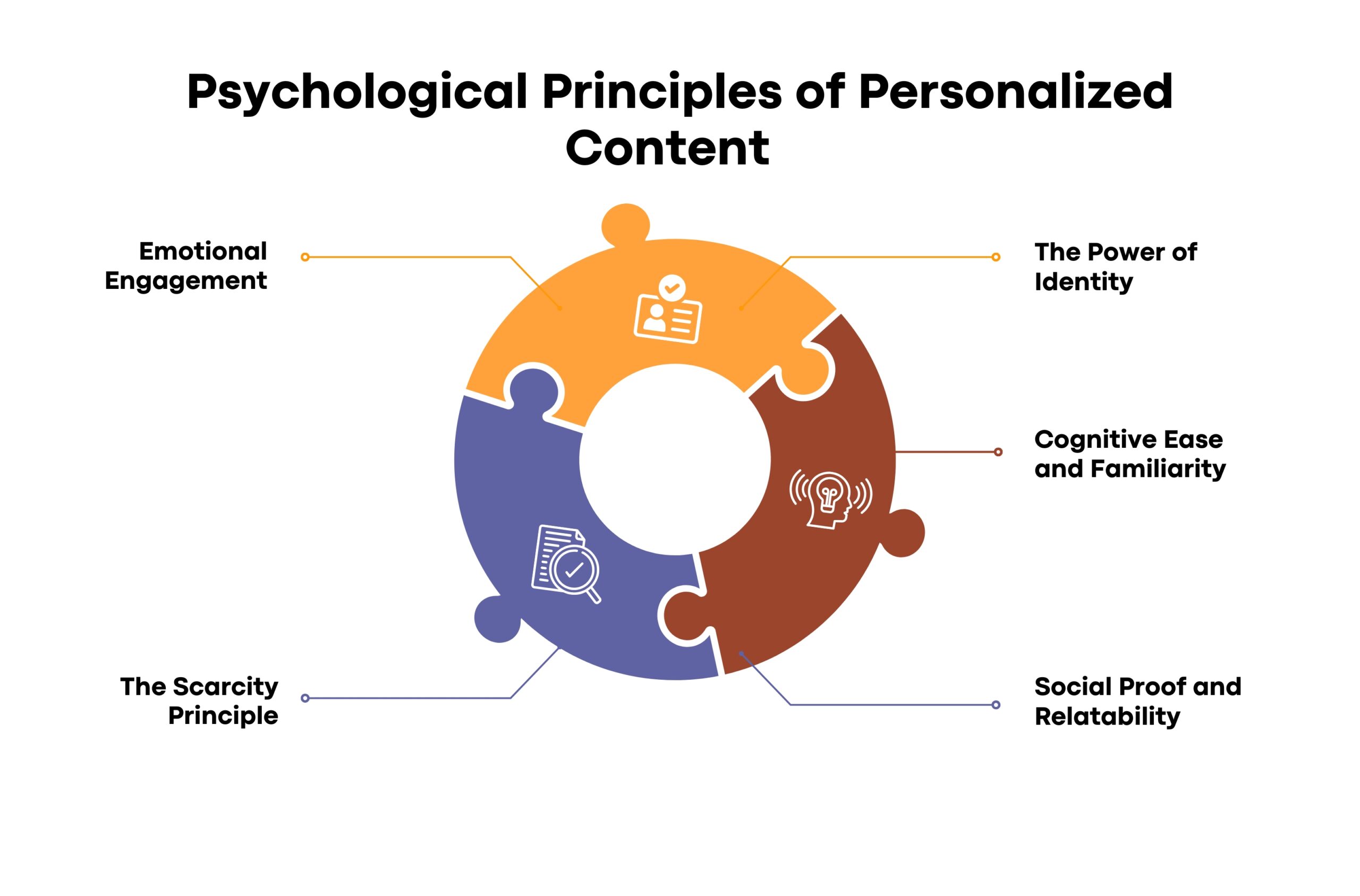
    Psychological Principles of Personalized Content
     

     Personalized Content1. The Power of Identity: 

    One of the primary reasons personalized content resonates with audiences is its ability to reinforce a person’s sense of identity. When individuals encounter content that aligns with their values, beliefs, and interests, they feel validated and understood. This alignment reinforces their identity and fosters a stronger connection with the brand.

    2. Cognitive Ease and Familiarity: 

    Personalized content feels familiar and relevant. This taps into the cognitive ease principles – our brains are naturally drawn to information that is easy to process. When content feels familiar due to personalization, audiences are more likely to engage with it.

    3. Social Proof and Relatability: 

    Human beings are inherently social creatures, and we often take cues from the behavior of others. Personalized content that showcases how others with similar profiles or preferences have engaged with a product or service provides social proof, making the content more relatable and credible.

    4. Emotional Engagement: 

    Personalized content has the ability to evoke emotions in audiences. Whether it’s nostalgia, joy, empathy, or excitement, content that speaks directly to an individual’s experiences triggers emotional responses. These emotions create a memorable connection with the brand.

    5. The Scarcity Principle: 

    When content is personalized, it creates a perception of scarcity. Audiences feel that the content is tailored specifically for them, which can trigger a sense of exclusivity and increase the perceived value of the message.


    Personalization Technique and Strategies

    1. Behavioral Data Analysis: 

    Brands use behavioral data such as browsing history, purchase behavior, and interaction patterns to predict what content a user might be interested in. This approach taps into the principle of familiarity and offers content that aligns with a user’s past behaviors.

    2. Segmentation and Audience Profiling: 

    Segmentation involves dividing an audience into smaller groups based on shared characteristics. Brands then create content that speaks to the unique needs and preferences of each segment, increasing the sense of identity and relatability.

    3. Dynamic Content Creation: 

    Dynamic content involves tailoring specific elements of a message to match the recipient’s profile. This could range from using their name in an email subject to showcasing products that match their previous purchases.

    4. Predictive Analytics: 

    Leveraging machine learning and predictive analytics, brands can anticipate user preferences before they even express them. This anticipatory approach taps into the psychology of surprise and delight.


    Benefits of Personalized Content

    1. Enhanced Engagement: 

    Personalized content drives higher engagement rates compared to generic content. When audiences feel that content speaks directly to them, they are more likely to interact, share, and comment.

    2. Increase Conversion Rates: 

    A personalized experience guides users through the buyer’s journey more effectively. Whether it’s tailored product recommendations or personalized email campaigns, content that aligns with user preferences increases the likelihood of conversions.

    3. Customer Loyalty and Advocacy: 

    When individuals feel understood and valued by a brand, they are more likely to become loyal customers and brand advocates. This word-of-mouth promotion can have a lasting impact on a brand’s reputation.

    4. Reduced Decision Fatigue: 

    The abundance of choices in the digital world can lead to decision fatigue. Personalized content streamlines choices, making it easier for audiences to make decisions that align with their preferences.


    Ethical Considerations

    While personalized content has its benefits, ethical considerations must not be overlooked. The collection and use of user data raise concerns about privacy and consent. Brands must be transparent about data usage and give users the ability to opt out of personalization. Additionally, the potential for algorithmic bias in content recommendations must be addressed to ensure fairness and inclusivity. 


    Conclusion

    The psychology behind personalized content is rooted in fundamental principles of human behavior and cognition. By aligning content with individual identities, preferences, and emotions, brands can create a deep resonance that goes beyond mere marketing. However, the responsible use of data and a keen awareness of ethical considerations are paramount as the world of personalized content continues to evolve. As technology advances and our understanding of psychology deepens, the possibilities for crafting content that truly speaks to each individual’s soul are boundless.
  • Personalization vs. Privacy: How to Find the Right Balance

    Today, “personalization vs. privacy” have become two of the most critical and frequently debated aspects of our online lives. On the one hand, personalization offers tailored experiences, making our interactions with technology more convenient and enjoyable. On the other hand, privacy concerns loom large as we grapple with the collection and utilization of our personal data.

    As brands seek to deliver more relevant content, individuals become increasingly aware of the data they share and the implications for their privacy. This article delves into the intricate dance between personalization and privacy, highlighting the need to find a delicate balance that respects both user expectations and data protection.


    The Power of Personalization vs. Privacy

    Content personalization involves the use of data to create tailored experiences for users. From personalized product recommendations to targeted email campaigns, brands leverage user behavior, preferences, and demographics to curate content that resonates with each individual. This approach isn’t just a marketing trend; it’s a strategic move to break through the noise of information overload and establish genuine connections with audiences.


    Benefits of Personalization

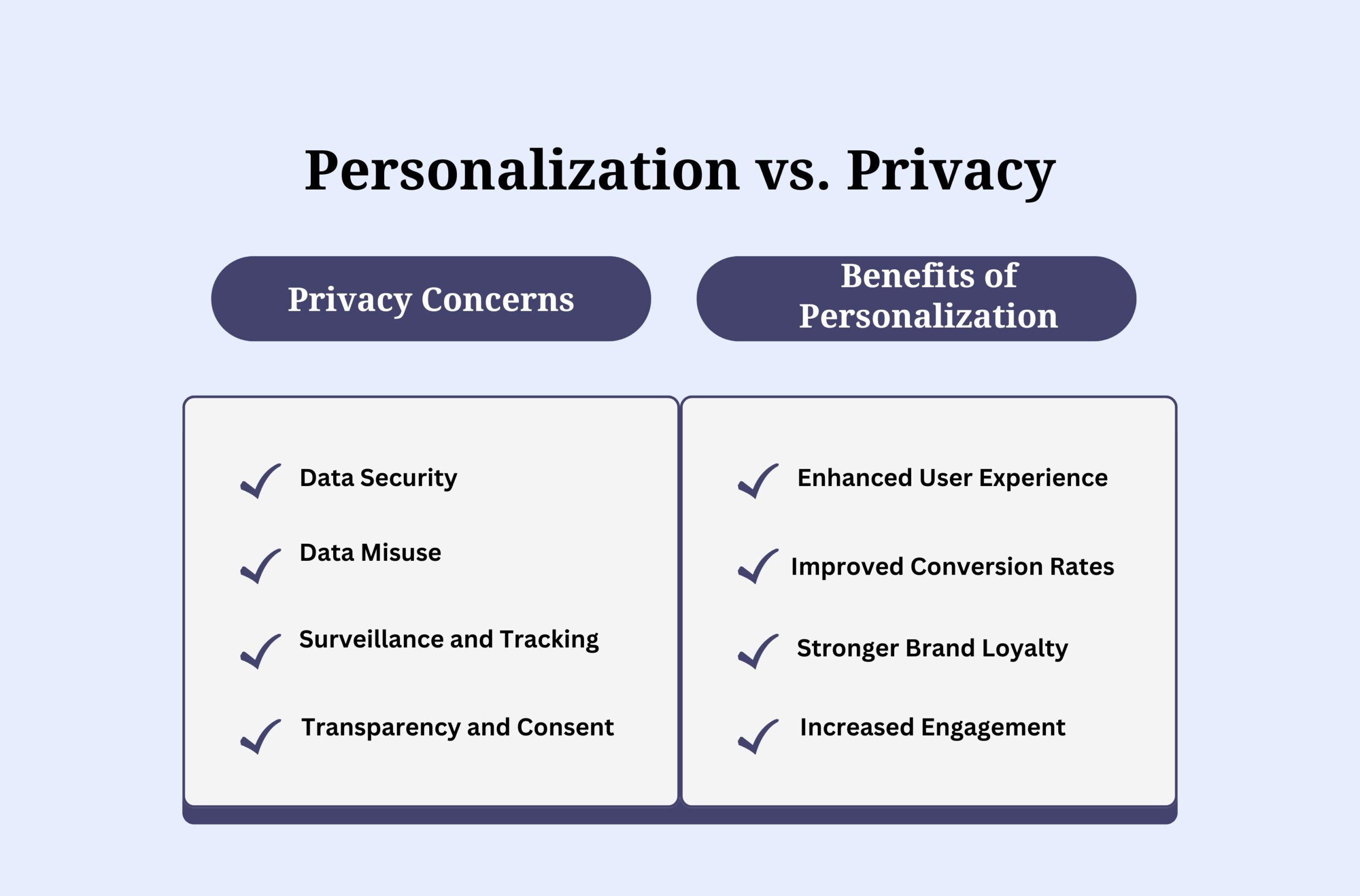
    1. Enhanced User Experience: 

    Personalized content streamlines the user experience by presenting information that’s relevant and timely. This reduces decision fatigue and increases the likelihood of engagement.

    2. Improved Conversion Rates: 

    Customized content guides users through the buyer’s journey, providing them with the information they need at each stage. This results in higher conversion rates and more qualified leads.

    3. Stronger Brand Loyalty: 

    When users feel understood and valued by a brand, they are more likely to develop a sense of loyalty. Personalized experiences foster a deeper emotional connection with the brand.

    4. Increased Engagement: 

    Content that speaks directly to users’ interests and needs captures their attention and encourages them to interact, comment, and share.


    Personalization vs. Privacy


    The Privacy Issues

    As brands strive to create personalized experiences, they rely on collecting and analyzing user data. This data can range from browsing history and purchase behavior to location and demographic information. While these insights are essential for effective personalization, they raise valid concerns about user privacy, data security, and the potential for misuse.


    Privacy Concerns

    1. Data Security: 

    The more data brands collect, the higher the risk of data breaches. Unauthorized access to personal information can have severe consequences for individuals and erode trust in brands.

    2. Data Misuse: 

    Personal data collected for content customization purposes could potentially be used for unintended purposes, such as targeted advertising without consent or even identity theft.

    3. Surveillance and Tracking: 

    Users are becoming increasingly aware of being tracked online, leading to concerns about surveillance, especially when data is shared across multiple platforms.

    4. Transparency and Consent: 

    Many users are unaware of how their data is being used. Lack of transparency and the absence of clear consent processes contribute to a sense of unease.


    Striking the Balance

    As the tension between personalization and privacy continues to mount, finding a balance that respects both user preferences and data protection is crucial. Here are several strategies to achieve this equilibrium:

    1. Transparency: Brands must be transparent about the data they collect, how it’s used, and the benefits users receive from sharing their information. Clear and concise privacy policies and terms of use go a long way in building trust.
    1. User Control: Empower users by giving them control over their data. Providing opt-in and opt-out options for personalized content and data sharing ensures users have a say in the experience.
    1. Anonymization: Whenever possible aggregate and anonymize data to protect individual identities while still enabling effective personalization. This minimizes the risk of data misuse.
    1. Minimal Data Collection: Brands should only collect data that is necessary for delivering personalized experiences. Avoid unnecessary data collection to reduce the potential for data breaches.
    1. Consent Processes: Implement clear and accessible consent processes that inform users about how their data will be used. Consent should be informed, specific, and revocable.
    1. Data Security Measures: Prioritize robust data security measures to prevent unauthorized access and data breaches. Regular security audits and compliance with data protection regulations are essential.
    1. Algorithmic Fairness: Pay attention to algorithmic bias and ensure that personalized content doesn’t perpetuate stereotypes or discriminate against certain groups.
    1. Education and Empowerment: Educate users about the benefits of personalization and the steps taken to protect their privacy. When users understand the value and safeguards in place, they are more likely to engage willingly.


    Conclusion

    The tug-of-war between personalization and privacy is a complex challenge that requires thoughtful consideration from brands, policymakers, and individuals alike. Personalization offers numerous benefits in terms of engagement, loyalty, and conversion rates, but it must be approached responsibly.

    Finding the balance involves respecting user privacy, giving individuals control over their data, and employing secure practices to safeguard sensitive information. As technology evolves and the conversation around data ethics intensifies, the delicate equilibrium between personalization and privacy will continue to shape the future of digital content customization.


    Frequently Asked Questions (FAQs)

    1. How does personalization benefit users?

    Personalization enhances user experiences by offering content and recommendations that align with individual tastes and preferences. It saves time, increases engagement, and can lead to improved efficiency.


    1. What is privacy in the digital age?

    Privacy, in the digital age, concerns the protection of personal information and the ability to control how that information is collected, used, and shared. It involves safeguarding one’s data from unauthorized access or use.


    1. What steps can individuals take to protect their online privacy?

    Individuals can protect their online privacy by using strong, unique passwords, enabling two-factor authentication, regularly reviewing app permissions, and being cautious about sharing personal information online.


    1. Are there privacy regulations in place to protect user data?

    Yes, many countries have implemented data protection regulations, such as the GDPR (General Data Protection Regulation) and the CCPA (California Consumer Privacy Act, to protect user data and privacy rights.


    1. How companies ensure transparency in data practices?

    Companies can ensure transparency by providing clear and concise information about their data collection and usage practices in their privacy policies. They should also make it easy for users to access and understand this information.

  • Search Algorithms in Social Networks: Friend Suggestion and Content Discovery

    In the digital age, Search Algorithms in “social networks” have revolutionized the way we connect, share, and discover content. From reconnecting with old friends to staying updated with the latest trends, social media platforms have become an integral part of our daily lives. One of the key features that underpin the success of these platforms is their ability to suggest friends and relevant content to users.


    Friend Suggestion on Social Networks

    The days of manually searching for friends on social media are long gone, thanks to sophisticated friend suggestion algorithms. These algorithms analyze an excess of data points, including mutual friends, interests, location, and interactions, to identify potential connections. Machine learning techniques play a vital role in understanding user behavior and preferences, allowing platforms to recommend friends with a high likelihood of acceptance.

    At the heart of friend suggestion algorithms lies the concept of a social graph. Each user is a node, and their connections are represented as edges. By traversing this graph, search algorithms can uncover hidden relationships and suggest friends that users might have overlooked. This process goes beyond serendipity, as algorithms leverage the power of data to bring people together in a digital space.


    Content Discovery: From Noise to Relevance

    Inundate with a constant stream of updates, posts, and media, users often find it challenging to discover content that truly resonates with them. This is where content discovery algorithms aim to cut through the noise and present users with content that aligns with their interests, preferences, and browsing habits.

    Similar to friend suggestion algorithms, content discovery algorithms utilize machine learning to understand user behavior. By analyzing past interactions, clicks, likes, and shares, these algorithms create a user profile that captures individuals’ tastes. Using this profile, search algorithms can then recommend articles, videos, and posts that are likely to captivate the user’s attention.


    Collaborative Filtering: The Engine of Personalization

    Collaborative Filtering is a cornerstone of both friend suggestion and content discovery algorithms. This technique builds on the idea that users who have similar interests and behaviors are likely to appreciate the same content or connect. There are two main approaches to collaborative filtering: user-based and item-based.

    In user-based collaborative filtering, the algorithm identifies users with similar preferences and suggests content or friends based on what those similar users have engaged with. On the other hand, item-based collaborative filtering recommends content or friends that are similar to what users have already shown an affinity for. These techniques work in tandem to create a personalized experience that keeps users engaged and satisfied.


    Balancing Act: Privacy and Ethics in Social Networks

    While search algorithms in social networks offer numerous benefits, they also raise concerns about privacy and ethics. As algorithms analyze users’ interactions, preferences, and connections, there’s a potential for sensitive data to be mishandled or exploited. Social platforms must strike a delicate balance between offering personalized experiences and safeguarding user privacy.

    Moreover, algorithmic bias is another ethical consideration. If algorithms are not trained on diverse datasets, they might inadvertently favor certain groups or content, leading to a lack of inclusivity. Ensuring fairness and transparency in algorithm design is crucial to prevent reinforcing existing biases and creating information bubbles.


    Future Directions: From AI to Human-Centricity

    The future of search algorithms in social networks is exciting and multifaceted. Artificial intelligence (AI) and Machine learning will continue to evolve, enhancing the accuracy of friend suggestions and content recommendations. However, the focus is shifting toward creating more human-centric experiences.

    Understanding the nuances of human relationships and emotions is a challenge for algorithms, but advancements in sentiment analysis and natural language processing are making headway. Platforms are exploring ways to factor in an emotional context, enhancing the authenticity and meaningfulness of friend suggestions and content recommendations.

    Social Networks

    Conclusion Of Social Networks

    Search algorithms have transformed the landscape of social networks, elevating the way we connect, interact, and discover content. Friend suggestion and content discovery algorithms have evolved from simple rule-based systems to complex machine-learning models, offering personalized experiences to users. 

    As the digital world continues changing, the challenge lies in striking a balance between technological advancement, privacy protection, and ethical considerations. The future holds the promise of even more human-centric algorithms that enhance our social interactions and deepen our connections in the virtual realm.


    Frequently Asked Questions (FAQs)

    1. What factors influence the ranking of search results in social networks?

    Several factors influence the ranking of search results in social networks, including the relevance of keywords, the user’s past interactions, the popularity of content, and the recency posts.


    1. Can social network search algorithms personalize search results for users?

    Yes, many social network search algorithms incorporate personalization to tailor search results based on a user’s interests, connections, and previous activity on the platform.


    1. Do social networks use machine learning in their search algorithms?

    Yes, many social networks employ machine learning techniques to improve the performance of their search algorithms. Machine learning helps refine search results and adapt to user behavior over time.


    1. How do social networks handle controversial or sensitive content in search results?

    Social networks implement content moderation policies and algorithms to detect and filter out controversial or sensitive content from search results, aiming to provide a safe and positive user experience.


    1. Are there any best practices for optimizing content for social network search algorithms?

    Yes, best practices include using relevant keywords, creating high-quality content, engaging with your audience, and staying up-to-date with platform-specific guidelines and changes.

  • What is Local Influencer Marketing and its benefits?

    [vc_row][vc_column][vc_column_text css=””]The digital age has not only connected people across continents but also given rise to a unique form of influencer marketing example local influencer marketing. This innovative approach revolves around leveraging influencers who have a strong presence within specific local communities. By harnessing the deep connection and trust these influencers hold, brands can tap into the hearts and minds of local consumers in ways that traditional marketing methods often struggle to achieve.


    What is Local Influencer Marketing?


    Local influencer marketing involves partnering with influencers who have strong local followers and can influence locals to use that business. These influencers possess a deep understanding of local trends, preferences, and customs, allowing them to connect authentically with their followers. 

    Local influencer promoting brand

    By collaborating with local influencers, brands can tailor their messaging to resonate with the unique characteristics of a particular locale, effectively reaching and engaging target audiences at a community level. This approach emphasizes trust, relatability, and cultural relevance, resulting in more impactful brand-consumer relationships within specific geographic regions.


    Benefits of Local Influencer Marketing for Small Businesses


    1. Target Reach: 


    Brands can laser-focus their marketing efforts on specific geographic areas, ensuring that their message reaches the right audience. This is particularly beneficial for businesses with regional offerings or local events.


    2. Local Influencers are Cost-Effective: 


    Working with local influencers can be more cost-effective than engaging larger, global influencers, allowing brands with limited budgets to achieve impactful results.


    3.  Hyper-Local Insights: 


    Local influencers provide invaluable insights into local trends, preferences, and emerging markets. This knowledge can help brands tailor their products and campaigns to better suit the needs of local consumers.


    4. Cultural Relevance: 


    Local influencers understand the cultural fabric of their communities. They can create content that reflects the values, traditions, and cultural sensitivities of their audience, resulting in content that feels genuine and relatable.


    5. Trust and Authenticity:


    Local influencers are often seen as community leaders or trusted sources of information. Their recommendations carry weight due to the trust they’ve built within their communities, leading to higher engagement and conversion rates.


    Strategies for Successful Localized Influencer Campaigns


    1. Collaboration: 


    Allow influencers creative freedom while ensuring that their content aligns with your brand’s messaging. This collaboration should reflect the influencer’s personal style while conveying the brand’s key points.


    2. Localized Content: 


    Encourage influencers to create content that resonates with local culture, language, and trends. This could include highlighting local landmarks, using regional dialects, or referencing local events.


    3. Geo-Tagging and Hashtags: 


    Utilize geo-tagging and location-specific hashtags to ensure that your content reaches the intended local audience and generates organic local engagement.


    4. Research and Selection: 


    Identify influencers who align with your brand’s values and cater to your target audience. Look for those who have an engaged and authentic following within the specific locale.


    5. Community Involvement: 


    Engage in community-driven initiatives alongside local influencers. Participate in local events, charities, or causes to showcase your commitment to the area.


    6. User-Generated Content: 


    Encourage followers to create and share their content related to your brand, fostering a sense of community engagement and authenticity.


    Case Study: The Impact of Local Influencer Marketing


    A prime example of local influencer marketing success is the partnership between a local coffee shop and a micro-influencer within the same neighborhood. The micro-influencer shared authentic and relatable posts featuring the coffee shop’s cozy atmosphere and signature beverages, using localized hashtags. 


    The engagement from the local community was extraordinary, with comments from followers expressing their love for the coffee shop and even tagging their friends to visit. This campaign not only increased foot traffic to the coffee shop but also solidified its position as a beloved local hangout.


    Conclusion


    Local influencer marketing is a powerful tool that enables brands to connect with consumers on a deeply personal level. By collaborating with influencers who intimately understand the local culture, brands can build genuine relationships and foster a strong sense of community. 


    This approach not only drives engagement and conversions but also creates a lasting impact on the brand’s reputation within the local area. As the digital world continues to expand, localized influencer marketing stands as a testament to the enduring importance of community and authenticity in the realm of marketing.


    Frequently Asked Questions (FAQs)

    [/vc_column_text][/vc_column][/vc_row][vc_row][vc_column][vc_toggle title=”Is local influencer marketing suitable for all types of business?” css=””]While it can benefit many businesses, its suitability depends on your target audience and marketing goals. It’s particularly effective for businesses with a local customer base.[/vc_toggle][vc_toggle title=”Can local influencer marketing work for small businesses?” css=””]Yes, it can be especially effective for small businesses with limited budgets, as it offers a cost-effective way to connect with local customers.[/vc_toggle][vc_toggle title=”What are the benefits of working with local influencers?” css=””]Benefits include building trust, reaching a hyper-local audience, cost-effectiveness, and leveraging the influencer’s credibility within the community.[/vc_toggle][vc_toggle title=”How do I find the right local influencers for my business?” css=””]Use social media analytics tools, influencer databases, or simply search on platforms like Instagram and Twitter using location-based hashtags to identify potential local influencers.[/vc_toggle][vc_toggle title=”How do I approach and collaborate with local influencers?” css=””]Start by building a genuine relationship, engage with their content, and then propose a collaboration that aligns with their brand and your business objectives.[/vc_toggle][/vc_column][/vc_row]

  • E-commerce Payment Gateways: What You Need To Know?

    E-commerce has transformed the way we shop, enabling us to make purchases from the comfort of our homes. However, behind the scenes of every online transaction lies a crucial element – the e-commerce payment gateway. As consumers flock to online platforms to purchase products and services, the importance of secure and seamless payment solutions cannot be overstated.

    E-commerce payment gateways” have taken center stage, facilitating transactions and ensuring a smooth shopping experience. In this blog, we will discuss the e-commerce payment gateways, exploring their significance, functionality, and key considerations.


    Understanding E-commerce Payment Gateways

    At its core, an e-commerce payment gateway is a technology that acts as an intermediary between an online store and a payment processor. Its primary role is to securely authorize and process payment transactions, facilitating the transfer of funds from customers to merchants. Payment gateways enable customers to enter their payment information during the checkout process and then securely transmit the data to the payment processor, which subsequently completes the transaction.


    Importance of Secure Transactions

    Security is a paramount concern in E-commerce, given the sensitive nature of payment information. E-commerce payment gateways employ encryption protocols to safeguard customer data, including credit card numbers, personal details, and transaction histories. The encryption ensures that information transmitted between the customer, the merchant, and the payment processor is protected from unauthorized access and potential cyber threats.


    Functionality and Transaction Flow

    The process of a payment gateway involves several steps to ensure the accuracy and security of each transaction:

    1. Customer Initiatives Payment: The customer selects products or services and proceeds to the checkout page.
    1. Data Encryption: Payment information, including credit card details, is encrypted to prevent interception by malicious actors.
    1. Payment Gateway Interaction: The encrypted data is sent to the payment gateway.
    1. Authorization: The payment gateway verifies the payment details with the customer’s bank or credit card issuer to ensure there are sufficient funds and that the transaction is legitimate.
    1. Transaction Processing: If the payment is approved, the transaction is processed, and funds are transferred from the customer’s account to the merchant’s account.
    1. Confirmation: Both the customer and the merchant receive confirmation of the successful transaction.
    1. Settlement: The funds are settled into the merchant’s account, typically within a predetermined time frame.


    Types of E-commerce Payment Gateways


    E-commerce payment gateways

    There are various types of payment gateways, each catering to different needs and preferences:

    1. Hosted Payment Gateways:

    Customers are redirected to a separate payment page hosted by the payment gateway provider. The advantage is that the merchant doesn’t handle sensitive payment data directly.

    2. Self-Hosted Payment Gateways:

    These gateways are integrated into the merchant’s website, offering a seamless user experience. Payment information is collected on the merchant’s site and then securely transmitted to the gateway.

    3. API (Application Programming Interface) Payment Gateways: 

    These gateways provide more customization options and are often used by larger E-commerce businesses. They allow for deeper integration with the website’s design and functionality.

    4. Local Payment Gateways:

    Some regions have their own preferred payment methods and gateways. Merchants need to offer options that cater to the preferences of their target audience.


    Key Considerations When Choosing a Payment Gateway

    Selecting the right payment gateway is a critical decision for any e-commerce business. Here are some key considerations:

    1. Security: Opt for a payment gateway that employs robust security measures, including encryption, PCI DSS compliance, and fraud detection.
    1. User Experience: The payment process should be user-friendly and seamless, reducing the risk of abandoned carts due to a complex checkout process.
    1. Accepted Payment Methods: Ensure that the payment gateway supports a wide range of payment methods, including credit cards, debit cards, digital wallets, and even alternative payment methods based on your target market.
    1. Integration: Check whether the payment gateway integrates smoothly with your e-commerce platform or website. Compatibility and ease of integration are crucial.
    1. Fees and Costs: Different payment gateways have varying fee structures, including transaction fees, monthly fees, and setup fees. Understand these costs before making a decision.
    1. Global Reach: If you’re catering to an international audience, consider a payment gateway that supports multiple currencies and languages.
    1. Customer Support: Reliable customer support is essential for troubleshooting issues and addressing concerns promptly.


    Prominent E-commerce Payment Gateways

    Several e-commerce payment gateways have gained prominence in the industry:

    1. PayPal: Widely recognized and accepted, PayPal offers a range of services, including direct payment processing, invoicing, and integration with various e-commerce platforms.
    1. Stripe: Known for its developer-friendly approach, Stripe provides customizable payment solutions and supports a wide array of payment methods.
    1. Square: Initially known for its point-of-sale solutions, Square has expanded into online payments, offering an integrated system for both offline and online transactions.
    1. Authorize.Net: A popular choice for businesses of all sizes, Authorize.Net offers a range of features including fraud prevention tools and recurring billing options.


    Future Trends in E-commerce Payment Gateways

    As technology continues to evolve, e-commerce payment gateways are also undergoing innovations:

    1. Mobile Payments: With the rise of mobile commerce, payment gateways are adapting to facilitate seamless mobile transactions.
    1. Biometric Authentication: Expect to see more biometric authentication methods, such as fingerprint and facial recognition, enhancing payment security.
    1. Blockchain Technology: Blockchain’s decentralized nature could potentially transform payment gateways, offering enhanced security and transparency.
    1. Integration of AI: Artificial Intelligence can play a role in fraud prevention and customer support, streamlining the payment process.


    Conclusion

    E-commerce payment gateways serve as the backbone of online transactions, ensuring secure, efficient, and seamless payment processing. Their significance cannot be understated, as they play a pivotal role in driving customer trust and satisfaction. As businesses continue to tap into the vast opportunities of the digital realm, selecting the right payment gateway becomes a strategic decision that can shape the success of an E-commerce venture. 

    By understanding the functionality, security measures, and considerations involved in choosing a payment gateway, businesses can navigate the world of online transactions with confidence and provide customers with a frictionless shopping experience.

  • Niche vs. General E-commerce: Which Approach is Right for You?

    In e-commerce, entrepreneurs faced a vital decision: whether to carve out a specialized niche or cast a wider net with a general and Niche E-commerce approach. Both strategies have their merits and challenges, and choosing the right path requires careful consideration of factors such as market trends, competition, and personal strengths. 

    In this blog, we will discuss the nuances of niche and general e-commerce, and help you determine which approach aligns with your business goals and strengths.


    Understanding Niche E-commerce

    Niche e-commerce refers to online retail businesses that cater to a specific, often specialized, segment of the market. Instead of selling a wide range of products, niche e-commerce stores focus on a particular product category, industry, or target audience. The goal is to serve a smaller, more defined customer base with unique products or services. Niche e-commerce involves targeting a specific segment of the market with unique products or services. By catering to a specialized audience, niche businesses aim to stand out in a crowded marketplace. 


    Advantages of Niche E-commerce


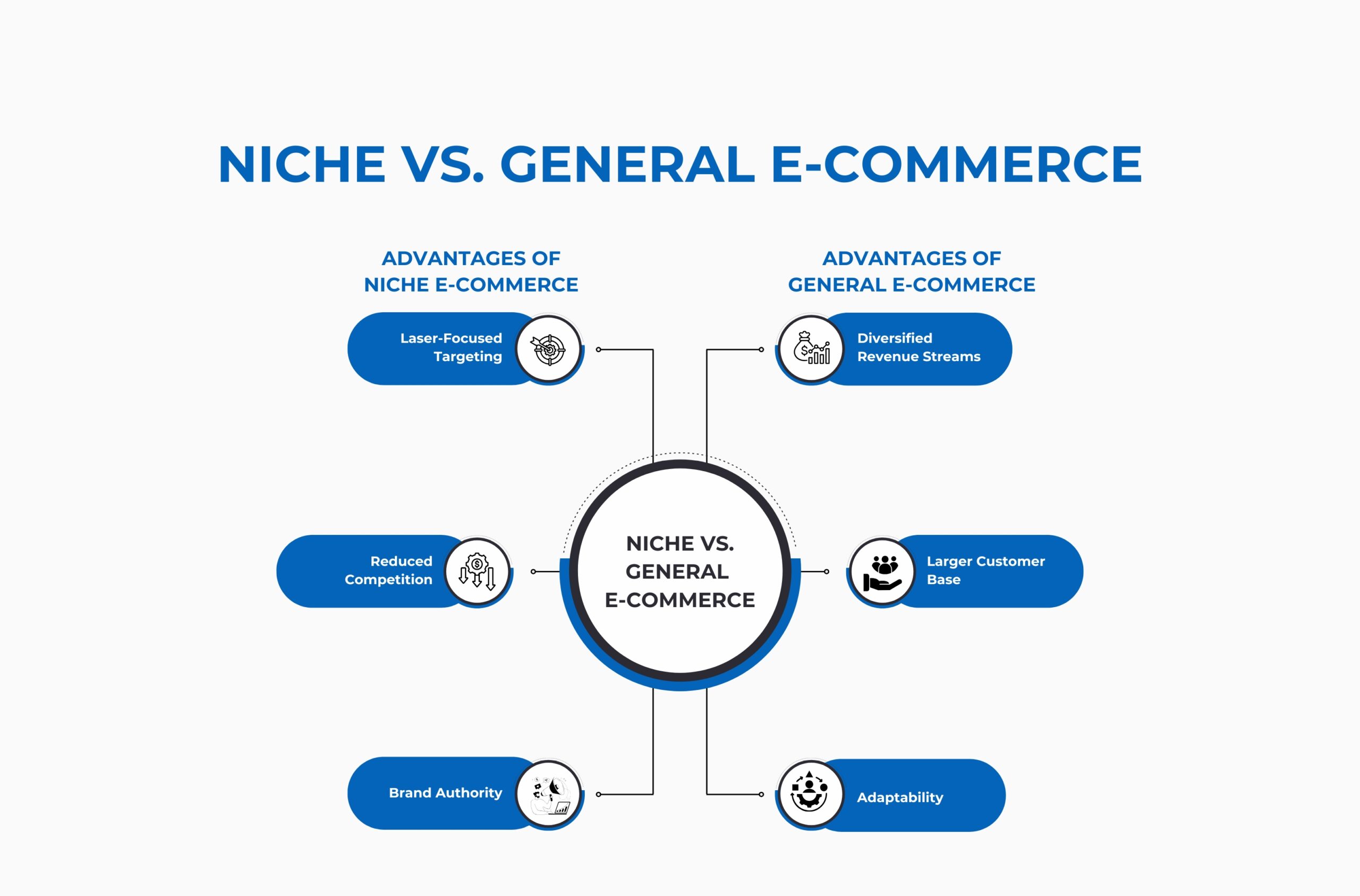
    1. Laser-Focused Targeting:

    Niche businesses can tailor their marketing efforts to a specific audience, leading to higher engagement and conversion rates. This targeting can include personalized messaging, product recommendations, and specialized content that resonates with the audience’s interests.

    2. Reduced Competition:

    By focusing on a narrow market segment, niche businesses often face less competition compared to general e-commerce players. This can lead to higher visibility and a better chance of establishing themselves as industry experts.

    3. Brand Authority In Niche e-commerce

    Niche businesses can position themselves as authorities in their field, building a strong brand reputation and loyal customer base. This authority can translate into higher customer trust and long-term success.

    4. Personal Connection:

    Niche businesses have the opportunity to develop a personal connection with their customers. By understanding their specific needs and preferences, niche businesses can offer personalized experiences that foster customer loyalty.

    5. Product Differentiation:

    Niche products are often unique or specialized, allowing businesses to stand out based on the distinct value they provide. This differentiation can lead to higher perceived value and pricing flexibility.


    Niche E-commerce


    Advantages of General E-commerce


    General e-commerce, on the other hand, involves offering a wide range of products or services that cater to a broader audience. This approach has its own set of benefits:

    1. Diversified Revenue Streams: 

    General e-commerce businesses can tap into multiple product categories, reducing reliance on a single niche. This diversification can provide a safety net against market fluctuations.

    2. Larger Customer Base: 

    With a broader product range, general e-commerce businesses can attract a wider customer base. This increases the potential for higher sales volumes and revenue.

    3. Adaptability: 

    General e-commerce businesses can more easily adapt to changing market trends. If one product category experiences a decline, the business can shift its focus to other profitable areas.

    4. Economics of Scale: 

    With larger product volumes, general e-commerce businesses may benefit from economies of scale, leading to potential cost savings in areas such as inventory management and shipping.

    5. Cross-Selling and Upselling: 

    General e-commerce businesses have the advantage of cross-selling and upselling opportunities. Customers who purchase one product might be enticed to explore other offerings, leading to increased average order values.


    Factors to Consider


    The decision to pursue a niche or general e-commerce approach depends on various factors, including your business goals, resources, and market insights. Consider the following factors when making your choice:

    1. Expertise and Passion:

    If you’re deeply knowledgeable and passionate about a specific niche, it might be the ideal path for you. Niche businesses often require a deep understanding of the industry to deliver value and build trust.

    2. Market Demand:

    Conduct thorough market research to determine the demand for your chosen niche. Is there a sufficient audience interested in the products or services you plan to offer?

    3. Competition Analysis In Niche E-commerce

    Assess the level of competition in your chosen niche. High competition might require unique strategies to differentiate your business and gain a foothold.

    4. Long-Term Visibility:

    Consider whether your chosen niche is likely to remain relevant and profitable in the long run. Market trends and consumer preferences can evolve.

    5. Resource Allocation:

    Evaluate the resources you have available, including budget, time, and manpower. Niche businesses might require specialized marketing and product development efforts.

    6. Risk Tolerance:

    Niche businesses might have a more defined customer base, which could pose risks if that audience shrinks. General e-commerce might provide more stability due to a broader market.

    7. Scalability:

    Consider whether your chosen approach can scale as your business grows. Niche businesses might have limitations in terms of growth potential.


    Finding the Middle Ground: Hybrid Approach


    In some cases, entrepreneurs opt for a hybrid approach that combines elements of both niche and general e-commerce. This involves starting with a specific niche and gradually expanding the product range over time. This approach allows you to build a strong foundation within a niche while retaining the flexibility to diversify as your business gains traction.


    Conclusion


    The choice between niche and general e-commerce hinges on your strengths, resources, market insights, and business goals. Niche e-commerce offers the opportunity for specialization, authority, and a strong connection with a targeted audience. General e-commerce provides diversification, a larger customer base, and adaptability to market shifts.

    Ultimately, success in either approach relies on delivering value, understanding your customers, and staying agile in a dynamic e-commerce landscape. Whether you decide to carve a niche or embrace the breadth of possibilities, thorough research, and a clear business strategy will be your guiding lights on the path to e-commerce success.


    Frequently Asked Questions (FAQs)


    1. What are the advantages of niche e-commerce?

    Advantages include a focused customer base, less competition within the niche, the ability to build a strong brand identity, and the potential for higher profit margins.


    1. What are the advantages of general e-commerce?

    Advantages include a larger potential customer base, versatility in product offerings, and the ability to adapt to changing market trends.


    1. How do I choose between niche and general e-commerce for my business?

    Consider your expertise and passion, market research, competition, and your target audience’s needs and preferences when deciding which approach is best for your business.


    1. Which one is more profitable, niche or general e-commerce?

    Profitability depends on various factors, including market demand, competition, and the quality of your products. Niche e-commerce can be profitable if there’s a dedicated customer base, while general e-commerce may require more extensive marketing.  

  • What is Marketing Social Responsibility and its Strategies

    The traditional boundaries between business and society are becoming blurred. Consumers today are not just looking for products and services, they’re seeking brands that align with their values and contribute positively to the world. 

    This evolving landscape has given rise to the concept of “Marketing Social Responsibility” (MSR), where brands leverage their marketing strategies to not only promote their offerings but also drive social impact. In this blog, we will discuss the essence of Marketing Social Responsibility and its significance in shaping the future of business.


    Defining Marketing Social Responsibility


    Marketing Social Responsibility refers to the deliberate efforts of brands to incorporate social and ethical considerations into their marketing strategies. It goes beyond the traditional focus on profit generation to encompass a brand’s role in fostering positive change and addressing societal challenges. MSR involves using the reach and influence of marketing campaigns to promote social causes, sustainable practices, and ethical values.


    The Intersection of Profit and Purpose


    Historically, the primary goal of businesses was to generate profit. However, as global challenges such as climate change, inequality, and social injustice came to the forefront, consumer expectations shifted. People began demanding more from the brands they supported, expecting them to play a proactive role in addressing these issues. This led to a shift from a profit-centric model to a purpose-driven approach.

    Marketing Social Responsibility provides a powerful way to bridge the gap between profit and purpose. By aligning their marketing efforts with social causes, brands can build deeper connections with consumers, fostering brand loyalty and driving positive societal impact simultaneously.


    Strategies for Effective Marketing Social Responsibility


    1. Cause Integration: Brands can integrate social causes into their marketing campaigns, creating mutually beneficial partnerships. For instance, a clothing brand can collaborate with a charity organization to donate a portion of sales to a cause related to poverty alleviation. This approach not only raises awareness for the cause but also humanizes the brand.
    1. Transparency and Authenticity: In an era of information transparency, consumers value authenticity. Brands that openly share their social responsibility initiatives, along with the progress they’re making, build trust with their audience. Authenticity in communicating these efforts is crucial to avoiding accusations of “greenwashing” and building long-lasting connections.
    1. Storytelling for Impact: Stories have the power to evoke emotions and inspire action. Brands can leverage storytelling in their marketing campaigns to highlight real-world instances where their social responsibility initiatives have made a difference. These stories create a personal connection with consumers, encouraging them to participate in the brand’s mission.
    1. Inclusive Campaigns: Marketing Social Responsibility also involves promoting inclusivity and diversity. Brands that showcase people from different backgrounds in their campaigns send a message of acceptance and unity. This resonates with consumers who appreciate brands that celebrate and respect individual differences.
    1. Empowerment and Awareness: Brands can use their marketing prowess to raise awareness about critical social issues. Educational campaigns not only inform the public but also empower individuals to take action. For example, a health-oriented brand could run campaigns on healthy lifestyle choices, thereby contributing to a healthier society.


    The Benefits of Marketing Social Responsibility


    1. Enhanced Brand Image: Brands that engage in Marketing Social Responsibility efforts are perceived as more socially conscious and caring. This positive brand image translates to increased consumer loyalty and preference.
    1. Deeper Consumer Connections: Consumers are more likely to connect with brands that stand for something beyond profit. MSR provides a platform for brands to establish emotional connections with their audience, fostering long-term relationships.
    1. Competitive Advantage: As consumers become more socially conscious, brands that prioritize social responsibility gain a competitive edge. Consumers are more likely to choose a brand that aligns with their values.
    1. Positive Societal Impact: The most significant benefit of MSR is the potential for positive societal change. When brands use their influence to promote social causes, they contribute to creating a better world.


    Challenges and Ethical Considerations


    While Marketing Social Responsibility has numerous benefits, it’s not without challenges:

    1. Authenticity Concerns: Brands must genuinely commit to the causes they support. Inauthentic efforts can lead to backlash and damage the brand’s reputation.
    1. Balancing Profit and Impact: Brands need to strike a balance between their profit-driven objectives and their social responsibility goals. It’s crucial to avoid compromising one for the other.
    1. Accusations of Exploitation: Brands need to be cautious about not exploiting sensitive social issues for marketing gain. Any attempt to capitalize on tragedies or hardships can backfire.
    1. Measuring Impact: Measuring the actual impact of social responsibility initiatives can be complex. Brands need to invest in rigorous monitoring and evaluation to ensure their efforts are effective.


    Conclusion

    Marketing Social Responsibility is a transformative approach that aligns brands with the values of their consumers and the needs of society. By integrating social causes, promoting transparency, and telling impactful stories, brands can create meaningful connections and drive positive change. 

    The shift towards Marketing Social Responsibility signifies an ideal change in business operations, one where purpose and profit are harmonized for the betterment of all.


    Frequently Asked Questions (FAQs)


    1. Why is MSR important for businesses?

    MSR can enhance brand reputation, attract socially-conscious consumers, and create a competitive advantage. It fosters long-term sustainability, improves employee engagement, and can lead to financial benefits.


    1. Can small businesses engage in MSR?

    Absolutely, MSR isn’t limited to large corporations. Small businesses can engage in social responsibility by supporting local causes, adopting sustainable practices, and sharing their efforts with their communities.


    1. Is MSR a long-term strategy for businesses?

    Yes, MSR is a long-term strategy. It involves a commitment to ethical and sustainable practices that can benefit both the business and society over time.


    1. What are some potential challenges in implementing MSR?

    Challenges may include resource constraints, the need for cultural change within the organization, and effectively communicating MSR efforts to stakeholders.


    1. How can a company measure the success of its MSR efforts?

    Success can be measured through various metrics, including increased brand awareness, customer loyalty, employee satisfaction, and the social or environmental impact achieved.

  • Social Responsibility in Marketing: How Brands Could Make a Positive Impact?


    In an era characterized by increasing consumer awareness and demand for ethical business practices, the concept of Social Responsibility in Marketing has taken center stage. Brands are not only expected to deliver quality products and services but also to contribute positively to society. 

    In this article, we will discuss the significance of social responsibility in marketing and explore strategies that brands can adopt to make a lasting and positive impact on their bottom line and the world.


    Understanding Social Responsibility in Marketing


    Social responsibility in marketing refers to a company’s commitment to conducting its operations with consideration for the social and environmental impact it has on society. It involves aligning business practices with ethical and moral standards while striving to make a positive contribution to the community and the planet. 

    This responsibility extends beyond mere compliance with regulations and laws, aiming to proactively address social issues and concerns.


    The Evolution of Social Responsibility in Marketing


    Historically, businesses were primarily concerned with profit generation. However, as societies became more interconnected and consumers more informed, a shift occurred. Brands began recognizing their potential to influence social change and started embracing social responsibility in their marketing efforts.

    Socially responsible marketing involves incorporating ethical considerations and community-oriented initiatives into a brand’s messaging and actions. This approach acknowledges that a brand’s success is intertwined with the well-being of the communities it serves.


    Building Authentic Connections


    The foundation of effective social responsibility in marketing lies in building authentic connections with consumers. This means going beyond mere lip service and aligning marketing efforts with genuine efforts to create positive change. When brands demonstrate authenticity in their commitments, consumers are more likely to develop a sense of loyalty and trust.


    Strategies for Socially Responsible Marketing


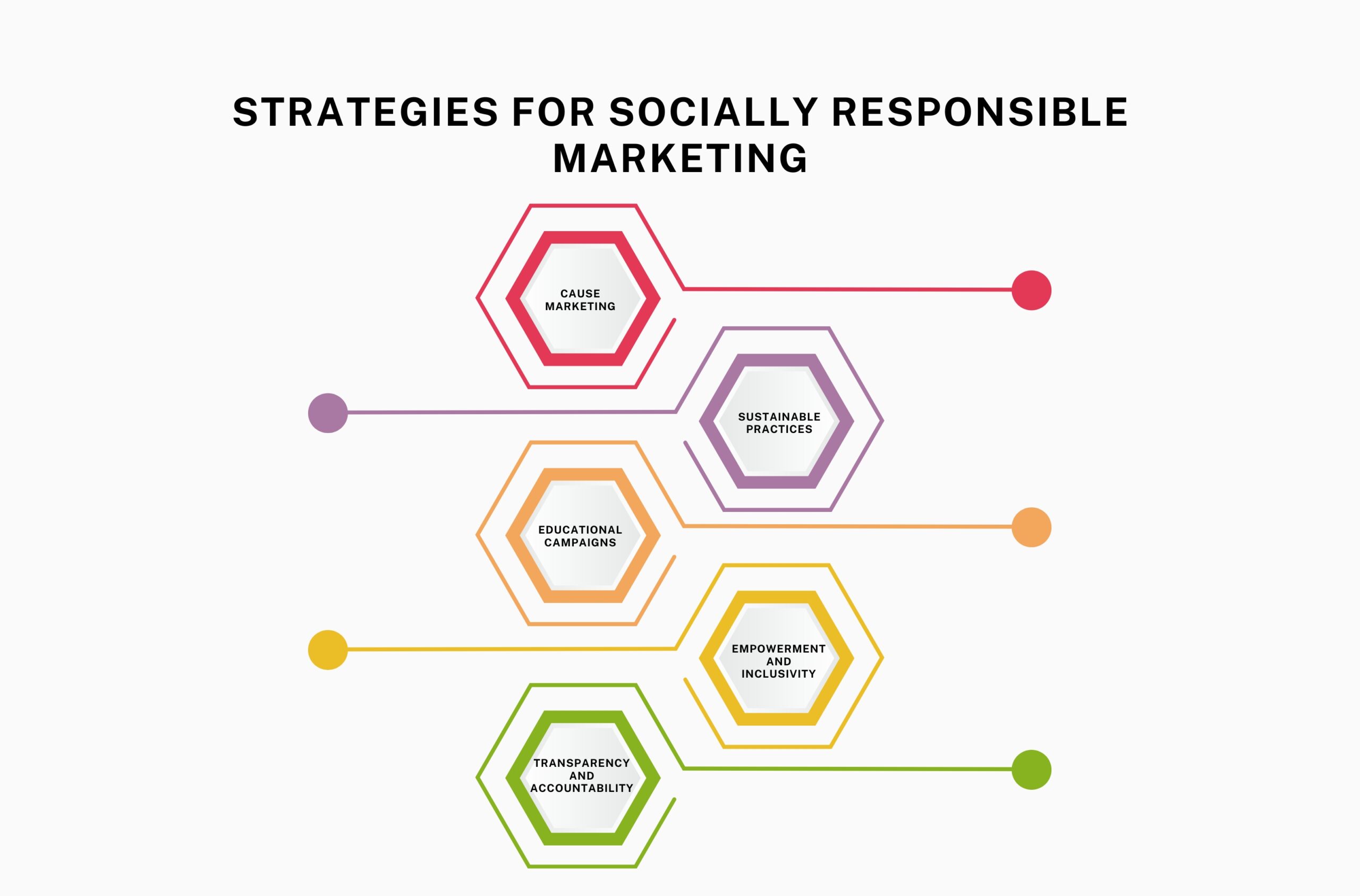
    1. Cause Marketing

    Cause marketing involves partnering with charitable organizations or social causes to create campaigns that benefit both the cause and the brand. This approach not only raises awareness for the cause but also positions the brand as one that cares about making a difference.

    For example, TOMS Shoes pioneered the “One for One” campaign, promising to donate a pair of shoes to a child in need for every pair purchased. This initiative demonstrated their commitment to social responsibility and resonated with consumers who wanted their purchases to have a positive impact.


    2. Sustainable Practices

    Embracing sustainable practices in manufacturing and sourcing material not only reduces a brand’s environmental footprint but also appeals to environmentally conscious consumers. Brands that prioritize sustainability can highlight their efforts in marketing campaigns, showcasing their commitment to the planet.


    3. Transparency and Accountability

    Openly sharing information about business practices, supply chains, and labor conditions demonstrates transparency and a commitment to ethical operations. Brands that are accountable for their actions, both positive and negative, build credibility with consumers who value honesty.


    4. Empowerment and Inclusivity

    Marketing campaigns that celebrate diversity, inclusivity, and empowerment resonate with a wide range of consumers. Brands that actively work to dismantle stereotypes and create platforms for marginalized voices can foster positive social change through their marketing efforts.


    5. Educational Campaigns

    Educational campaigns aim to raise awareness about social issues and encourage positive behavior changes. Brands can leverage their marketing reach to educate the public and encourage actions that contribute to a better society.


    Benefits of Social Responsibility in Marketing


    Social responsibility in marketing


    Embracing social responsibility in marketing offers numerous benefits for both brands and society as a whole:

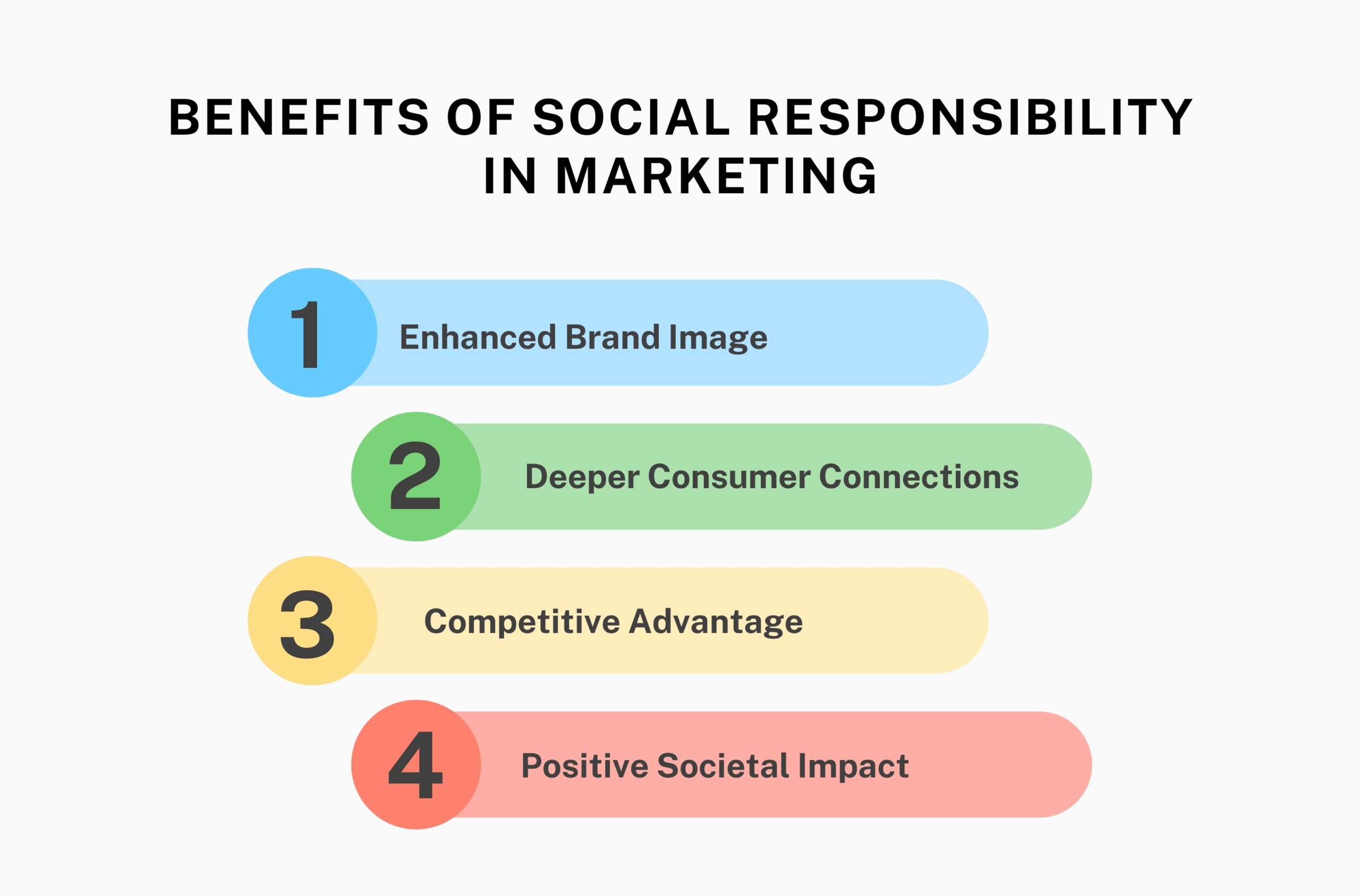
    1. Enhanced Brand Image: Brands that actively contribute to societal well-being are viewed more favorably by consumers, leading to increased brand loyalty and positive associations.
    1. Competitive Advantage: Ethical practices and a commitment to social responsibility can set brands apart in competitive markets.
    1. Increased Consumer Engagement: Meaningful campaigns that resonate with consumers’ values lead to higher engagement and participation.
    1. Long-Term Sustainability: Brands that prioritize social responsibility are more likely to build a sustainable and enduring business model.
    1. Positive Impact: Most importantly, socially responsible marketing allows brands to play an active role in addressing societal challenges and making the world a better place.


    Challenges and Considerations


    While the benefits are significant, socially responsible marketing is not without its challenges. Brands must carefully navigate potential pitfalls, such as accusations of “greenwashing” (making false or exaggerated claims about sustainability efforts) and the risk of appearing opportunistic. Authenticity and a genuine commitment to change are essential to overcoming these challenges.


    Conclusion


    As consumers continue to demand more from the brands they support, the importance of social responsibility in marketing cannot be overstated. Brands that recognize their role in shaping society and take meaningful steps to contribute positively are likely to thrive in the long run. 

    By adopting strategies like cause marketing, embracing sustainability, fostering inclusivity, and promoting transparency, brands can create a positive impact that resonates far beyond their products and services. In a world where consumer choices can drive social change, socially responsible marketing isn’t just an option – it’s a powerful tool for creating a better future.


    Frequently Asked Questions (FAQs)


    1. What is Social Responsibility in marketing?

    Social responsibility in marketing refers to a company’s commitment to conducting its marketing activities in an ethical and socially conscious manner, taking into account the impact on society and the environment.


    1. Why is social responsibility important in marketing?

    Social responsibility is important in marketing because it helps build trust with consumers, attracts ethically conscious customers, provides a competitive advantage, and enhances a company’s reputation.


    1. What are some examples of sustainable marketing practices?

    Sustainable marketing practices include using eco-friendly materials, reducing waste in packaging, and promoting energy-efficient production processes. Companies can also highlight their sustainability efforts in marketing campaigns.


    1. What does social responsibility benefit a company’s brand image?

    Social responsibility can enhance a company’s brand image by showing that it cares about more than just profits. It can lead to increased consumer trust, positive public relations, and differentiation in the market.


    1. Can Social responsibility in marketing help attract investors?

    Yes, investors are increasingly interested in companies with strong social responsibility practices. Demonstrating a commitment to ethical and sustainable business can attract socially responsible investors and positively impact a company’s stock performance.

  • What are Ethical Issues in Digital Marketing: Addressing Privacy, Consent, and Online Behavior

    Digital marketing has become an integral part of the modern business. It allows companies to reach their target audience. It allows companies to reach their target audience more effectively and efficiently than ever before. However, the rapid evolution of ethical issues in digital marketing has brought with it a host of ethical concerns related to privacy, consent, and online behavior.

    In this blog, we will discuss the ethical implications of digital marketing practices and discuss how brands can address these concerns while maintaining their online presence and engagement.


    The Landscape of Ethical Issues in Digital Marketing

    Digital marketing encompasses a broad range of strategies, including social media marketing, email campaigns, search engine optimization (SEO), content marketing, and more. These strategies leverage digital platforms to reach and engage audiences on a global scale. However, the digital landscape also raises complex ethical dilemmas that demand thoughtful consideration.


    Ethical Issues in Digital Marketing


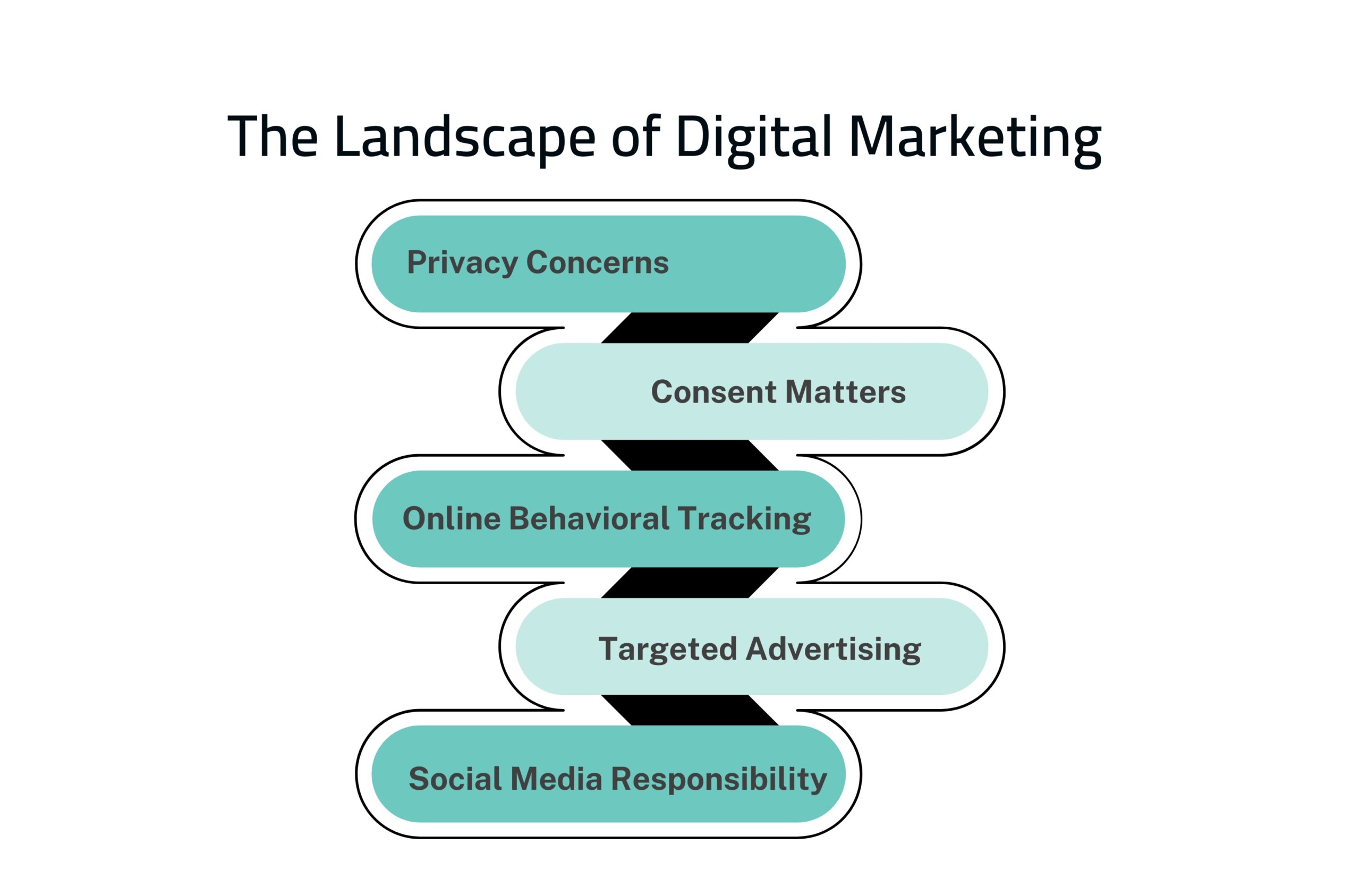
    Privacy Concerns

    Issue: One of the foremost ethical concerns in digital marketing is the handling of user data and personal information. The massive amounts of data collected online can potentially be misused or exploited, leading to privacy breaches and unauthorized access to personal details.

    Solution: Brands must prioritize data security and respect user privacy. Implementing robust security measures, obtaining explicit consent before collecting data, and transparently communicating how the data will be used can help build trust with consumers.


    Consent Matters for Ethical Issues in Digital Marketing

    Issue: Obtaining informed consent from users before collecting their data is a fundamental ethical principle. However, the complex language often used in privacy policies and terms of service agreements can make it difficult for users to fully understand what they’re agreeing to 

    Solution: Brands should present information in clear and concise language that users can easily understand. Consent should be given voluntarily and without coercion. Implementing “opt-in” mechanisms instead of “opt-out” options empowers users to make conscious choices about their data.


    Online Behavioral Tracking

    Issue: Tracking user behavior online allows brands to tailor their marketing efforts, but it also raises concerns about invasions of privacy and the potential for creating filter bubbles that limit exposure to diverse perspectives.

    Solution: Brands should be transparent about the tracking practices they employ. Providing users with options to control tracking settings and offering an explanation of how tracked data is used can help mitigate concerns.


    Targeted Advertising

    Issue: While targeted advertising can be effective, there’s a fine line personalization and manipulation. Overstepping this line can result in brands exploiting user vulnerabilities or using personal information for discriminatory purposes.

    Solution: Brands should exercise caution when using personal data for advertising. Ensuring that targeting is based on user preferences rather than sensitive personal attributes and providing an option to opt out of targeted advertising can uphold ethical standards.


    Social Media Responsibility

    Issue: Social media platforms are powerful tools for communication, but they also have the potential to spread misinformation, amplify hate speech, and foster online harassment.

    Solution: Brands must use their social media presence responsibly. Taking a stance against hate speech, monitoring comments, and fostering a positive online environment can contribute to a more ethical digital space.


    Balancing Profits and Ethics

    Issue: The pressure to drive profits can sometimes lead to unethical practices, such as clickbait headlines, misleading advertisements, or the exploitation of user data.

    Solution: Brands should adopt a long-term perspective that recognizes the importance of building trust and maintaining a positive brand image. Prioritizing ethical considerations can lead to sustainable success and a loyal customer base.


    The Role of Regulation

    Issue: As the digital landscape evolves, regulations and laws surrounding digital marketing ethics are also changing. Brands must keep up with these changes to ensure compliance.

    Solution: Brands should stay informed about relevant laws and regulations in their jurisdictions. Taking a proactive approach to compliance demonstrates a commitment to ethical behavior.


    Ethical Consumers

    Issue: Users often lack a comprehensive understanding of how their data is collected, shared, and used in digital marketing efforts.

    Solution: Brands can play a role in educating consumers about digital marketing practices, data collection, and privacy concerns. Providing clear explanations and resources can empower users to make informed decisions.


    Conclusion

    In digital marketing, ethical considerations must remain at the forefront of decision-making. Addressing privacy concerns, obtaining informed consent, promoting responsible online behavior, and navigating the fine line between personalization and manipulation are critical steps for brands seeking to build trust and maintain a positive online presence.

    By placing ethics at the core of their digital marketing strategies, brands can contribute to a more transparent, respectful, ensuring the long-term success of both their marketing efforts and their reputation.


    Frequently Asked Questions (FAQs)


    1. What are the main privacy concerns in digital marketing?

    Privacy concerns in digital marketing revolve around the collection and use of user data without clear consent, data breaches, and the creation of detailed user profiles for targeted advertising.


    1. How can digital marketers address privacy concerns?

    Marketers can address privacy concerns by being transparent about data collection, providing clear privacy policies, allowing users to opt out of data tracking, and complying with data protection laws like GDPR and CCPS.


    1. What is misleading content in digital marketing?

    Misleading content includes false advertising, fake reviews, and exaggerated claims that can deceive consumers and damage trust in digital marketing.


    1. How do consumers protect their privacy in digital marketing?

    Consumers can protect their privacy by being cautious about sharing personal information, using privacy settings, and supporting organizations that advocate for digital privacy rights.


    1. How can misleading content be combated in digital marketing?

    Marketers should ensure the accuracy and truthfulness of their content. User-generated content and reviews should be monitored for authenticity, and regulatory bodies should enforce penalties for deceptive advertising.


    1. How can digital marketers obtain ethical consent from users?

    Marketers can obtain ethical consent by using clear and concise language, offering granular opt-in choices, and implementing double opt-in processes to enhance user trust.

  • What Role Does User Experience Play in E-Commerce Success?

    In the world of e-commerce, where countless options compete for consumer’s attention, the significance of user experience in E-commerce (UX) cannot be overstated. A seamless and enjoyable online shopping journey can make all the difference between a one-time visitor and a loyal customer. This article delves into the pivotal role that user experience plays in e-commerce success, exploring its impact on customer satisfaction, conversion rates, and brand loyalty.


    Defining User Experience in E-commerce

    User experience refers to the overall satisfaction and impression a user gains while interacting with a website or digital platform. In the context of e-commerce, UX encompasses every aspect of the online shopping process, from the initial website visit to the final purchase. It encompasses design, navigation, speed, responsiveness, product information, checkout process, and post-purchase support.


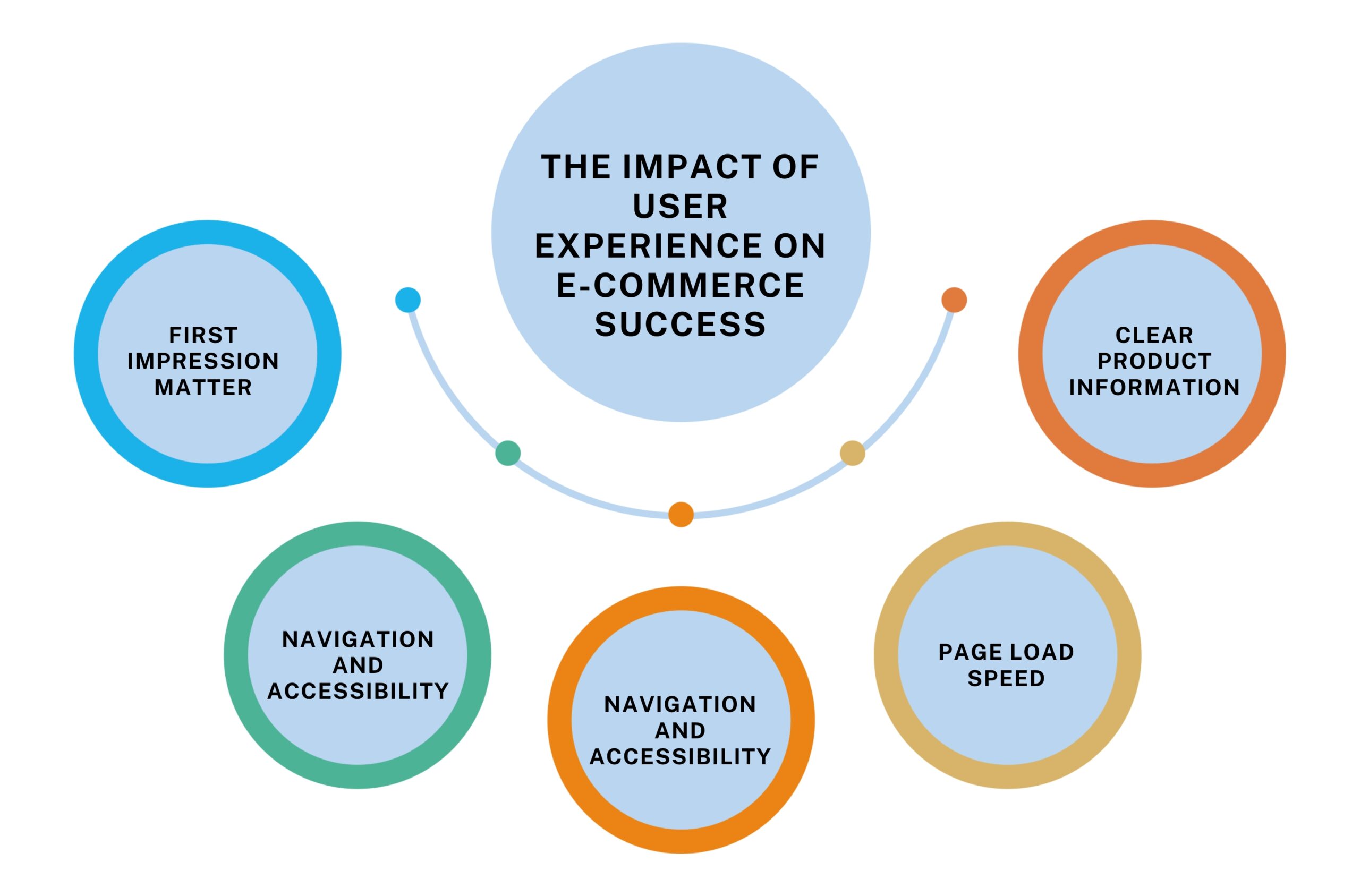
    The Impact of User Experience in E-commerce Success


    User Experience in E-Commerce.


    1. First Impression Matter: User Experience in E-commerce Success

    First impressions are often formed within seconds. A visually appealing and well-organized website immediately captures visitors’ attention and encourages them to explore further. A cluttered or confusing interface, on the other hand, can lead to high bounce rates and lost opportunities.


    2. Navigation and Accessibility: 

    Smooth navigation is crucial for guiding users through the site effortlessly. Intuitive menus, clear categorization, and effective search functionalities ensure that customers can find what they’re looking for quickly. A frustrating navigation experience can frustrate visitors, causing them to abandon the site in favor of competitors.


    3. Mobile Responsiveness:

    With mobile devices accounting for a significant portion of online traffic, mobile responsiveness is non-negotiable. Websites that are not optimized for mobile devices can lead to frustration and a subpar shopping experience, ultimately impacting conversion rates.


    4. Page Load Speed for User Experience in E-commerce

    Slow-loading pages are a major turn-off for online shoppers. In an era of instant gratification, delays in page loading can result in abandoned carts and missed sales opportunities. Optimizing page load speed enhances both user satisfaction and search engine rankings.


    5. Clear Product Information: 

    Detailed and accurate product information is essential for informed purchasing decisions. High-quality images, comprehensive descriptions, pricing details, and availability status provide users with the confidence to make a purchase.


    6. Seamless Checkout Process for User Experience in E-commerce

    The checkout process should be streamlined and frictionless. Lengthy forms, mandatory account creation, and unexpected fees can lead to cart abandonment. Offering guest checkout options, multiple payment methods, and clear shipping details contribute to a positive checkout experience.


    7. Personalization and Recommendations:

    User experience is enhanced when customers feel that a website understands their preferences. Personalized product recommendations based on browsing history and previous purchases can lead to increased cross-selling and upselling opportunities.


    8. Trust and Security: 

    Earning customer trust is paramount in e-commerce. Displaying security badges, using secure payment gateways, and offering transparent privacy policies reassure users that their personal and financial information is safe.


    9. Post-Purchase Support: 

    User experience doesn’t end with the purchase. Efficient order tracking, timely delivery, and responsive customer support contribute to a positive overall experience. Addressing post-purchase concerns promptly can turn customers into brand advocates.


    The Link between User Experience and Conversion Rates


    A seamless user experience directly influences conversion rates, which is the percentage of website visitors who complete a desired action, such as making a purchase. An enhanced UX increases the likelihood of visitors becoming paying customers. Intuitive navigation, clear calls to action, and a user-friendly checkout process all contribute to a smoother conversion journey.

    Furthermore, a positive user experience can decrease the rate of experience can decrease the rate of cart abandonment. Shopping cart abandonment occurs when users add items to their cart but do not complete the purchase. Factors such as unexpected fees, complex checkout procedures, and security concerns can lead to cart abandonment. By addressing these issues and ensuring a frictionless checkout experience, e-commerce businesses can recover potentially lost sales.


    Building Brand Loyalty through Exceptional User Experience


    User experience has a profound impact on brand loyalty. Customers who have a positive experience are more likely to return for future purchases and recommend the brand to others. Word-of-mouth referrals, positive online reviews, and social media mentions can all be attributed to a satisfying user experience. In contrast, negative reviews, damage a brand’s reputation and deter potential customers.

    Repeat customers are valuable assets for e-commerce business. Not only do they contribute to recurring revenues, but they also have a higher average order value and are more likely to explore other products offered by the brand. By consistently delivering exceptional user experiences, businesses can foster lasting relationships with customers and build a loyal customer base.


    Continuous Improvement and Adaptation


    User experience is not a static concept. It requires continuous monitoring, analysis, and adaptation to changing consumer behaviors and preferences. E-commerce businesses should gather user feedback, track metrics such as bounce rates and conversion rates, and implement changes based on insights gained. Regular updates to the website’s design, functionality, and features ensure that the user experience remains aligned with evolving expectations.


    Conclusion:User Experience in E-commerce

    User experience stands as a cornerstone of e-commerce success. From the initial website visit to the final checkout, every interaction shapes a customer’s perception of a brand. By prioritizing elements such as responsive design, intuitive navigation, informative product details, and seamless checkout processes, e-commerce businesses can create a positive, memorable, and trust-building experience. 

    This, in turn, leads to improved conversion rates, higher customer satisfaction, enhanced brand loyalty, and sustained business growth in the competitive world of online retail. 


    Frequently Asked Questions (FAQs)


    1. What is user experience (UX) in e-commerce?

    User experience in e-commerce refers to the overall quality of a customer’s interactions with an online store. It encompasses website design, navigation, ease of use, and how customers feel while browsing and making purchases.


    1. How does user experience impact e-commerce success?

    A positive user experience is critical for e-commerce success because it directly influences customer satisfaction, conversion rates, and brand loyalty. An excellent UX can lead to higher sales and repeat.


    1. How can I improve the user experience on my e-commerce website?

    To enhance UX, focus on mobile optimization, provide detailed product information, streamline the checkout process, offer multiple payment options, and ensure your website is easy to navigate. Regularly seek feedback from customers for continuous improvement.


    1. How can customer reviews and ratings influence e-commerce user experience?

    Customer reviews and ratings provide social proof and help shoppers make informed decisions. Positive reviews build trust, while negative reviews can provide insights for improvement. Encourage customers to leave honest feedback.