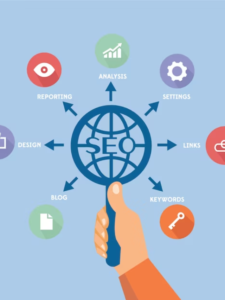
What is SEO?
SEO stands for Search Engine Optimization. It refers to the practice of optimizing a website and its contents to improve its visibility and rankings in search engine results pages (SERPs). The primary objective of SEO is to drive organic or unpaid traffic to a website by making it more accessible to search engines and appealing to users. It is one of the key components of successful online strategies.
Search engines like Google, Bing, and Yahoo use complex algorithms to determine the relevance and quality of websites when users enter search queries. SEO techniques help websites align with these algorithms and increase their chances of appearing prominently in search results for relevant keywords.
The goal of SEO is to make a website more visible to its target audience by improving its search engine rankings. When a website ranks higher in search results, it tends to receive more clicks and organic traffic, which can lead to increased brand exposure, higher conversion rates, and business growth.
It’s important to note that SEO is an ongoing procedure, as search engine algorithms are constantly evolving. Staying updated with the latest SEO best practices and adapting strategies accordingly is crucial for long-term success in improving website rankings and driving organic traffic.
Strategies to enhance your online visibility:
1. Keyword Research and Optimization:
Keywords are the foundation of SEO. Conduct thorough keyword research to identify the terms and phrases your target audience is using to search for products or services related to your business. Utilize keyword research tools like Google Keyword Planner, SEMrush, or Moz to find relevant and high-volume keywords.
Once you have identified your target keywords, optimize your website’s content accordingly. Incorporate keywords naturally into your page titles, meta descriptions, headings, and body content. However, avoid keyword stuffing, as it could damage your rankings. Focus on providing valuable and engaging content that caters to both search engines and users.
2. High-Quality Content Creation:
Creating high-quality, informative, and engaging content is crucial for SEO success. Search engines prioritize websites that offer valuable information to users. Develop a content strategy that aligns with your target audience’s needs and interests.
Produce well-researched articles, blog posts, videos, and infographics that answer users’ questions and provide valuable insights. Use relevant keywords within your content, but ensure they flow naturally. Long-form content tends to perform well in search engine rankings, so aim for comprehensive and in-depth articles when possible.
3. On-Page Optimization:
Optimizing on-page elements is essential to improve your website’s visibility. Start by optimizing your website’s URL structure. Use descriptive and keyword-rich URLs that are easy for both search engines and users to understand.
Next, optimize your page titles and meta descriptions. These elements should accurately represent the content of your pages and incorporate relevant keywords. Including compelling meta descriptions can also increase click-through rates.
Pay attention to your website’s internal linking structure. Link relevant pages together using anchor text that includes keywords. Internal linking helps search engines understand the structures of your website and improves user navigation.
4. Mobile-Friendly Optimization:
With the increasing user of mobile devices, optimizing your website for mobile is no longer optional. Mobile-friendliness is now a ranking factor in search engine algorithms. Make sure that your website is responsive and adapts to different screen sizes.
Optimize page load speed, as slow-loading websites can negatively impact user experience and rankings. Test your website’s mobile-friendliness using tools like Google’s Mobile-Friendly Test and make necessary improvements.
5. Backlink Building:
Building high-quality backlinks is an essential SEO technique. Backlinks are links from other websites to your own, indicating that your content is valuable and trustworthy. Earn backlinks from authoritative and relevant websites through various strategies, such as guest blogging, creating compelling content, and reaching out to industry influencers.
White Hat SEO vs. Black Hat SEO:
White Hat SEO refers to ethical and legitimate techniques that align with search engine guidelines. It focuses on providing value to users and improving website visibility through organic means.
Conversely, Black Hat SEO employs unethical tactics that try to manipulate search engine algorithms for quick gains. Black Hat techniques can lead to penalties, loss of rankings, and even website bans. It’s crucial to adhere to White Hat SEO practices for sustainable and long-term success.
Conclusion:
Implementing effective SEO techniques is vital for achieving higher rankings in search engine results. By conducting thorough keyword research, creating high-quality content, optimizing on-page elements, ensuring mobile-friendliness, and building authoritative backlinks, you can enhance your website’s visibility and attract organic traffic. With dedication and consistency, you can achieve higher rankings and propel your online success.
Frequently Asked Questions (FAQs)
- What is the role of content in SEO?
Content is a crucial component of SEO. High-quality, relevant, and valuable content helps attract and engage users. It also provides opportunities to incorporate keywords and earn backlinks, both of which positively impact SEO.
- What are backlinks, and why are they important for SEO?
Backlinks are links from other websites to yours. They are important for SEO because search engines consider them as votes of confidence in your content. High-quality backlinks from reputable websites can improve your website’s authority and search rankings.
- How long does it take to see results from SEO efforts?
The timeline for seeing SEO results can vary widely. It depends on factors like the competiveness of your industry, the quality of your SEO efforts, and the authority of your website. Generally, it may take several months to see significant improvements.
- What are keywords, and how do I choose them for SEO?
Keywords are words or phrases that users type into search engines to find information. To choose keywords for SEO, research relevant terms related to your content or industry, consider search volume and competition, and select keywords that match user intent.
- How do search engines like Google determine website rankings?
Search engines use complex algorithms to determine website rankings. These algorithms take into account various factors, including the relevance and quality of content, website structure, backlinks, user experience, and more.