Tag: influencer marketing

  • Influencer Marketing and Its Impact on Content Strategy

    Introduction:

    Today, influencer marketing has emerged as a powerful strategy for brands to reach and engage with their target audience. With the rise of social media platforms, individuals with substantial online followings, known as influencers, have become key players in shaping consumer behavior and influencing purchasing decisions. 

    As a result, influencer marketing has a significant impact on content strategy, transforming the way brands create and distribute their content. In this blog, we will explore the world of influencer marketing and delve into its profound influence on content strategy.

    What is Influencer Marketing?

    To understand the impact of influencer marketing on content strategy, it is crucial to first grasp the concept of influencer marketing itself. Influencer marketing involves collaborating with influential individuals who have a dedicated and enhanced online following. These influencers possess the ability to sway their followers’ opinions, preferences, and purchasing decisions. By partnering with influencers, brands can leverage their credibility, authenticity, and reach to promote their products or services.

    How Influencer Marketing Affects Content Strategy?

    One of the primary ways influencer marketing affects content strategy is through the creation of user-generated content. User-generated content refers to any content created by consumers or fans of a brand, often shared on social media platforms. When brands collaborate with influencers, they tap into the power of user-generated content as influencers act as brand advocates and create content that resonates with their audience.

    This content can range from product reviews, tutorials, unboxing videos, or lifestyle shots featuring the brand’s offerings. By incorporating user-generated content into their content strategy, brands can build trust, authenticity, and social proof, which are crucial elements in capturing the attention of today’s consumers.

    Influencer marketing also influences content strategy by providing brands with access to niche markets and target audiences. Influencers often specialize in specific niches or industries and have cultivated a loyal following within those communities. This allows brands to connect with their desired audience on a more personal level and tailor their content accordingly. 

    By collaborating with influencers who have a deep understanding of their target market, brands can develop content that is relevant, relatable, and resonates with their audience’s preferences and interests. This targeted approach helps brands cut through the noise and deliver their message to the right people, increasing the effectiveness of their content marketing efforts.

    What are the roles of Influencer Marketing?

    Moreover, influencer marketing contributes to content strategy by enhancing brand storytelling. In today’s cluttered digital landscape, consumers are seeking authentic and meaningful connections with brands.

    Influencers play a vital role in humanizing a brand and bringing its story to life. By partnering with influencers who align with their brand values and vision, companies can leverage their storytelling skills to create compelling narratives. Influencers can share their personal experiences with a brand, showcase how a product fits into their lifestyle, or even participate in brand campaigns that reflect their values. 

    This collaborative storytelling approach resonates with consumers, as they perceive it as more genuine and trustworthy than traditional advertising. Consequently, incorporating influencer-generated stories into content strategy allows brands to engage with their audience on a deeper emotional level, fostering brand loyalty and advocacy.

    In addition to user-generated content, targeted audience reach, and brand storytelling, influencer marketing impacts content strategy through amplification and distribution. Influencers possess a vast network of followers who trust their opinions and recommendations. When influencers share branded content, it can quickly gain traction and reach a wide audience, increasing brand visibility and awareness. 

    This amplification effect is especially beneficial for brands looking to expand their reach beyond their existing customer base. By collaborating with influencers, brands can tap into their follower base and leverage their platforms to extend the reach of their content. This broader distribution not only helps in acquiring new customers but also generates valuable user-generated content, as followers may share, engage with, or create content inspired by the influencer’s endorsement.

    However, it is essential to note that influencer marketing’s impact on content strategy is not without its challenges. As the popularity of influencer marketing grows, so does the need for authenticity and transparency. Consumers are becoming increasingly discerning and can quickly identify inauthentic or forced brand partnerships. To maintain credibility, brands must choose influencers whose values align with their own and create genuine collaborations. Brands should also provide influencers with content that remains authentic and resonates with their audience.

    Conclusion:

    Influencer marketing has revolutionized content strategy by introducing user-generated content, providing access to niche audiences, enhancing brand storytelling, and amplifying content reach. Brands can leverage influencer partnerships to create content that is authentic, relatable, and targeted, thus maximizing their impact on consumers.

    However, it is crucial for brands to approach influencer marketing strategically and prioritize authenticity to maintain trust and credibility. By embracing influencer marketing and integrating it into their content strategy, brands can effectively connect with their target audience, foster brand loyalty, and achieve their marketing objectives in the digital age. 

    Frequently Asked Questions (FAQs)

    1. What types of content are commonly created in influencer marketing campaigns?

    Influencers create various content types, including sponsored posts, reviews, unboxing videos, tutorials, and user-generated content that align with a brand’s goals.

    2. What are some common challenges in influencer marketing’s impact on content strategy?

    Challenges can include finding the right influencers, ensuring content authenticity, maintaining brand consistency, and measuring the ROI effectively.

    3. How can I measure the impact of influencer marketing on my content strategy?

    You can measure influencer marketing impact through metrics like engagement rates, reach, conversion rates, and brand sentiment analysis in collaboration with influencers.

    4. What benefits does influencer marketing offer for content strategy?

    Influencer marketing can provide fresh content ideas, increase brand visibility, and help in reaching a more targeted audience effectively.

    5. How can I integrate influencer generated content into my overall content strategy?

    Integrating influencer content involves aligning their content with your brand’s messaging, repurposing it for different channels, and using it to enhance your existing content plan.

  • How Influencer Marketing is the #1 trend on Social Media

    In recent years, influencer marketing has emerged as a popular and effective strategy for brands to connect with their target audience and promote their products or services. In this blog, we will explore the benefits of influencer marketing, how to find the right influencers, how to measure the success of influencer marketing, and tips for getting started with influencer marketing. 

    What is Influencer Marketing?

    Influencer marketing is a type of marketing that involves partnering with individuals who have a large social media following and are considered to be experts in their respective niches or industries, in order to promote a brand, product, or service.

    These individuals often referred to as “influencers“, have a significant impact on the purchasing decisions of their followers and can help increase a brand’s visibility, reach, and engagement through their posts, videos, stories, or other forms of content.

    Influencer marketing campaigns can take many forms, such as sponsored posts, product reviews, brand ambassadorship, social media takeovers, and more. The effectiveness of influencer marketing depends on the fit between the influencer, the brand, and the target audience, as well as the authenticity and transparency of the partnership.

    Benefits of Influencer Marketing

    There are several benefits of influencer marketing, including:

    1- Increased brand awareness: Working with influencers can help expand your brand’s reach and exposure to their large and engaged social media following.

    2- Improved trust and credibility: Influencers are often seen as trusted experts in their niches, and partnering with them can enhance your brand’s credibility and reputation.

    3- Higher engagement rates: Influencer marketing can result in higher engagement rates, as followers are more likely to engage with content from influencers they trust and follow closely.

    4- More targeted advertising: Influencers often have a specific niche or demographic they cater to, which can help you reach a more targeted audience with your advertising.

    5- Better return on investment: Influencer marketing can be more cost-effective than traditional advertising methods, as it often requires less investment and can lead to more impactful results.

    6- Increased conversions: Influencer marketing can lead to higher conversion rates, as followers of influencers may be more likely to make a purchase if the influencer recommends a product or service.

    How to Find the Right Influencers

    Finding the right influencers for your brand can be a critical step in running a successful influencer marketing campaign. Here are some steps to help you find the right influencers:

    1- Define your target audience: Before you start looking for influencers, make sure you have a clear understanding of your target audience. This will help you find influencers who can connect with your audience and promote your brand effectively.

    2- Use social media tools: There are several social media tools that can help you find influencers in your niche. These tools can help you search for influencers based on criteria like followers, engagement rate, niche, and location.

    3- Check hashtags: Hashtags related to your industry or product can be a great way to find influencers who are already talking about your niche.

    4- Look for user-generated content: Look for user-generated content that is related to your brand or industry. Often, users who create this type of content can become excellent influencers for your brand.

    5- Check engagement rates: When you find potential influencers, be sure to check their engagement rates to ensure they have an engaged and active following.

    6- Review content quality: Make sure to review the content of potential influencers to ensure their style and quality align with your brand image.

    7- Consider audience demographics: Make sure to check the demographics of an influencer’s audience to ensure that it aligns with your target audience.

    8- Reach out and start a conversation: Once you have identified potential influencers, reach out and start a conversation to gauge their interest in collaborating with your brand.

    How to Measure the Success of Influencer Marketing

    Measuring the success of influencer marketing can be challenging, but there are several key metrics that can help you evaluate the effectiveness of your campaign. Here are some ways to measure the success of your influencer marketing campaign:

    1- Reach and Impressions: One of the most critical metrics for measuring the success of an influencer campaign is reach and impressions. This includes the number of followers an influencer has and the number of people who saw your brand’s content through the influencer’s post.

    2- Engagement: Another important metric is engagement, which refers to the number of likes, comments, shares, and other interactions on a post. This metric can help you determine the level of interest and engagement your brand’s content generated.

    3- Conversions: The ultimate goal of influencer marketing is to increase conversions, whether that’s sales, sign-ups, or other actions. Measuring the number of conversions generated by your influencer campaign can help you determine the ROI of your investment.

    4- Brand awareness: Another key metric for measuring the success of an influencer campaign is brand awareness. You can measure brand awareness by tracking the number of mentions, shares, or hashtags related to your brand.

    5- Influencer impact: It’s important to evaluate the impact of the influencer on your campaign. This includes factors like how many people were driven to your website or social media profiles through the influencer’s posts.

    6- Cost-per-engagement: Calculating the cost-per-engagement of an influencer campaign can help you determine the effectiveness of your investment.

    Overall, measuring the success of influencer marketing requires a combination of quantitative and qualitative metrics. It’s important to establish clear goals for your campaign and use data-driven insights to evaluate its effectiveness.

    Tips for Getting Started with Influencer Marketing

    In recent years, influencer marketing has emerged as a popular and effective strategy for brands to connect with their target audience and promote their products or services. By partnering with social media influencers who have a large and engaged following, brands can leverage their reach and credibility to reach new customers and build brand awareness.

    1- Define your goals: Start by defining your goals for your influencer marketing campaign. Do you want to increase brand awareness, boost sales, or build credibility? Having clear goals will help you determine the best approach to finding and partnering with influencers.

    2- Identify your target audience: Determine who your target audience is, and then research the influencers who cater to that audience. This will help you find influencers who have the right followers and engagement to reach your target audience.

    3- Choose the right influencers: Not all influencers are the same, so take the time to find the right ones for your brand. Consider factors such as the influencer’s audience, engagement rate, content style, and reputation.

    4- Develop a partnership: Once you’ve identified potential influencers, reach out and start a conversation to discuss a potential partnership. Make sure to outline your expectations, such as the type of content you want the influencer to create, and agree on compensation.

    5- Create a content strategy: Develop a content strategy that outlines the type of content you want the influencer to create, as well as the messaging and branding guidelines. Make sure to give the influencer creative freedom while ensuring the content aligns with your brand.

    6- Track and measure results: Track and measure the results of your influencer marketing campaign to evaluate its success. Use tools like Google Analytics and social media analytics to monitor the impact of the campaign on your website traffic, engagement rates, and conversions.

    7- Be transparent: Make sure to be transparent about your partnership with the influencer. Clearly label any sponsored content as such to maintain transparency and build trust with your audience.

    Conclusion

    In conclusion, influencer marketing can be a highly effective strategy for brands to connect with their target audience, increase brand awareness, and drive conversions. By partnering with the right influencers, brands can leverage their audience and credibility to reach new customers and build trust with their existing ones. To succeed in influencer marketing, it’s important to set clear goals, find the right influencers, develop a content strategy, track and measure results, and maintain transparency with your audience. While influencer marketing can be a complex and ever-changing field, by following best practices and staying up-to-date with trends and developments, brands can unlock their potential to achieve their marketing objectives.

    Q- What is influencer marketing?

    Ans- Influencer marketing is a type of marketing that involves partnering with individuals who have a large social media following and are considered to be experts in their respective niches or industries, in order to promote a brand, product, or service.

    Q- What are some benefits of using influencers?

    Ans-  Benefits include higher levels of brand awareness, increased sales, and leads, greater customer engagement and loyalty, and access to multiple networking opportunities, which can open up whole new markets. 

    Q- How can you identify an influencer?

    Ans- They tend to have a good following on social media, their profiles should feature an impressive list of collaborations or endorsements from other brands or individuals, and the influencer’s writing style and messaging need to stand out from the crowd in order for them to have real influence.

    Q- What is the process of collaborating with an influencer?

    Ans- You need to identify which influencers align with your brand, reach out to them by email or private message on social media, and then you’ll have to provide detailed information about your project, including, why you think they’d be a good fit for it, what they’d get in return, metrics they’ll be able to track their success with, etc. 

    Q- How do you measure the success of your influencer marketing initiative?

    Ans- Measuring the success of influencer marketing requires a combination of quantitative and qualitative metrics. It’s important to establish clear goals for your campaign and use data-driven insights to evaluate its effectiveness.

  • Upcoming Projections for Social Media Marketing in 2023

    As we move further into 2023, the world of digital marketing is evolving rapidly, and social media is no exception. With new trends, technologies, and platforms emerging daily, it can be challenging to keep up with the latest developments. In this blog post, we’ll dive into the top predictions for the future of social media marketing and explore how businesses can stay ahead of the curve. Get ready to discover the future of social media marketing and revolutionize your digital strategy!

    What Exactly is Social Media Marketing?

    Social media marketing refers to the use of social media platforms for product or service promotion. It involves creating and sharing content that attracts and engages an audience to build brand awareness, increase website traffic, and drive sales. Social media marketing can take many forms, including posting photos and videos on Instagram, tweeting on Twitter, creating blog posts on LinkedIn or Facebook, and even partnering with influencers.

    An effective social media marketing strategy requires a deep understanding of the target audience, knowledge of platform algorithms, creativity, and consistent effort.

    The Rise of Video Content

    The rise of video content has already transformed the marketing industry, and it is emerging as the future of social media marketing. The effectiveness of videos in grabbing the audience’s attention and retaining their interest is undeniable. Videos are also ideal for telling stories and creating emotional connections with potential consumers, which are essential for building brand loyalty. Moreover, the popularity of social media platforms like Youtube and TikTok, which are based solely on video content, highlights the importance of video marketing in today’s world.

    Social media platforms like Facebook, Twitter, Instagram, and LinkedIn have also recognized the importance of video marketing and have adopted their algorithms to prioritize video content. Furthermore, this has resulted in more reach and engagement for businesses that use video marketing than those that stick to traditional advertising methods.  

    The Emergence of Augmented Reality

    The emergence of augmented reality (AR) has opened up a whole new world of opportunities for social media marketing as well as for overall digital marketing. AR allows for a more immersive and interactive experience, which can help brands engage with their target audience in a deeper and more meaningful way. Through AR, social media users can explore products and services in real time, view them from different angles, and even try them out virtually.

    AR has also enabled brands to create personalized experiences for their customers. For example, makeup brands can use AR to allow users to see how a particular shade of lipstick would look on their faces, or furniture brands can use AR to enable customers to see how a piece of furniture might appear in their space before purchasing. The possibilities are endless and as technology continues to advance, the opportunities for AR in social media marketing will only continue to grow.  

    The Importance of Personalization

    The importance of personalization in the future of the social media market cannot be overemphasized. In recent years, social media has grown to become an integral part of our daily lives, with billions of people using it regularly. Personalization is a key element of social media that makes it unique and appealing to users. It involves customizing content, recommendations, and preferences for individual users, based on their interests, behavior, and browsing patterns. With personalized social media experiences, users can engage more deeply with content,  connect better with like-minded people, and ultimately derive more value from the platform.

    As we move into the future, the social media market is expected to become more competitive, with new players entering and existing ones expanding their offerings. Personalization will become a key differentiator that will determine the success of social media companies. Those that can deliver customized experiences that meet the unique needs and preferences of their users will be the ones that thrive. The personalized social media experience will not only benefit users but moreover, it also brands and advertisers, who will be able to target their marketing efforts more effectively based on user’s preferences and behaviors.    

    The Growing Significance of Influencer Marketing

    Influencer marketing has become an increasingly popular form of advertising over the past few years, and it is growing at an unprecedented rate too. This marketing strategy has been widely adopted by businesses of all sizes and industries to reach a wider audience and increase their brand awareness. This is because influencer marketing capitalizes on the trust and loyalty that influencers have built up with their followers, allowing businesses to leverage that trust to increase their credibility and visibility. 

    As social media continues to dominate the digital landscape, influencer marketing is expected to become even more important and trending in the coming years. This is because social media platforms like Instagram and TikTok are ideal for influencer marketing due to their highly visual and shareable nature. Additionally, younger generations are increasingly turning to social media for their news and entertainment, making influencer marketing an effective way to reach this demographic. With the continued growth of social media, there is no doubt that influencer marketing will play an even bigger or equally important role in shaping the future of the social media market.

    How Businesses Can Stay Ahead of the Curve?

    Social Media Marketing

    Moreover, staying ahead of the curve in social media marketing requires continuous learning, experimentation, and adaptation. 

    Here are some pointers to keep you one step ahead of the competition and win the strategy game:

    1- Stay up-to-date with industry trends: Follow reputable sources, attend industry events, and keep an eye on emerging technologies to stay on top of the latest trends in social media marketing.

    2- Experiment with new platforms and features: Don’t be afraid to try new social media platforms or features as they emerge. Experimentation is key to staying ahead of the curve and finding what works for your business.

    3- Personalize your approach: Consumers are looking for personalized experiences, so it’s equally important to tailor your social media marketing strategy to your target audience. Use data analytics to understand your audience better and create personalized content that resonates with them.

    4- Be agile and adaptable: Social media is constantly evolving, and so should your marketing strategy. Be prepared to pivot quickly and adapt to new trends, algorithms, and platforms as they arise.

    5- Collaborate and network: Networking with other professionals in the industry can help you stay on top of the latest trends and gain valuable insights into what’s working for others. Finally, consider collaborating with other brands or influencers to expand your reach and build your brand.

    If you are looking for the Best Social media Marketing Agency for your Business please contact Bliss Marcom.
    Office Address in Noida.

  • What is Influencer Marketing? Best Influencers in India 2021

    Influencer Marketing is a hybrid of new and old marketing tools. It takes the concept of celebrity endorsement and places it into a modern-day content-driven advertising and marketing effort.  

    But influencer marketing doesn’t just involve celebrities. On the contrary, it revolves around influencers, many of whom would not consider themselves famous in an offline setting.


    One of the biggest mistakes that traditional media makes is finding the difference between actors and internet influencers. 


    It is also essential to realize it is the influencers who’ve assembled a keen and enthusiastic audience. It is not accidental that these people follow influencers, not the newest. 


    The audience doesn’t care less about your brand. They only care about the remarks of the influencers. Don’t try and impose principles and business practices onto an influencer. 


    The audience is there, and they’re able to walk away, taking their followers together.


    WHAT IS INFLUENCER MARKETING ?

    Influencer Marketing is part of social media marketing. In Influencer Marketing, brands endorse influencers to promote their products and services on social media platforms.


    These Influencers have a huge following and expertise in their particular niches. It is the most popular method of promoting products and services in the current time.


    Influencers have a loyal audience that listens to them, so it is easy to promote or market any social media product. And it also increases the chances of generating leads.


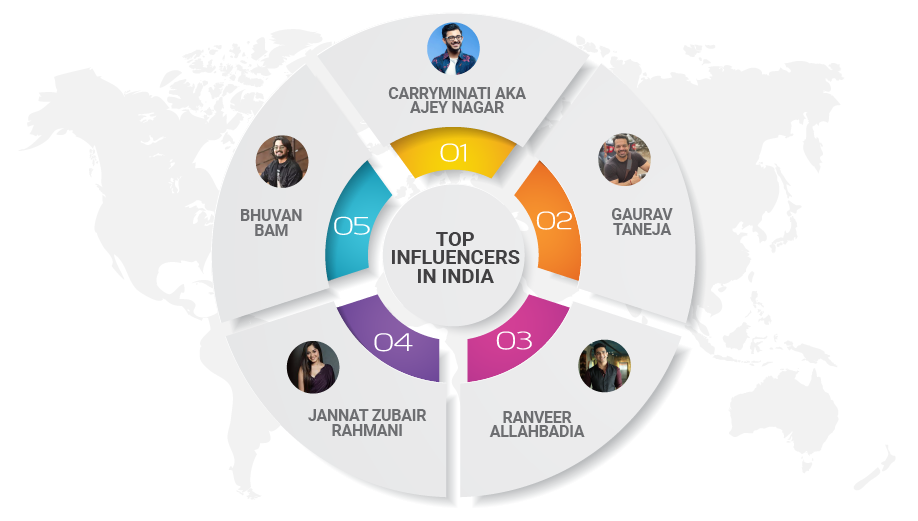
    TOP INFLUENCERS IN INDIA

    After the JIO resolution, India is one of the most active countries on the internet. Currently, India has almost 761 Million substantial Internet users.


    So there are so many opportunities for marketers to promote their products and services. Influencer Marketing is the trending marketing method, So here are some of the best Indian influencers.

    TOP INFLUENCERS IN INDIA-01

    RANVEER ALLAHBADIA

    Ranbir Allahbadia

    Ranveer Allahbadia, aka Beer Biceps, is an Indian YouTuber, Social Media Influencer, and Entrepreneur.

    He runs his 3 YouTube channels, Beer Biceps, Ranveer Allahbadia, The Ranveer Show Clips. And in the future, he will also shift his content to the regional language.


    CARRYMINATI AKA AJEY NAGAR

    Ajey Nagar

    Of course, you know who CarryMinati is. He is the No. 1 YouTuber in India. His real name is Ajey Nagar. 

    He has almost 28 Million Subscribers, which is the highest for an individual in India, and it is continuously increasing. 


    BHUVAN BAM

    Bhuvan Bam

    Bhuvan Bam has a whole family within him. He has almost 20 Million Subscribers on YouTube. 

    He is an official brand ambassador of the Indian brand MIVI. Bhuvan Bam is also a Singer, and he also dubbed a character in Deadpool 2, called Bhupinder.


    JANNAT ZUBAIR RAHMANI

    jannat zubair rahmani

    Jannat Zubair Rahmani is an Indian influencer recognized on TikTok, and now she has almost 23 Million followers on her Instagram.

    He also worked as a child artist on a Television Show Phulva on Colors TV.


    GAURAV TANEJA

    Gaurav Taneja

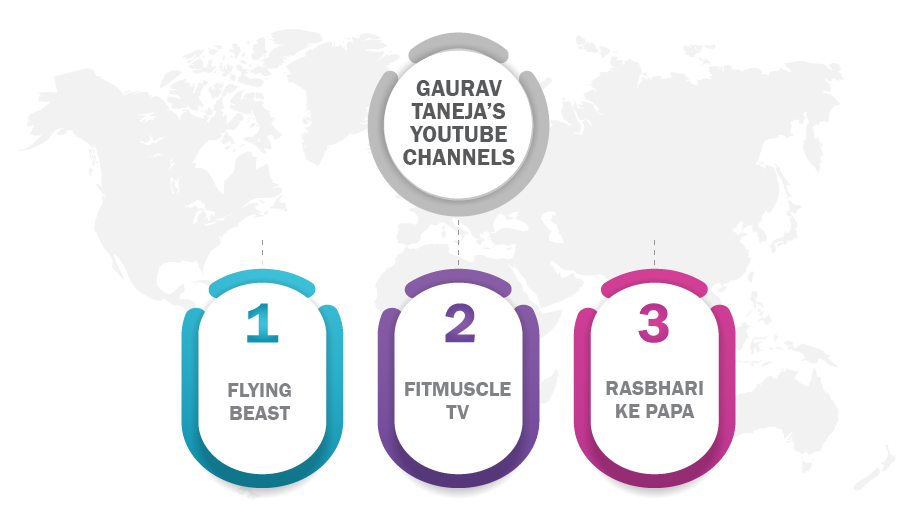
    Flying Beast, aka Gaurav Taneja, is one of the most popular YouTubers and Influencers in India. He has almost 4.55 Million Subscribers on his channel, Flying Beast. 

    He also has his fitness channel called FitMuscle Tv, which has almost 1.82 Million followers, and his other YouTube Channel, Rasbhari Ke Papa, has nearly 1.30 Million followers.

    So, this is a brief overview of Influencer Marketing and some of the most popular Indian influencers. Who is your favorite influencer? Tell us.


    Thanks all.

    GAURAV TANEJA
    If you are looking for the Best Digital Marketing Agency for your Business please contact Bliss Marcom.
    Office Address in Noida.