Category: Social Media Marketing

  • What Impact Does Social Media Listening Have on Customer Insights and Brand Reputation?

    Introduction:

    Today, social media has become an integral part of our lives, shaping our interactions, opinions, and purchasing decisions. As billions of people engage with various social platforms daily, they share their thoughts, emotions, and experiences freely. For businesses, this wealth of user-generated content presents a unique opportunity to gain valuable customer insights and manage brand reputation effectively. Social media listening, a strategic approach to monitoring and analyzing online conversations, has emerged as a powerful tool to understand customer sentiments, preferences, and perceptions. This blog explores the impact of social media listening on customer insights and brand reputation, revealing its significance in today’s hyper-connected world.

    Understanding Customer Sentiments

    Social media listening enables businesses to gauge customer sentiments in real time. By tracking mentions, comments, and interactions related to their brand, products, or industry, companies can gain valuable insights into how customers perceive their offerings. Positive feedback can highlight areas of success, while negative feedback offers opportunities for improvement.

    Through sentiment analysis, businesses can categorize conversations as positive, negative, or neutral, providing a quantitative overview of customer attitudes. Armed with this knowledge, brands can respond promptly to customer concerns, acknowledge positive feedback, and address issues proactively. Understanding customer sentiments helps businesses build stronger relationships with their audience and demonstrates a commitment to customer satisfaction.

    Identifying Emerging Trends and Consumer Needs

    Social media is a hotbed of emerging trends and consumer needs. Through social media listening, businesses can identify the latest buzzwords, topics, and discussions relevant to their industry. Staying attuned to such trends allows brands to adapt their marketing strategies and product offerings accordingly, remaining relevant in a rapidly changing market.

    Moreover, customers often express their needs and pain points on social media platforms. Social media listening helps companies capture these insights, enabling them to develop products and services that address genuine consumer demands. By meeting these needs, businesses can foster brand loyalty and attract new customers who appreciate a brand’s attentiveness to their requirements.

    Enhancing Customer Service

    Social media listening plays a pivotal role in enhancing customer service. Customers expect timely and personalized responses when they reach out to brands on social media platforms. Through social media monitoring tools, businesses can track and respond to customer inquiries, complaints, and feedback promptly.

    Proactive customer service on social media can turn unhappy customers into brand advocates. By addressing issues publicly and transparently, businesses demonstrate accountability and a commitment to resolving customer concerns. Positive interactions with customers on social media can influence how others perceive the brand and contribute to a positive brand reputation.

    Competitor Analysis and Benchmarking

    Social media listening is not limited to tracking mentions of one’s brand. It also offers valuable insights into competitor conversations, businesses can gain a comprehensive understanding of their rivals’ strengths, weaknesses, and customer sentiments. This knowledge allows brands to position themselves strategically in the market, differentiating their offerings and meeting unfulfilled customer needs.

    Benchmarking against competitors can also highlight areas where a brand outperforms or lags behind its rivals. This information guides strategic decision-making, enabling businesses to improve their offerings and services continuously.

    Crisis Management and Reputation Repair

    In the digital era, a brand’s reputation can be tarnished or bolstered within minutes. Negative feedback or viral misinformation can quickly escalate into a full-blown crisis. Social media listening equips businesses with early detection mechanisms to identify potential reputation threats before they spiral out of control.

    With real-time alerts and notifications, businesses can swiftly respond to emerging issues, mitigating the impact on their brand reputation. Transparent and empathetic communication during a crisis can foster trust and loyalty among customers, demonstrating a brand’s commitment to taking responsibility and resolving issues promptly.

    Influencer Marketing and Brand Advocacy

    Social media listening can also help identify influencers and brand advocates who have a positive impact on a brand’s reputation. These individuals can also play a crucial role in influencer marketing campaigns, reaching out to a broader audience and driving engagement.

    By monitoring conversations about the brand, businesses can identify customers who are particularly enthusiastic about their products or services. Nurturing these brand advocates and providing them with unique experiences can lead to organic word-of-mouth marketing and positive sentiment amplification.

    Conclusion:

    In the dynamic and ever-connected world of social media, social media listening has emerged as a powerful tool for businesses to glean customer insights and manage brand reputation effectively. By understanding customer sentiments, identifying emerging trends, and meeting consumer needs, brands can adapt their strategies to remain relevant and competitive in the market.

    Enhanced customer service through social media listening fosters stronger relationships with customers, leading to increased loyalty and positive brand perception. Additionally, social media listening enables businesses to monitor competitors, benchmark their performance, and seize strategic opportunities.

    Moreover, in times of crisis, social media listening plays a vital role in damage control and reputation repair. By promptly addressing issues and communicating transparently with customers, brands can safeguard their reputation and maintain customer trust.

    Influencer marketing and brand advocacy are also significantly impacted by social media listening. Identifying influential individuals and nurturing brand advocates can lead to powerful word-of-mouth marketing and increased brand credibility.

    In conclusion, social media listening is more than just a tool for data analysis. It is a strategic approach that empowers businesses to understand their customers deeply, foster meaningful relationships, and nurture a positive brand reputation in an ever-evolving digital landscape. Embracing social media listening can pave the way for sustained growth and success in the competitive world of business.

  • Instagram’s New Feature Threads: Enhacing the user experience

    In social media, platforms are constantly striving to innovate and offer new features that captivate and engage users. Instagram, one of the leading social media platforms, has recently introduced a ground-breaking feature called “Threads.” 

    This new feature aims to enhance the user experience by fostering more intimate connections, encouraging meaningful interactions, and providing users with a streamlined way to share and engage with content. In this blog, we’ll explore the details of Instagram’s new feature thread and its potential impact on the platform’s user base.

    What is Instagram’s Threads?

    Instagram Threads is a feature introduced by Instagram that focuses on facilitating close connections between users. Unlike the traditional feed and stories. Threads allow users to create smaller, private groups composed of their closest friends. 

    These groups, or “threads,” enable users to share photos, videos, and updates with a select circle of people, creating a more intimate and personalized sharing experience. The feature was designed to encourage genuine interactions, fostering deeper relationships among users while preserving privacy and control over content sharing.

    Key Features and Functionality

    1. Close Friends Lists: 

    Threads integrate seamlessly with Instagram’s “Close Friends” list. Users can easily choose who to include in their threads from this list, ensuring that only their most trusted contacts have access to the shared content.

    2. Status Updates: 

    One of the unique aspects of Threads is the ability to set automatic status updates. Users can choose from a range of preset statuses or create their own, giving friends a glimpse into their current activities or moods without the need for direct messaging.

    3. Photo and Video Sharing: 

    Threads prioritize photo and video sharing. The camera interface is front and center, encouraging users to capture and share moments with ease. The shared content appears in the form of a continuous feed within the thread, facilitating storytelling among friends.

    4. Notifications: 

    Threads come with customizable notifications. Users can choose which threads they want to receive notifications from, ensuring that they stay informed about updates from their closest friends without being overwhelmed.

    5. Active Status: 

    The feature also displays an “Active” status for friends who are currently online. This encourages real-time conversations and helps users connect more effortlessly.

    Impact on User Experience

    Instagram Threads addresses a growing desire among users for more personal and meaningful interactions on social media. With the rise of larger follower counts and a multitude of content types flooding the platform, users often find it challenging to engage in deep conversations or share personal updates with a selected group. Threads seek to counter this trend by providing a platform for authentic communication within a trusted circle.

    The feature’s emphasis on visual sharing aligns with Instagram’s core identity as a platform centered around photos and videos. By creating a separate space for close friends, Threads acknowledges that not all content is meant for a wide audience. Users can now share candid snapshots, funny videos, and spontaneous updates without fear of oversharing or compromising their online image.

    Privacy Concerns and Controls

    While Instagram Threads aims to create a safe and private space for sharing, privacy concerns are still relevant. Instagram has implemented several controls to address these concerns and give users autonomy over their shared content. The “Close Friends” list, which Threads is closely tied to, already provides users with the option to select who can view their stories. Threads takes this concept further by offering an even more exclusive space for sharing.

    Moreover, Instagram has been keen on providing granular controls over notifications and activity status. Users can decide how frequently they want to receive notifications and can opt to turn off the “Active” status feature if they value their privacy during online browsing.

    Conclusion

    Instagram’s new feature thread, Threads, represents a significant step towards fostering more authentic and personal interactions within the platform. By enabling users to create private sharing circles with their closest friends, Threads, addresses the need for intimacy and meaningful connections in an increasingly expansive social media landscape. Through features like status updates, visual sharing, and customizable notifications.

    Threads offer users a space to share moments, build relationships, and stay connected on a deeper level. As social media continues to evolve, features like Threads remind us that amidst the digital noise, the desire for genuine human connections remains at the forefront of user engagement.

    Frequently Asked Questions (FAQs)

    1. What is Instagram’s new feature “Threads”?

    Instagram Threads is a standalone messaging app developed by Instagram. It’s designed for close friends and allows users to share photos, videos, and messages with a selected group of people. 

    1. How does “Threads” differ from the regular Instagram app?

    Threads is focused on private, one-to-one, or small group messaging with your closest friends, whereas the regular Instagram app is more about sharing posts publicly or with a broader audience.

    1. Can I use Threads without having a regular Instagram account?

    No, you need a regular Instagram account to use Threads. It’s meant to complement your Instagram experience by offering a more private and intimate communication platform.

    1. How do I add close friends to Threads?

    Threads automatically sync with your Instagram Close Friends list. You can also manually add friends within the app.

    1. Is the content shared in Threads private and secure?

    Threads is designed for private communication. However, it’s essential to be cautious about what you share, as with any messaging app. Instagram has security and privacy settings you can configure.

    1. Can I use Threads to manage multiple Instagram accounts?

    Threads is primarily a messaging app and doesn’t provide account management features. You’ll still need the regular Instagram app for that.

  • Complete Guide to Creating Irresistible Social Content

    Are you looking for ways to create engaging and irresistible social media content? In this article, we’ll provide you with tips and tricks to help you create content that will capture your audience’s attention and keep them coming back for more.

    What is irresistible Social Media Content? 

    Irresistible social media content is content that people can’t help but pause and spend some time engaging with. This could include images, videos, or written content that tends to evoke a strong emotional reaction from the viewer, including things like humorous memes or photos of adorable animals. Content can also be thought-provoking, inspiring or educational in nature, providing audiences with material to explore further or ask questions about. Generally the key ingredients for irresistible social media content are creativity and relevance – aiming to share something original that resonates with your target audience.

    How to create engaging content ?

    Creating engaging content is important for capturing and retaining your audience’s attention. Here are some tips for creating engaging content:

    1-  Know your audience: Identify the requirements and preferences of your intended readers. Create content that will appeal to their interests and provide value.

    2- Use attention-grabbing headlines: Use headlines that are attention-grabbing and accurately represent the content of the article. Use a headline analyzer tool to test the effectiveness of your headline.

    3- Make your content visually appealing: Use images, videos, and infographics to make your content visually appealing and easy to understand.

    4- Keep it simple: Use simple language and avoid jargon. Keep your content easy to understand for your audience.

    5- Use storytelling: Use storytelling techniques to make your content interesting and engaging. Use personal experiences, anecdotes, and case studies to illustrate your point.

    6- Add value: Provide value to your audience by offering actionable tips, expert advice, and useful information.

    7- Be authentic: Be authentic and genuine in your content. Use your own voice and personality to connect with your audience.

    8- Use social media: Use social media to promote your content and engage with your audience. Encourage feedback and respond to comments and questions.

    Tips for crafting irresistible content 

    One of the keys to successful content creation is crafting irresistible content that will grab readers’ attention and have them asking for more. Over the years there have been a variety of techniques formulated to make content more prominent and effective, and these tips are designed to make your content stand out.

    1- Start with a captivating introduction: The introduction to your content is the key to making readers interested in what you have to say. It should set the tone for your content and draw the reader in. Start with a captivating story, a shocking statistic, or an engaging question. Whatever strikes your fancy. Make sure this introduction quickly and clearly sets the stage for the rest of your content.

    2- Focus on quality over quantity: No one enjoys reading content that is filled with fluff. Quality will always trump Quantity when it comes to creating content; so, make sure that what you write is unique, interesting, fact-based and will evoke an emotion from your readers. They should walk away from your content knowing that it was something that was worth their time to read.

    3- Make it clear and concise: Long, convoluted sentences are a major turn off for readers. Keep it short and sweet. You don’t have to explain every detail in great detail; rather make your point using a few direct words. This will help your readers be able to quickly understand what you are trying to get across and not lose interest in your content.

    4- Include visuals: Visuals have been proven to have a tremendous impact on the effectiveness of content. Images, photos, graphs and infographics can help to illustrate and make your content more interesting and noteworthy. Visuals also make it easier for your content to be shared across other social media platforms.

    5- Include meta tags and keywords: Meta Tags and keywords are incredibly important for making your content search engine friendly. Be sure to research relevant keywords that can make it easier for your content to be found by potential readers. The key is to find a balance between including too many keywords and not enough; otherwise you may get penalized by the search engines.

    6- Connect with your audience: In order to make your content more personal and appealing to readers, write in a personal and conversational tone. Utilize the active voice and address the reader’s needs and questions. Offer specific solutions that they can apply to better their lives. Show them why your content is valuable and important.

    7-End with a call to action: Include a call to action to prompt readers to take action after reading your content. You could ask them to share your content on social media, sign up for a newsletter, or even purchase a product or service. The idea is to get readers to do something tangible in response to your content.

    These are just a few tips for crafting irresistible content. Quality content creation doesn’t just happen overnight; it takes time and strategy.

    How to measure the success of your Content

    For any business, a successful content strategy is key to growth and profitability. Measuring the success of your content can be the difference between a successful content strategy and a wasted investment. Measuring the success of your content can be a difficult task, but if done properly, it can provide invaluable insights into how you should approach your content strategy.

    1- The first element to consider is content engagement, which includes such things as clicks and views on content. To measure content engagement, you should look at how many visitors your page, post, or overall content is getting, how long visitors are staying on the page, and how they are engaging with the content (e.g., comments, shares, etc.). One popular tool to measure engagement is the ‘Google Analytics Dashboard’; here, you can track how visitors are engaging with you across different channels.

    2- Secondly, you need to measure how well your content is converting. Conversion rates can be measured by looking at how many visitors are buying your product or signing up for your services. Google Analytics also has tools to measure conversions, allowing you to track how visitors interact with your content, from the point of view to purchase.

    3- Lastly, you should measure the return on investment (ROI) of your content. To do so, you need to measure the amount of money spent on content creation and promotion compared to the amount of money it brings in. If the content is successful, you should have a positive ROI. If the content is unsuccessful, then you may be losing money.

    By taking into account content engagement, conversions, and ROI, you can get a better understanding of what works and what needs to be improved. 

    How to optimize your content for maximum engagement?

    Content optimization is the process of crafting content in such a way that readers or customers interact with it in a successful and meaningful way. Increasing engagement levels with your content is important for capturing people’s attention and having a successful online presence. Here are some tips for optimizing your content for maximum engagement. 

    1- Focus on creating content that is clearly and effectively written. Good writing should be straightforward and easy to understand. Keep an objective tone and use natural language that resonates with your audience. Avoid long words and unclear phrasing; instead, focus on writing craftily and with essential details. 

    2- Ensure that your content is visually engaging. Use visuals like images and videos to make your content more interesting and attractive to readers. People respond better to visuals than plain text and images help convey ideas easier. Furthermore, visuals are often timeless and reusable, allowing you to recycle them for longer time periods.

    3- Customize and tailor your content for each channel you’re using. Keep in mind that each channel your content is published on may have its own requirements, be it size or presentation. Make sure to optimize your content according to the platform’s technical requirements. 

    4- Structure your content in an engaging manner. Good structure and good writing go hand-in-hand. Be sure to craft sentences and paragraphs that are easy to follow. Balance short sentences alongside longer ones to keep your writing interesting and use the right headings and titles to attract people to your content. 

    5- Create content that is valuable and helpful. Even if your content is well written and engaging, readers won’t be interested if it doesn’t offer something of value. Keep your content interesting and relevant to your target audience. Research the most popular topics in your industry and strive to produce content that answers questions people are already asking. 

    By following these tips, you’ll be sure to optimize your content for maximum engagement. Remember to use visual aids, customize it for different platforms, and focus on producing useful and helpful content. Optimizing your content can be a difficult process, but the results will pay off in the long run.


    Q- How to write effective content?

    Ans- To write effective content, start with captivating introduction, use simple words, include images and infographics and keep you content short and concise.

    Q- How to use keywords for content?

    Ans- Use only relevant keywords to your topic and avoid keyword stuffing.

    Q- What’s the character limit of a meta title?

    Ans- 50-60 characters.

    Q- What’s the character limit of a meta description?

    Ans- 150-160 characters.

    Q- What is irresistible social media content?

    Ans- Irresistible social media content is content that people can’t help but pause and spend some time engaging with.

    Q- What type of content comes under social media content?

    Ans- Types of content under social media content include images, videos, or written content that tends to evoke a strong emotional reaction from the viewer.

  • B2B Influencer Marketing: Strategies for Business Growth

    [vc_row][vc_column][vc_column_text css=””]In today’s digital world, B2B influencer marketing has become a smart way to grow business and build trust. Unlike B2C, where influencers promote directly to consumers, B2B influencer marketing focuses on professional relationships, industry credibility, and thought leadership.

    Whether you’re a small business or a growing enterprise, using a well-planned B2B influencer strategy can help you attract quality leads, build strong partnerships, and stay ahead of the competition.

    In influencer marketing, the spotlight has long shone on B2B collaborations. However, the transformative power of influencer marketing extends well beyond the consumer landscape. B2B influencer marketing has emerged as a potent strategy for connecting with professional audiences and building growth.

    This blog explores the world of B2B influencer marketing, exploring its unique dynamics, benefits, and effective strategies for engaging and resonating with professional audiences.


    What is B2B Influencer Marketing?

    B2B influencer marketing refers to the practice of collaborating with authoritative individuals, experts, or thought leaders within a specific industry to promote products, services, or ideas to other businesses. Unlike B2C influencer marketing, which targets consumers, B2B influencer marketing focuses on reaching professional audiences, such as decision-makers, executives, and stakeholders within other businesses.

    In B2B influencer marketing, influencers are individuals who have gained credibility and recognition within their industry due to their expertise, thought leadership, and insights. Brands partner with these influencers to leverage their reputation and reach to enhance brand credibility, build thought leadership, and establish meaningful connections with target B2B influencers.

    The goal of B2B influencer marketing is to create authentic and valuable content that resonates with the specific challenges, trends, and interests of professionals within a given industry. By collaborating with influencers who have a deep understanding of the industry, brands can tap into their expertise to create content that addresses relevant issues, provide insights, and offers solutions, ultimately fostering trust and engagement within the B2B space.

    Some examples of B2B influencers:

    • SaaS experts on LinkedIn
    • Tech bloggers
    • Industry podcast hosts
    • Marketing authors
    • Startup mentors

    Benefits of B2B Influencer Marketing

    1. Credibility and Trust: 

    Collaborating with recognized experts within a niche builds credibility for your brand, as their endorsement serves as a seal of approval in the eyes of your target audience.

    2. Thought Leadership:

    Partnering with influencers known for their insightful perspectives positions your brand as a thought leader within your industry, sparking valuable discussions and conversations.

    3. Content Enhancement: 

    Influencers bring their unique viewpoints and expertise, enriching your content with fresh insights and perspectives that resonate with professional audiences.

    4. Humanizing B2B Brands: 

    B2B influencer marketing humanizes brands by associating them with real people, fostering more personal and relatable connections.

    5. Access to Niche Audiences: 

    Influencers typically have a dedicated following within a specific industry or vertical. This allows you to tap into a well-defined audience aligned with your business goals.


    B2B Influencer Marketing


    Strategies for Successful B2B Influencer Campaigns

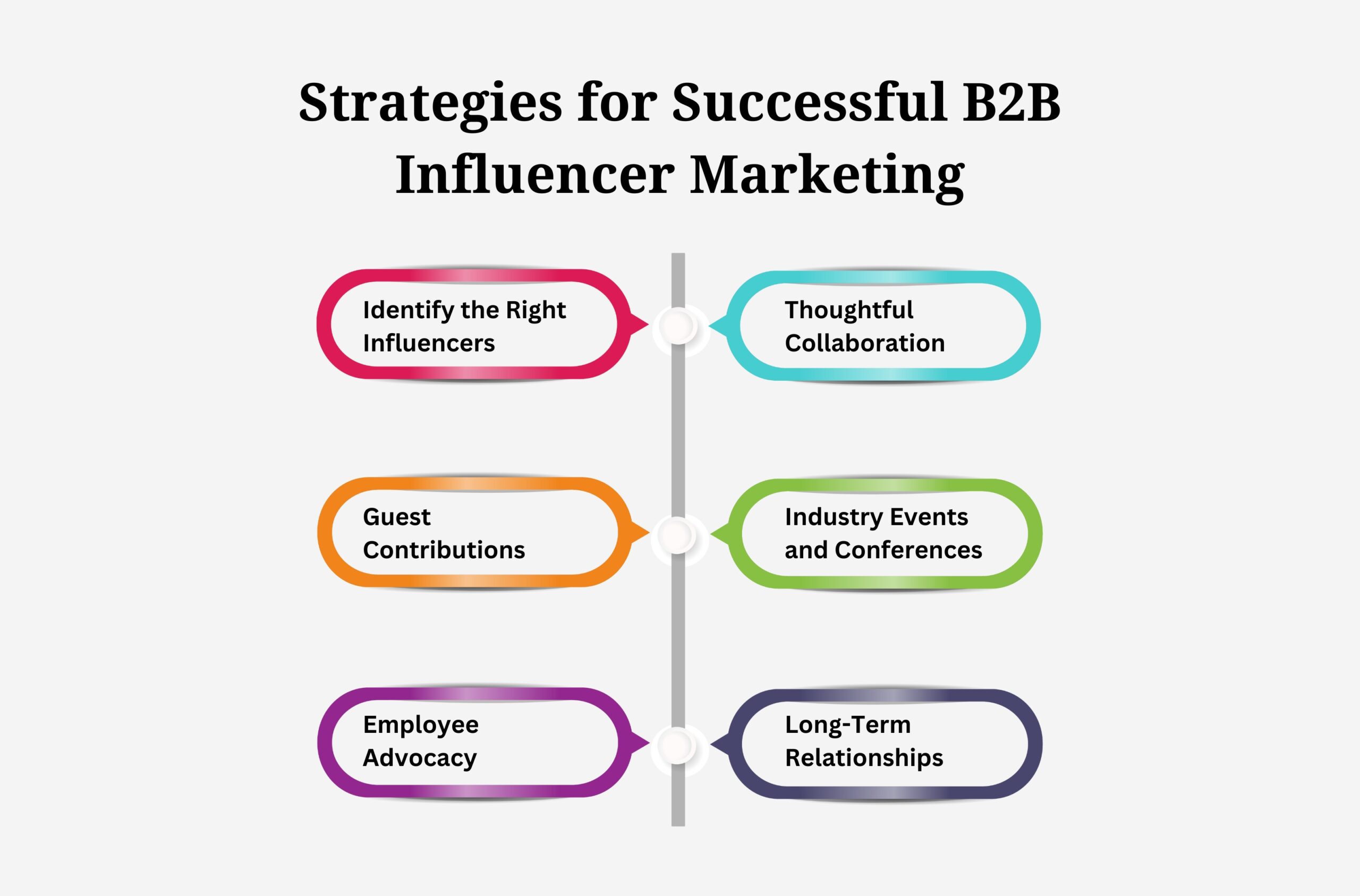
    1. Identify the Right Influencers: 

    Seek out influencers who are well-respected in your industry, have a strong online presence, and align with your brand’s values and objectives. Their credibility should complement your brand’s mission.

    2. Thoughtful Collaboration: 

    Collaborate with influencers on meaningful and insightful content that addresses industry challenges, trends, and solutions. This content should provide genuine value to your target audience.

    3. Educational Webinars and Workshops: 

    Host webinars or workshops in partnership with influencers to provide in-depth insights, training, and knowledge-sharing. This showcases your brand’s commitment to education and professional development.

    4. Guest Contributions: 

    Invite influencers to contribute guest blog posts, articles, or podcasts that provide unique perspectives on industry trends, fostering a collaborative exchange of insights.

    5. Industry Events and Conferences: 

    Partner with influencers to co-host or participate in industry events, panels, and conferences, showcasing your brand’s active engagement in thought leadership.

    6. Employee Advocacy: 

    Empower your employees to be influencers within their respective fields. Encourage them to share their expertise on social media and industry platforms, expanding your brand’s reach.

    7. Long-Term Relationships: 

    Cultivate long-term relationships with influencers to build trust and authenticity over time. A series of collaborations strengthen the influencer’s association with your brand.


    Case Study: B2B Influencer Marketing Example

    A leading B2B software company leverages influencer marketing to connect with professionals in the tech industry. They collaborated with industry experts and C-level executives to co-create thought-provoking whitepapers and webinars discussing emerging technology trends. By tapping into the influencers’ expertise and aligning their insights with the company’s offerings, the campaign garnered substantial engagement and positioned the brand as an authority within the tech landscape.


    Does B2B Influencer Marketing really Work?

    B2B influencer marketing can be effective, as it involves collaborating with industry experts and thought leaders to promote your products or services to their relevant audience. When executed well, it can enhance credibility, reach, and engagement within the B2B space. However, success depends on proper targeting, authenticity, and aligning influencer content with your brand’s values and goals.


    Conclusion

    B2B influencer marketing represents a strategic approach to nurturing relationships, fostering thought leadership, and building credibility within professional networks. By harnessing the influence and authority of industry experts, brands can engage in meaningful conversations, contribute valuable insights, and position themselves as trusted partners. 

    As the B2B landscape continues to evolve, influencer marketing emerges as a pivotal strategy to unlock new avenues for growth, authenticity, and engagement with the professional audiences that drive industries forward.


    Frequently Asked Questions (FAQs)

    [/vc_column_text][vc_toggle title=”How do I find the right B2B influencers?” css=””]Identifying the right influencers involves research within your industry. Look for individuals with expertise, a strong online presence, and a following that aligns with your target audience.[/vc_toggle][vc_toggle title=”How do I approach B2B influencers for collaboration?” css=””]Reach out with a personalized pitch that outlines the benefits of working together. Be clear about your goals, expectations, and how the collaboration can be mutually beneficial.[/vc_toggle][vc_toggle title=”How can I measure the ROI of my B2B influencer campaign?” css=””]Calculate ROI by comparing the cost of the campaign to the revenue generated through leads or conversions. Track the impact on brand awareness and long-term customer relationships.[/vc_toggle][vc_toggle title=”What are some successful examples of B2B influencer marketing campaigns?” css=””]Research case studies in your industry to find examples of effective B2B influencer marketing campaigns. Analyze their strategies and tactics to gain insights for your own efforts.[/vc_toggle][vc_toggle title=”What are the benefits of B2B influencer marketing?” css=””]Benefits include increased brand awareness, lead generation, thought leadership, and enhanced credibility within your industry. It can also foster long-term relationships with influencers.[/vc_toggle][/vc_column][/vc_row]

  • Know the Best Effective Social Media Marketing Strategy

    Social Media Marketing has turned out to be an indispensable part of contemporary business technique. With billions of users worldwide, platforms like Facebook, Instagram, Twitter, and LinkedIn offer unparalleled opportunities for businesses to reach their target audience and promote their products or services. 

    However, effective social media marketing requires careful planning and execution. In this article, we will discuss some proven strategies that can help businesses make the most of their social media marketing efforts.

    • Set Clear Goals For Social Media Plan: 

    Before diving into social media marketing, it is crucial to establish clear and measurable goals. Whether it’s increasing brand awareness, driving website traffic, generating leads, or boosting sales, having well-defined objectives will guide your strategy and allow you to track your progress effectively.

    • Identify your target audience: 

    Understanding your target audience is essential for successful social media marketing. Conduct marketplace research to become aware of the demographics, pastimes, and choices of your ability clients. This information will help you tailor your content and messaging to resonate with your audience and drive engagement.

    • Choose the Right Social Media Platforms: 

    Not all social media platforms are suitable for every business. Determine which platforms your target audience uses most frequently and focus your efforts there. For instance, if you are targeting professionals, LinkedIn might be more effective than Instagram. By concentrating your resources on the platforms that matter most to your audience, you can maximize your reach and engagement.

    • Create Compelling Content: 

    Content is the cornerstone of social media marketing. Expand a content material method that aligns with your emblem identity and resonates with your target market. Create a mix of different content types, including images, videos, infographics, blog posts, and user-generated content. Ensure that your content is valuable, informative, entertaining, and shareable to encourage engagement and viral sharing.

    • Utilize Visuals Content On Social Media: 

    Visual content tends to perform exceptionally well on social media platforms. Incorporate high-quality images, videos, and graphics into your social media posts to grab attention and convey your message effectively. Use professional photography, eye-catching designs, and engaging videos to captivate your audience and increase their likelihood of sharing your content.

    • Message and Consistent Content Updates: 


    Consistency is key when it comes to social media marketing. Establish a consistent brand voice, visual style, and posting schedule across all your social media platforms. Consistency helps build brand recognition, establishes trust with your audience, and encourages them to engage with your content regularly.

    • Have interaction with your target market


    Social media is a – way conversation channel. Encourage your audience to interact with your content by posing questions, asking for feedback, and responding to comments and messages promptly. Engaging with your audience builds a sense of community and strengthens customer relationships, leading to increased brand loyalty and advocacy.

    • Leverage Influencer Marketing: 

    Influencer marketing can be a powerful tool to expand your reach and tap into new audiences. Perceive influencers on your niche who have a widespread following and align with your emblem values. Collaborate with influencers to create sponsored content or run giveaways to leverage their influence and reach a wider audience.

    • Utilize Paid Advertising: 


    While organic reach is valuable, paid advertising on social media platforms can provide an extra boost to your marketing efforts. Platforms like Facebook, Instagram, and LinkedIn offer robust targeting options to allow you to reach specific demographics, interests, and behaviors. Allocate a portion of your marketing budget to run targeted ads and monitor their performance to optimize your campaigns.

    • Track and Analyze Social Media Results: 


    Regularly track and analyze the performance of your social media marketing efforts. Utilize platform analytics and third-party tools to measure key metrics such as reach engagement, click-through rates, conversions, and return on investments (ROI). Use these insights to refine your strategy, identify what works best for your audience, and make data-driven decisions.

    • Complete and optimize your Social Media profiles: 


    Start by ensuring that your social media profiles are fully completed with accurate and up-to-date information. Use consistent branding elements such as profile pictures, cover photos, and descriptions across all platforms. Optimize your profiles by incorporating relevant keywords and hashtags to improve discoverability.

    • Optimize Content for Each Platform: 

    Predictive PersonalizationEach social media platform has its unique features and best practices. Tailor your content to fit the specific requirements of each platform. For example, on Instagram, focus on visual content with captivating images and concise captions. On LinkedIn, share industry insights thought leadership articles, and professional networking opportunities. Adapting your content to each platform will enhance its effectiveness and appeal to the respective audience.

    • Utilize Hashtags on Social Media Platforms : 

    Hashtags are powerful tools for increasing the visibility of your content and reaching a broader audience. Research and use relevant hashtags that are popular in your industry or niche. Incorporate both trending and niche-specific hashtags in your posts to increase the likelihood of being discovered by users who are interested in your content.

    • Encourage Social Sharing: 

    Make it easy for your audience to share your content by incorporating social sharing buttons on your website and blog. Include calls to action in your social media posts to encourage users to like, comment, share, and tag their friends. User-generated content, contests, and giveaways are also effective ways to encourage social sharing and increase brand exposure

    • Stay Updated and Experiment: 


    Social media platforms are constantly evolving, with new features and trends emerging regularly. Stay updated with the latest developments and experiment with new features and strategies. 


    Social Media Marketing Frequently Asked Questions (FAQs)

    Is paid advertising necessary for Social Media Optimization ?

    While organic efforts are important, paid advertising can boost your reach and target specific audiences. It’s often a valuable part of an SMO strategy.


    1. What are the common mistakes to avoid in Social  Media Marketing?

    Avoid over posting, neglecting customer interactions, using irrelevant hashtags, and not monitoring your analytics. Also, be careful with automation, as it can come across as impersonal.


    1. How can I stay updates with SMO best practices?

    Stay informed by following industry blogs, attending webinars, and experimenting with new strategies. Social media trends can change rapidly, so ongoing learning is essential.


    1. Why is Social Media Marketing is important for businesses?

    SMO helps businesses build a strong online presence, connect with their target audience, drive traffic to their websites, and ultimately, increase conversions and sales.

  • Search Algorithms in Social Networks: Friend Suggestion and Content Discovery

    In the digital age, Search Algorithms in “social networks” have revolutionized the way we connect, share, and discover content. From reconnecting with old friends to staying updated with the latest trends, social media platforms have become an integral part of our daily lives. One of the key features that underpin the success of these platforms is their ability to suggest friends and relevant content to users.


    Friend Suggestion on Social Networks

    The days of manually searching for friends on social media are long gone, thanks to sophisticated friend suggestion algorithms. These algorithms analyze an excess of data points, including mutual friends, interests, location, and interactions, to identify potential connections. Machine learning techniques play a vital role in understanding user behavior and preferences, allowing platforms to recommend friends with a high likelihood of acceptance.

    At the heart of friend suggestion algorithms lies the concept of a social graph. Each user is a node, and their connections are represented as edges. By traversing this graph, search algorithms can uncover hidden relationships and suggest friends that users might have overlooked. This process goes beyond serendipity, as algorithms leverage the power of data to bring people together in a digital space.


    Content Discovery: From Noise to Relevance

    Inundate with a constant stream of updates, posts, and media, users often find it challenging to discover content that truly resonates with them. This is where content discovery algorithms aim to cut through the noise and present users with content that aligns with their interests, preferences, and browsing habits.

    Similar to friend suggestion algorithms, content discovery algorithms utilize machine learning to understand user behavior. By analyzing past interactions, clicks, likes, and shares, these algorithms create a user profile that captures individuals’ tastes. Using this profile, search algorithms can then recommend articles, videos, and posts that are likely to captivate the user’s attention.


    Collaborative Filtering: The Engine of Personalization

    Collaborative Filtering is a cornerstone of both friend suggestion and content discovery algorithms. This technique builds on the idea that users who have similar interests and behaviors are likely to appreciate the same content or connect. There are two main approaches to collaborative filtering: user-based and item-based.

    In user-based collaborative filtering, the algorithm identifies users with similar preferences and suggests content or friends based on what those similar users have engaged with. On the other hand, item-based collaborative filtering recommends content or friends that are similar to what users have already shown an affinity for. These techniques work in tandem to create a personalized experience that keeps users engaged and satisfied.


    Balancing Act: Privacy and Ethics in Social Networks

    While search algorithms in social networks offer numerous benefits, they also raise concerns about privacy and ethics. As algorithms analyze users’ interactions, preferences, and connections, there’s a potential for sensitive data to be mishandled or exploited. Social platforms must strike a delicate balance between offering personalized experiences and safeguarding user privacy.

    Moreover, algorithmic bias is another ethical consideration. If algorithms are not trained on diverse datasets, they might inadvertently favor certain groups or content, leading to a lack of inclusivity. Ensuring fairness and transparency in algorithm design is crucial to prevent reinforcing existing biases and creating information bubbles.


    Future Directions: From AI to Human-Centricity

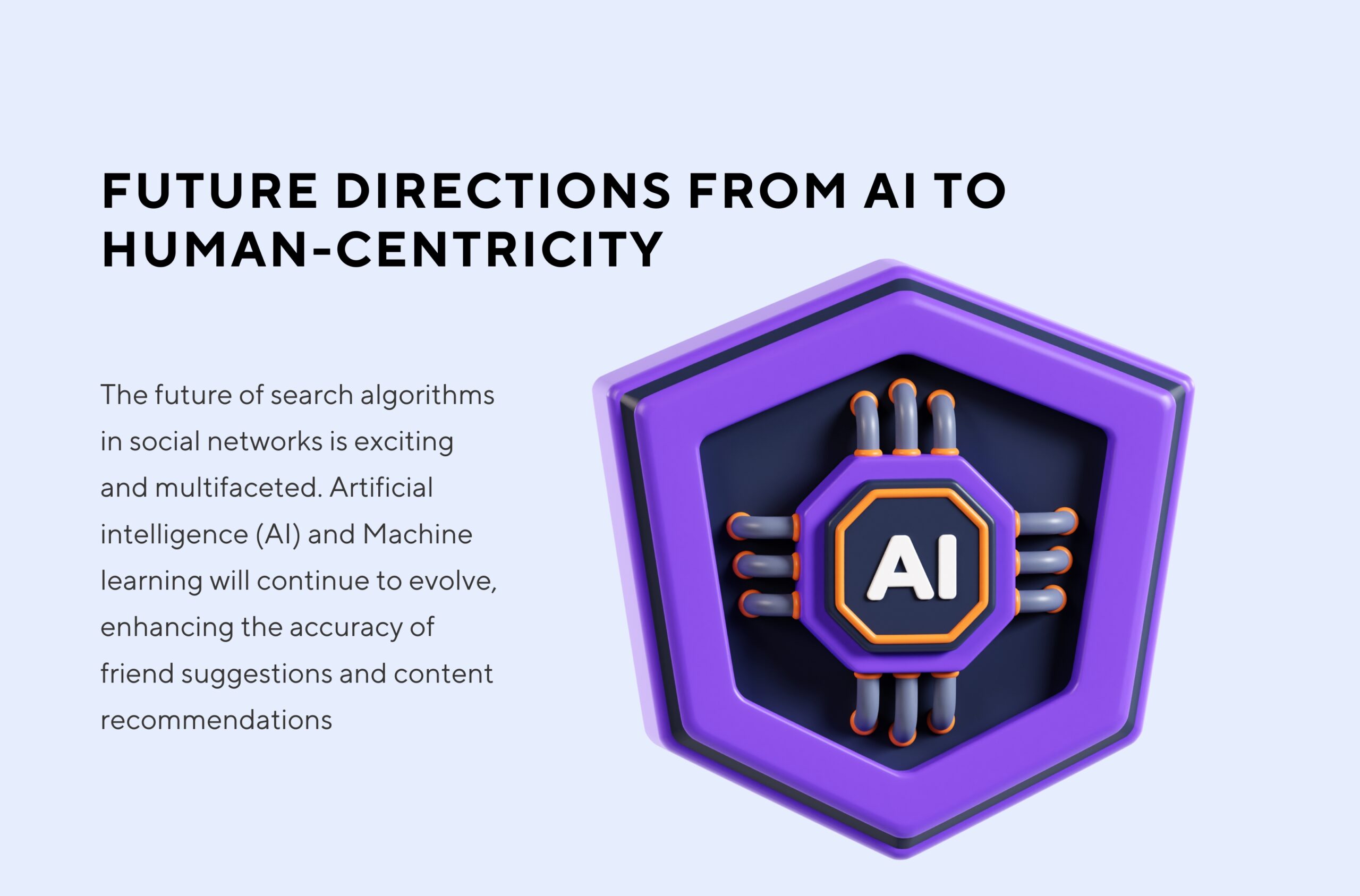
    The future of search algorithms in social networks is exciting and multifaceted. Artificial intelligence (AI) and Machine learning will continue to evolve, enhancing the accuracy of friend suggestions and content recommendations. However, the focus is shifting toward creating more human-centric experiences.

    Understanding the nuances of human relationships and emotions is a challenge for algorithms, but advancements in sentiment analysis and natural language processing are making headway. Platforms are exploring ways to factor in an emotional context, enhancing the authenticity and meaningfulness of friend suggestions and content recommendations.

    Social Networks

    Conclusion Of Social Networks

    Search algorithms have transformed the landscape of social networks, elevating the way we connect, interact, and discover content. Friend suggestion and content discovery algorithms have evolved from simple rule-based systems to complex machine-learning models, offering personalized experiences to users. 

    As the digital world continues changing, the challenge lies in striking a balance between technological advancement, privacy protection, and ethical considerations. The future holds the promise of even more human-centric algorithms that enhance our social interactions and deepen our connections in the virtual realm.


    Frequently Asked Questions (FAQs)

    1. What factors influence the ranking of search results in social networks?

    Several factors influence the ranking of search results in social networks, including the relevance of keywords, the user’s past interactions, the popularity of content, and the recency posts.


    1. Can social network search algorithms personalize search results for users?

    Yes, many social network search algorithms incorporate personalization to tailor search results based on a user’s interests, connections, and previous activity on the platform.


    1. Do social networks use machine learning in their search algorithms?

    Yes, many social networks employ machine learning techniques to improve the performance of their search algorithms. Machine learning helps refine search results and adapt to user behavior over time.


    1. How do social networks handle controversial or sensitive content in search results?

    Social networks implement content moderation policies and algorithms to detect and filter out controversial or sensitive content from search results, aiming to provide a safe and positive user experience.


    1. Are there any best practices for optimizing content for social network search algorithms?

    Yes, best practices include using relevant keywords, creating high-quality content, engaging with your audience, and staying up-to-date with platform-specific guidelines and changes.

  • Detecting Influencer Fraud and How to Detect Fake Followers and Engagement

    In influencer marketing, where reach and engagement are often termed as the base of success, the specter of influencer fraud looms large. As brands increasingly turn to influencers to connect with their audiences, the rise of fake followers and engagement metrics has become a significant concern.

    This blog explores the world of influencer fraud, exploring its various forms, the impact it has on campaigns, and most importantly, strategies to detect and combat fake followers and engagement for a more transparent and authentic influencer collaboration.

    What is Influencer Fraud?

    Influencer fraud refers to the tricks of follower counts, engagement metrics, and other performance indicators to create a false impression of an influencer’s popularity and influencer. This deceptive practice undermines the authenticity of influencer campaigns and can lead to wasted marketing budgets and diminished brand credibility. There are several forms of influencer fraud, including:

    1. Fake Followers: 

    Influencers purchase fake followers to artificially inflate their audience size. These purchased accounts are usually inactive or bot-driven and do not contribute to genuine engagement.

    2. Engagement Pods: 

    Some influencers join engagement pods, where participants engage with each other’s content inorganically to boost likes, comments, and shares. While engagement may appear high, it lacks authenticity.

    3. Comment Bots: 

    Automated comment bots flood an influencer’s posts with generic or irrelevant comments, creating a façade of engagement without genuine interaction.

    4. Engagement Buying: 

    Influencers can buy likes, comments, and shares to create an illusion of high interaction levels. This can mislead brands into believing they’re working with highly engaging influencers.

    The Impact of Influencer Fraud on Campaigns

    The consequences of falling victim to influencer fraud can be significant:

    1. Wasted Budgets: 

    Brands invest money in influencer collaborations with the expectation of reaching a genuine audience. Fraudulent influencers offer little to no return on investment.

    2. Diminished Credibility: 

    Collaborating with influencers with fake followers erodes brand credibility, as consumers can detect inauthenticity and may distance themselves from the brand.

    3. Misguided Strategies: 

    Relying on fake engagement metrics can lead brands to develop misguided marketing strategies that do not resonate with their actual target audience.

    4. Lost Opportunities: 

    Brands may miss out on authentic influencers with smaller but highly engaged audiences who could have yielded better results.

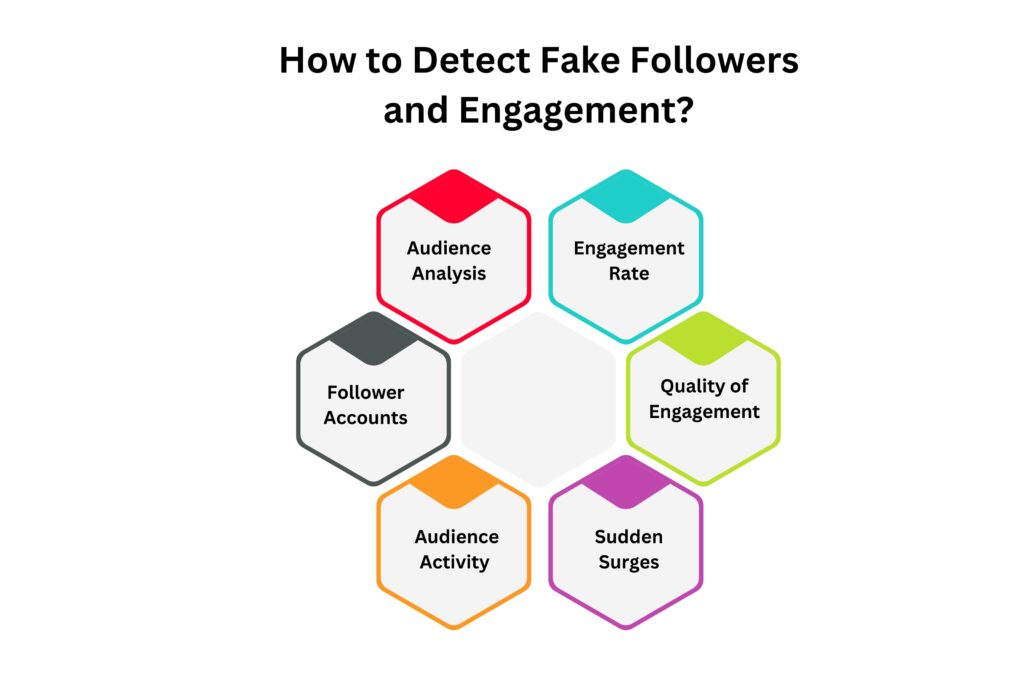
    How to Detect Fake Followers and Engagement?

    As the influencer landscape evolves, so do the strategies to combat influencer fraud. Here are effective methods to identify fake followers and engagement.

    1. Audience Analysis: 

    Examine an influencer’s followers’ demographics for inconsistencies. Sudden spikes in followers from countries unrelated to the influencer’s content may signal fake accounts.

    2. Engagement Rate: 

    Calculate the engagement rates ( like + comments/followers) for an influencer’s posts. Suspiciously high engagement rates in comparison to their follower count may indicate fraud.

    3. Quality of Engagement:

    Evaluate the quality of comments and interactions. Genuine comments are varied, relevant, and reflect a meaningful connection to the content.

    4. Sudden Surges: 

    Rapid increases in followers or engagement that are not accompanied by a correlating increase in content quality or collaboration opportunities may raise red flags.

    5. Audience Activity: 

    Analyze the timing and consistency of engagement. If an influencer’s posts receive engagement at unusual hours or times, it might suggest automated engagement.

    6. Follower Accounts: 

    Manually review a sample of an influencer’s followers. Look for profiles lacking profile pictures, posting history, or interaction with other users. 

    Ensuring Authentic Influencer Collaborations

    1. Thorough Research: 

    Investigate potential influencers thoroughly. Use influencer marketing platforms and tools to gain insights into their audience demographics and engagement history.

    2. Micro-Influencers: 

    Consider working with micro-influencers who have smaller but highly engaged and authentic followings. They are less likely to engage in fraudulent activities.

    3. Vet Collaborations: 

    Collaborate with influencers who align with your brand values and have a history of genuine engagement. Review their past campaigns for consistency and authenticity.

    4. Conversation and Transparency: 

    Discuss metrics, expectations, and the importance of genuine engagement with influencers before collaborating. Open dialogue fosters transparency.

    5. Use Tools: 

    Leverage tools that specialize in detecting fake followers and engagement, such as social media audit platforms that analyze an influencer’s audience authenticity.

    The Road to Authentic Influencer Marketing

    As brands strive to build genuine connections with their target audiences, the battle against influencer fraud becomes crucial. Detecting fake followers and engagement requires vigilance, education, and a commitment to transparency. 

    By employing advanced analysis, collaborating with micro-influencers, and maintaining open communication with influencers, brands can safeguard their reputation and ensure that their influencer marketing campaigns resonate with authenticity and credibility.

    In the world of influencer marketing, the pursuit of authenticity remains the true north for brands seeking meaningful connections in the digital age.

    Frequently Asked Questions (FAQs)

    1. What is influencer fraud?

    Influencer fraud refers to dishonest practices where influencers artificially inflate their follower counts, engagement metrics, or other aspects of their online presence to appear more influential than they actually are.

    1. What are some common signs of fake followers?

    Common signs include profiles with no profile pictures, limited actively, generic usernames, and a high number of followers but very few posts or interactions.

    1. What about fake engagement? How can I identify that?

    Fake engagement includes likes and comments from bots or inactive accounts. To identify it, look for comments that seem generic, irrelevant to the post, or repetitive. Sudden spikes in engagement can also be a red flag.

    1. How can I prevent influencer fraud?

    Prevention involves thorough vetting of influencers, setting clear expectations, and including fraud-detection clauses in contracts. Regularly monitor influencer performance and be vigilant for any suspicious activity.

  • How to Find the Right Social Media Marketing Agency?

    Selecting the right social media marketing agency is a crucial decision that can significantly impact your business’s success. To help you navigate this process, we’ve outlined a step-by-step guide to ensure you choose the agency that aligns with your goals and objectives.


    1. Define Your Goals and Objectives for Social Media Marketing Agency


    Before you begin your search for a social media marketing agency, it’s essential to have a clear understanding of your goals and objectives. Are you looking to increase brand awareness, drive website traffic, generate leads, or boost sales? Defining your goals will guide your agency selection process and help you measure the agency’s success.


    2. Research Potential Agencies

    Begin by researching potential agencies. Use search engines, social media platforms, and industry directories to compile a list of agencies that specialize in social media marketing. Don’t forget to ask for recommendations from peers or colleagues who have experience with social media agencies.


    3. Check Client Reviews

    Client reviews and testimonials provide valuable insights into an agency’s reputation and performance. Search for online reviews on platforms like Google, Yelp, or Clutch. Reach out to past and current clients if possible to gather firsthand feedback about their experiences with the agency.


    4. Evaluate Their Social Media Presence


    A reputable social media marketing agency should have a strong online presence. Evaluate their social media profiles – are they active, engaging, and consistent? This is a good indicator of their ability to manage your social media effectively.


    5. Discuss Budget and Pricing


    Budget considerations are essential when choosing an agency. Discuss pricing models, contract terms, and any additional costs upfront. Ensure that their pricing aligns with your budget and that there are no hidden fees.


    6. Assess Communication and Responsiveness


    Effective communication is key to a successful partnership with a social media marketing agency. Pay attention to their response times and how well they address your queries and concerns during the selection process. This will give you a glimpse of what to expect in the future.


    7. Start with a Trial Period


    Consider starting with a trial period or a smaller project to test the agency’s capabilities and compatibility with your business. This minimizes risk and allows you to gauge their performance before committing to a long-term contract.


    8. Monitor Progress


    Once you’ve selected an agency, closely monitor their progress and results. Regularly review reports and analytics to ensure that they are meeting your goals and expectations. Open and ongoing communication is vital to a successful partnership.


    Why Do You Need a Social Media Marketing Agency?


    Social Media Marketing Agency


    A social media marketing agency plays a vital role in the success of modern businesses for several compelling reasons. They possess up-to-date knowledge of algorithm changes, trends, and best practices, ensuring that your brand remains relevant and visible.


    Furthermore, a social media marketing agency brings a fresh perspective to your brand’s online presence. They can offer creative and innovative ideas to engage your audience effectively, which can be challenging to achieve internally.


    Social media marketing agencies have the tools and resources to track and measure the impact of your campaigns comprehensively. They can provide detailed insights into user behavior, engagement rates, and conversion metrics, enabling you to refine your strategy for optimal results.


    Collaborating with an agency also frees up your team’s time and resources, allowing them to focus on other core aspects of your business. It eliminates the need to hire and train in-house social media specialists, reducing overhead costs.


    Lastly, a social media marketing agency can help your brand stand out. They can craft a unique and consistent brand voice, foster community engagement, and build brand loyalty, all of which are crucial for success.


    In summary, a social media marketing agency is indispensable for businesses seeking to thrive today. Their expertise, and creativity can elevate your brand’s online presence, drive growth, and ensure a strong return on investment.


    Frequently Asked Questions (FAQs)


    1. What is a social media marketing agency, and why do I need one?

    A social media marketing agency specializes in managing and growing your brand’s presence on social media platforms. You may need one to enhance your online visibility, engage with your audience, and drive business results.


    2. What should I consider when choosing a social media marketing agency?

    Factors to consider include their expertise, experience, client reviews, pricing, services offered, and the ability to align with your brand’s goals and values.


    3. Do I need a large agency, or can a smaller one suffice?

    It depends on your goals and budget. Larger agencies may offer more resources, while smaller ones can provide personalized attention. Consider what aligns best with your needs.


    4. What social media platforms should my agency be proficient in?

    Ensure they are skilled in the platforms most relevant to your target audience. Common ones include Facebook, Instagram, Twitter, LinkedIn, and TikTok.


    5. How do I assess an agency’s expertise?

    Look at their portfolio, case studies, and client success stories. Ask about their team’s qualifications, certifications, and specific experience in your industry.


    6. How will they communicate and report to me regularly?

    Clarify their communication channels and frequency of reporting so you can stay informed about campaign progress.

  • Instagram Advertising: Best Practices for Running Effective Ad Campaigns

    In the digital age, social media platforms have become powerful tools for businesses to reach and engage with their target audience. Among these platforms, Instagram stands out as a popular choice for advertising due to its visually appealing nature and massive user base. With over one billion active monthly users, Instagram offers businesses a unique opportunity to promote their products and services through targeted ad campaigns. 


    However, running successful Instagram ad campaigns requires strategic planning and adherence to best practices. In this article, we will explore the key strategies and techniques for creating and managing effective Instagram ad campaigns.


    1. Clearly Define Your Objectives


    Before diving into the world of Instagram advertising, it is crucial to establish clear objectives for your ad campaign. Are you aiming to increase brand awareness, generate leads, drive website traffic, or boost sales? By defining your objectives, you can tailor your ad campaign accordingly and measure its success based on specific metrics.


    2. Know Your Target Audience:


    Understanding your target audience is fundamental to creating impactful Instagram ads. Utilize the platform’s vast array of targeting options, such as demographics, interests, and behaviors, to ensure your ads reach the right people. Conduct market research to identify your audience’s preferences, pain points, and desires, enabling you to craft compelling ad content that resonates with them.


    3. Create Compelling Visual Content:


    Instagram is a visual-centric platform, so your ads must stand out and captivate users’ attention. Use high-quality, eye-catching images or videos that are relevant to your brand and convey your message effectively. Experiment with different formats, such as carousel ads, stories, or videos, to see what works best for your campaign. Incorporate your brand’s unique visual identity, including colors, fonts, and logos, to maintain consistency across your ads.


    4. Craft Engaging Ad Copy:


    While visuals are important, compelling ad copy plays a crucial role in driving action. Write concise, persuasive captions that complement your visual content and entice users to take the desired action. Highlight the key benefits of your product or service, use strong calls-to-action (CTAs), and create a sense of urgency or exclusively to encourage engagement. Remember to keep your captions easy to read, and consider using emojis or hashtags to enhance your messaging.


    5. Utilize Instagram’s Ad Formats and Features:


    Instagram offers a variety of ad formats and features that can enhance the effectiveness of your campaigns. Explore options such as:


    a) Stories Ads: 

    Take advantage of the immersive, full-screen Stories format to deliver engaging, vertical content to users.


    b) Carousel Ads: 

    Showcase multiple images or videos within a single ad, allowing you to tell me a more comprehensive brand story or highlight different products.


    c) Explore Ads: 

    Extend your reach by placing ads in the Explore tab, where users discover new content based on their interests.


    d) Shopping Tags: 

    If you have an e-commerce business, leverage Shopping Tags to make your ads shoppable, allowing users to directly purchase products they are interested in.


    6. Test and Optimize Your Ads:


    Continuous testing and optimization are essential for running successful Instagram ad campaigns. Experiment with different ad creatives, CTAs, targeting options, and ad placements to identify what resonates best with your audience. Monitor your campaign’s performance regularly, track key metrics such as click-through rates, conversions, and engagement, and use the data to refine and optimize your ads for better results.


    6. Leverage User-Generated Content:


    User-generated content (UGC) can be a powerful asset in your Instagram ad campaigns. Encourage your followers and customers to create and share content related to your brand, such as testimonials, reviews, or photos featuring your products. Incorporate UGC into your ads to build social proof, enhance authenticity, and foster user trust. This not only boosts engagement but also helps in establishing a genuine connection with your target audience.


    7. Implement Retargeting Strategies:


    Retargeting allows you to reach users who have already interacted with your brand or website. Set up retargeting campaigns on Instagram to re-engage these users and guide them toward the desired action. By reminding them of your brand and products, you increase the likelihood of conversions and repeat purchases.


    8. Monitor and Analyze Results:


    Regularly monitor and analyze the performance of your Instagram ad campaigns. Utilize the platform’s built-in analytics or third-party tools to gain insights into key metrics, such as impressions, reach, engagement, and conversions. Identify trends, patterns, and areas for improvement based on the data, and make data-driven decisions to optimize future campaigns.


    9. Stay Up-to-Date with Instagram Advertising Trends:


    The social media landscape is ever-evolving, and Instagram is no exception. Stay informed about the latest trends, features, and updates related to Instagram advertising. This includes changes in algorithms, new ad formats, or emerging user behaviors. By staying up-to-date, you can leverage new opportunities and stay ahead of the competition.


    Conclusion:


    Instagram advertising offers businesses a powerful platform to connect with their target audience, increase brand visibility, and drive conversions. By following these best practices, you can maximize the effectiveness of your ad campaigns and achieve your marketing goals. 


    Remember to define clear objectives, understand your audience, create compelling visual content, optimize your ads based on data, and stay informed about the latest trends. With strategic planning and continuous optimization, you can harness the potential of Instagram advertising to grow your business and reach new heights in the digital landscape.


    Frequently Asked Questions (FAQs)


    1. Who can advertise on Instagram?

    Instagram advertising is open to businesses of all sizes, including small businesses, brands, and individuals, as long as they adhere to Instagram’s advertising policies.


    1. What is the cost of Instagram advertising?

    The cost of Instagram advertising varies based on factors such as your chosen ad objective, audience size, competition, and ad quality. You can set a budget that works for your business.


    1. Can I track the performance of my Instagram ads?

    Yes, Instagram provides detailed insights and analytics on ad performance, including metrics like reach, engagement, clicks, and conversions. This data helps you assess your ROI.


    1. Are there any creative guidelines for Instagram ads?

    Yes, Instagram has specified guidelines regarding image and video quality, text-to-image ratios, and other creative aspects. Adherence to these guidelines is crucial for successful campaigns.

    If you are looking for the Best Social Media Marketing Agency for your Business please contact Bliss Marcom.
    Office Address in Noida.

  • The Art of Creating Viral Videos: What Makes People Share Your Content?

    In the digital age, the term “viral” has taken on a whole new meaning. A viral video has the power to captivate, engage, and spread like wildfire across the internet, reaching millions of viewers in a matter of hours. But what exactly makes a video go viral? Is it luck, timing, or something else entirely? In this blog, we delve into the art of creating viral videos and uncover the elements that make people share your content.


    Emotion: The Catalyst for Sharing


    Emotions have a remarkable ability to connect people on a deeply human level. Whether it’s a burst of laughter, surprise, awe, or empathy, evoking strong emotions is a key factor in creating content that resonates. A heart-warming story, a hilarious prank, or a touching gesture can trigger an emotional response that compels viewers to hit the “share” button.


    Relatability and Relevance


    Viral videos often tap into relatable experiences and timely topics. When viewers see themselves or their own experiences reflected in a video, they are more likely to share it with their friends and followers. Timeless also plays a significant role. Creating content that aligns with current events, trends, or seasons can make your video more relevant and shareable.


    Storytelling that Sparks Curiosity


    Humans are natural storytellers and story consumers. A well-crafted narrative can keep viewers engaged from start to finish. However, the key is to create a story that leaves the audience curious, and wanting to know more. Cliffhangers, unexpected twists, and open-ended questions can all contribute to the curiosity that drives viewers to share the video in search of answers.


    Uniqueness and Originality


    Standing out in a sea of content requires a unique perspective. Viral videos often break the mold by presenting something fresh and original. Whether it’s a new take on a familiar concept or a completely novel idea, uniqueness grabs attention. Strive to create content that surprises, challenges, or intrigues your audience.


    Humor: The Universal Language


    Laughter is a universal language that transcends cultural boundaries. Humorous content has a higher likelihood of being shared because it brings joy and lightens the viewer’s day. Clever wordplay, witty commentary, and situational comedy can all contribute to a video’s shareability. However, humor can be subjective, so it’s important to understand your target audience’s preferences.


    Visual Appeal and Quality 


    In a visually-driven landscape, aesthetics matter. High-quality production values and visually pleasing elements can make a video more share-worthy. Crisp visuals, captivating animations, and skilled editing can elevate the overall viewing experience and make viewers more inclined to share content they’re proud to associate with.


    Encouraging User Participation


    Interactive content that invites user participation can boost engagement and sharing. Challenges, contests, polls, and quizzes are all effective ways to involve viewers in the video experience. When people participate and contribute, they’re more likely to share the video to encourage their peers to join in as well.


    Influencers and Cross-Promotion


    Leveraging the power of influencers and cross-promotion can exponentially increase the reach of your video. Collaborating with influencers who align with your content and brand can introduce your video to a wider audience. Similarly, cross-promotion with other content creators or brands can help you tap into new communities and networks.


    Short and Sweet: Attention Span Matters


    In an era of shortened attention spans, the length of your video matters. While there’s no strict rule, concise videos tend to fare better. Aim to deliver your message succinctly, keeping viewers engaged throughout. If the video provides value within a short time frame, viewers are more likely to share it with their followers.


    The Power of Shareability


    Creating a viral video isn’t just about creating great content; it’s also about designing content with shareability in mind. By integrating these key elements – emotion, relatability, storytelling, uniqueness, humor, visual appeal, user participation, influencers, and attention to video length – you can increase the likelihood of your video resonating with audiences and sparking the desire to share.


    Remember, while there’s no guaranteed formula for virality, understanding these factors and applying them creatively can significantly enhance your chances of creating content that resonates, captivates, and spreads like wildfire across the digital landscape. So, the next time you embark on a video creation journey, keep the art of creating viral videos in mind and watch your content soar to new heights of success.


    In conclusion, creating a viral video is both an art and a science. While there are no guarantees in the digital field, by mastering the art of creating viral videos, you can significantly enhance your chances of capturing the attention of a vast and engaged online audience. So, go forth, tell your story, and let the digital world share it with the world.


    Frequently Asked Questions (FAQs)


    1. How do I find trending topics or ideas for viral videos?

    Stay updated with current events, popular trends, and social media conversations. Platforms like Twitter and TikTok often showcase trending topics and challenges that you can leverage for video content.


    1. How long should a viral video be?

    Viral videos are often short, typically ranging from a few seconds to a few minutes. Attention spans online are short, so it’s essential to capture viewer’s interests quickly.


    1. What makes a video go viral?

    Several factors can contribute to a video going viral, including relatable content, emotional appeal, unexpected elements, humor, and the ability to resonate with a broad audience. Timing and promotion also play a role.


    1. What are some common mistakes to avoid when trying to create a viral video?

    Common mistakes include trying too hard to be viral, lacking authenticity, neglecting audience research, not optimizing for mobile, and ignoring engagement with viewers. Avoid clickbait tactics that can damage your brand’s reputation.


    1. How can I promote my video to increase its chances of going viral?

    Promote your video on social media, share it with relevant communities or forums, collaborate with influencers in your niche, and engage with your audience. Encourage sharing and use appropriate hashtags. 

    If you are Looking For the best digital marketing agency for your business, contact Bliss Marcom.

    Noida office address.