Category: E-commerce

  • How These Latest E-commerce Trends Can Boost Your Sales?

    Do you run an online store and want to increase sales? In this blog, we’ll explore some of the top e-commerce trends that can increase sales.

    What exactly are “E-commerce Trends”?

    E-commerce trends are the latest changes, developments, and patterns in the way online businesses operate, sell and market their products or services. E-commerce trends can encompass various aspects of the digital marketplace, including customer behavior, technological advancements, marketing strategies, and overall industry shifts.

    Benefits of E-commerce for Businesses and Consumers

    There are numerous benefits of e-commerce for both businesses and consumers.0

    • For Businesses: E-commerce provides expanded reach to a global customer base, allowing them to sell their products and services beyond their physical location. This results in increased sales and revenue, as well as reduced overhead costs allowing businesses to collect and analyze customer data, providing insights into customer behavior and preferences that can be used to improve marketing strategies.
    • For Consumers: E-commerce provides a convenient 24/7 shopping experience, allowing them to browse and purchase products from the comfort of their own homes or on the go. Customers can easily compare prices and products from multiple retailers, and across customer reviews and ratings to make an informed decision before purchasing the product. E-commerce also provides the potential for offers, discounts, and savings through online promotions and sales.

    Why is it Important to Keep up the E-commerce Trends?

    Keeping up with e-commerce trends is crucial for businesses that want to stay competitive in today’s digital marketplace. 

    Here are some reasons why:

    1- Customer behavior: The way customers shop online is constantly evolving, and businesses need to keep up with these changes in order to meet their needs. For example, customers may now expect faster delivery times or more convenient payment options.

    2- Competition: With so many businesses operating online, it’s important to stay ahead of the competition by offering innovative products and services that stand out from the crowd.

    3- Technology advancements: E-commerce technology is constantly evolving, and businesses that stay up-to-date with the latest trends are more likely to succeed. For instance, adopting new payment technologies or integrating chatbots to enhance customer service.

    4- Marketing strategies: E-commerce marketing strategies are constantly changing, and businesses that keep up with the latest trends are more likely to reach their target audience effectively. For example, social media advertising, influencer marketing, and personalized marketing strategies.

    5- Customer experience: In e-commerce, customer experience is key. Keeping up with trends allows businesses to offer the latest features and functionalities that can enhance the customer experience, such as mobile optimization, virtual try-on, and augmented reality.

    Latest Trends in E-commerce

    The Rise of Online Shopping and Mobile Commerce

    The rise of online shopping and mobile commerce has been a significant trend in recent years, driven by technological advancements and changing consumer behavior.

    Online shopping refers to the purchase of goods or services through the internet, while mobile commerce (also known as m-commerce) involves buying and selling goods or services through the use of mobile devices such as smartphones and tablets.

    One of the main drivers of the rise of online shopping and mobile commerce is the increasing availability of high-speed internet and mobile connectivity, which has made it easier and more convenient for consumers to shop online from anywhere and at any time.

    In addition, the growing popularity of mobile devices has led to an increase in mobile commerce, as consumers are able to make purchases on the go, wherever they are.

    Retailers have also recognized the potential of online shopping and mobile commerce, and have invested heavily in their e-commerce platforms to provide a seamless and user-friendly shopping experience for customers.

    The Growing Importance of Customer Experience

    In the modern world of e-commerce, customer experience (CX) has become increasingly important. CX refers to the overall experience that a customer has with a business or brand, encompassing every aspect of their interaction, from browsing and purchasing to receiving support and feedback. This has become crucial for several reasons.

    Firstly, as the e-commerce industry has grown, so has competition between businesses. With more options available, customers are more likely to choose a brand that provides a positive and convenient shopping experience. 

    Secondly, customers’ expectations have risen as e-commerce giants like Amazon have set high standards. Brands that can’t meet these expectations risk losing customers to competitors. 

    Thirdly, customers can easily share their experiences and opinions online through social media and review platforms. This has made it important for e-commerce businesses to prioritize CX to differentiate themselves from competitors and build customer loyalty. 

    To meet these challenges, e-commerce businesses are focusing on streamlining the purchasing process, personalizing the customer experience, and providing excellent customer support through various channels. Overall, businesses that prioritize CX in their e-commerce strategy are more likely to succeed in today’s highly competitive digital landscape.

    The Power of Social Media in E-commerce

    Social media has become a powerful tool in e-commerce, providing businesses with the ability to connect with customers, build brand awareness, and increase sales. With billions of people using social media platforms like Facebook, Instagram, Twitter, and Pinterest, businesses can leverage these platforms to reach a wider audience and engage with customers in new ways.

    One of the main advantages of social media in e-commerce is its ability to drive traffic to a business’s website or online store. By sharing links to products and content on social media, businesses can attract potential customers and increase sales. Social media also provides a way for businesses to build brand awareness and create a loyal following by sharing content that aligns with their brand values and resonates with their audience.

    Another advantage of social media is its ability to facilitate customer engagement and communication. By responding to customer comments and messages on social media, businesses can provide personalized support and build trust with their audience. Social media can also be used to gather feedback and insights from customers, helping businesses to improve their products and services.

    In addition, social media can be used to run targeted advertising campaigns that reach specific audiences based on factors such as age, location, interests, and behavior. This allows businesses to effectively reach potential customers and increase conversions.

    Overall, social media has become an essential tool in e-commerce, providing businesses with the ability to connect with customers, increase brand awareness, drive traffic and sales, and gather valuable insights and feedback. By leveraging social media effectively, businesses can improve their e-commerce strategy and stay competitive in today’s digital landscape.

    Conclusion 

    E-commerce continues to evolve rapidly and is becoming an increasingly important part of the retail landscape. Businesses can take advantage of e-commerce trends such as mobile shopping, social commerce, and omnichannel commerce to expand their reach and provide a seamless shopping experience for customers. While there are challenges such as competition and data security concerns, businesses can improve their e-commerce strategies through investments in website design, personalized shopping experiences, customer service, and data analytics. As technology and consumer preferences continue to evolve, e-commerce will likely continue to play a significant role in the retail industry.


    Q: What are some current e-commerce trends?

    A: Some current e-commerce trends include: increased use of mobile devices for online shopping, rise of social media commerce, growth of subscription services, increased emphasis on personalized and interactive shopping experiences, and adoption of new payment methods such as cryptocurrencies.

    Q: What are the benefits of e-commerce for businesses?

    A: E-commerce offers numerous benefits for businesses, including: expanded reach to a global customer base, reduced overhead costs, increased convenience for customers, ability to collect and analyze customer data for targeted marketing, and potential for increased sales and revenue.

    Q: What are the benefits of e-commerce for consumers?

    A: E-commerce offers numerous benefits for consumers, including: convenient 24/7 access to a wide range of products and services, ability to compare prices and products from multiple retailers, access to customer reviews and ratings, and the potential for discounts and savings through online promotions.

    Q: What is social commerce?

    A: Social commerce refers to the use of social media platforms for buying and selling products and services. This can include features such as shoppable posts, in-app purchases, and chatbots for customer service.

    Q: What is omnichannel commerce?

    A: Omnichannel commerce refers to a seamless shopping experience across multiple channels, such as in-store, online, and mobile. This includes features such as buy online and pick up in-store (BOPIS), and the ability to view and purchase products across all channels.

    Q: What are some challenges facing e-commerce businesses?

    A: Some challenges facing e-commerce businesses include: increased competition, concerns over data privacy and security, difficulty in building customer loyalty and trust, challenges in managing inventory and fulfillment, and the need to continually adapt to evolving technology and consumer preferences.

    Q: How can businesses improve their e-commerce strategy?

    A: Businesses can improve their e-commerce strategy by: investing in user-friendly website design and mobile optimization, offering personalized and interactive shopping experiences, providing exceptional customer service and support, leveraging social media and influencer marketing, and utilizing data analytics to optimize sales and marketing strategies.

  • E-commerce Payment Gateways: What You Need To Know?

    E-commerce has transformed the way we shop, enabling us to make purchases from the comfort of our homes. However, behind the scenes of every online transaction lies a crucial element – the e-commerce payment gateway. As consumers flock to online platforms to purchase products and services, the importance of secure and seamless payment solutions cannot be overstated.

    E-commerce payment gateways” have taken center stage, facilitating transactions and ensuring a smooth shopping experience. In this blog, we will discuss the e-commerce payment gateways, exploring their significance, functionality, and key considerations.


    Understanding E-commerce Payment Gateways

    At its core, an e-commerce payment gateway is a technology that acts as an intermediary between an online store and a payment processor. Its primary role is to securely authorize and process payment transactions, facilitating the transfer of funds from customers to merchants. Payment gateways enable customers to enter their payment information during the checkout process and then securely transmit the data to the payment processor, which subsequently completes the transaction.


    Importance of Secure Transactions

    Security is a paramount concern in E-commerce, given the sensitive nature of payment information. E-commerce payment gateways employ encryption protocols to safeguard customer data, including credit card numbers, personal details, and transaction histories. The encryption ensures that information transmitted between the customer, the merchant, and the payment processor is protected from unauthorized access and potential cyber threats.


    Functionality and Transaction Flow

    The process of a payment gateway involves several steps to ensure the accuracy and security of each transaction:

    1. Customer Initiatives Payment: The customer selects products or services and proceeds to the checkout page.
    1. Data Encryption: Payment information, including credit card details, is encrypted to prevent interception by malicious actors.
    1. Payment Gateway Interaction: The encrypted data is sent to the payment gateway.
    1. Authorization: The payment gateway verifies the payment details with the customer’s bank or credit card issuer to ensure there are sufficient funds and that the transaction is legitimate.
    1. Transaction Processing: If the payment is approved, the transaction is processed, and funds are transferred from the customer’s account to the merchant’s account.
    1. Confirmation: Both the customer and the merchant receive confirmation of the successful transaction.
    1. Settlement: The funds are settled into the merchant’s account, typically within a predetermined time frame.


    Types of E-commerce Payment Gateways


    E-commerce payment gateways

    There are various types of payment gateways, each catering to different needs and preferences:

    1. Hosted Payment Gateways:

    Customers are redirected to a separate payment page hosted by the payment gateway provider. The advantage is that the merchant doesn’t handle sensitive payment data directly.

    2. Self-Hosted Payment Gateways:

    These gateways are integrated into the merchant’s website, offering a seamless user experience. Payment information is collected on the merchant’s site and then securely transmitted to the gateway.

    3. API (Application Programming Interface) Payment Gateways: 

    These gateways provide more customization options and are often used by larger E-commerce businesses. They allow for deeper integration with the website’s design and functionality.

    4. Local Payment Gateways:

    Some regions have their own preferred payment methods and gateways. Merchants need to offer options that cater to the preferences of their target audience.


    Key Considerations When Choosing a Payment Gateway

    Selecting the right payment gateway is a critical decision for any e-commerce business. Here are some key considerations:

    1. Security: Opt for a payment gateway that employs robust security measures, including encryption, PCI DSS compliance, and fraud detection.
    1. User Experience: The payment process should be user-friendly and seamless, reducing the risk of abandoned carts due to a complex checkout process.
    1. Accepted Payment Methods: Ensure that the payment gateway supports a wide range of payment methods, including credit cards, debit cards, digital wallets, and even alternative payment methods based on your target market.
    1. Integration: Check whether the payment gateway integrates smoothly with your e-commerce platform or website. Compatibility and ease of integration are crucial.
    1. Fees and Costs: Different payment gateways have varying fee structures, including transaction fees, monthly fees, and setup fees. Understand these costs before making a decision.
    1. Global Reach: If you’re catering to an international audience, consider a payment gateway that supports multiple currencies and languages.
    1. Customer Support: Reliable customer support is essential for troubleshooting issues and addressing concerns promptly.


    Prominent E-commerce Payment Gateways

    Several e-commerce payment gateways have gained prominence in the industry:

    1. PayPal: Widely recognized and accepted, PayPal offers a range of services, including direct payment processing, invoicing, and integration with various e-commerce platforms.
    1. Stripe: Known for its developer-friendly approach, Stripe provides customizable payment solutions and supports a wide array of payment methods.
    1. Square: Initially known for its point-of-sale solutions, Square has expanded into online payments, offering an integrated system for both offline and online transactions.
    1. Authorize.Net: A popular choice for businesses of all sizes, Authorize.Net offers a range of features including fraud prevention tools and recurring billing options.


    Future Trends in E-commerce Payment Gateways

    As technology continues to evolve, e-commerce payment gateways are also undergoing innovations:

    1. Mobile Payments: With the rise of mobile commerce, payment gateways are adapting to facilitate seamless mobile transactions.
    1. Biometric Authentication: Expect to see more biometric authentication methods, such as fingerprint and facial recognition, enhancing payment security.
    1. Blockchain Technology: Blockchain’s decentralized nature could potentially transform payment gateways, offering enhanced security and transparency.
    1. Integration of AI: Artificial Intelligence can play a role in fraud prevention and customer support, streamlining the payment process.


    Conclusion

    E-commerce payment gateways serve as the backbone of online transactions, ensuring secure, efficient, and seamless payment processing. Their significance cannot be understated, as they play a pivotal role in driving customer trust and satisfaction. As businesses continue to tap into the vast opportunities of the digital realm, selecting the right payment gateway becomes a strategic decision that can shape the success of an E-commerce venture. 

    By understanding the functionality, security measures, and considerations involved in choosing a payment gateway, businesses can navigate the world of online transactions with confidence and provide customers with a frictionless shopping experience.

  • Niche vs. General E-commerce: Which Approach is Right for You?

    In e-commerce, entrepreneurs faced a vital decision: whether to carve out a specialized niche or cast a wider net with a general and Niche E-commerce approach. Both strategies have their merits and challenges, and choosing the right path requires careful consideration of factors such as market trends, competition, and personal strengths. 

    In this blog, we will discuss the nuances of niche and general e-commerce, and help you determine which approach aligns with your business goals and strengths.


    Understanding Niche E-commerce

    Niche e-commerce refers to online retail businesses that cater to a specific, often specialized, segment of the market. Instead of selling a wide range of products, niche e-commerce stores focus on a particular product category, industry, or target audience. The goal is to serve a smaller, more defined customer base with unique products or services. Niche e-commerce involves targeting a specific segment of the market with unique products or services. By catering to a specialized audience, niche businesses aim to stand out in a crowded marketplace. 


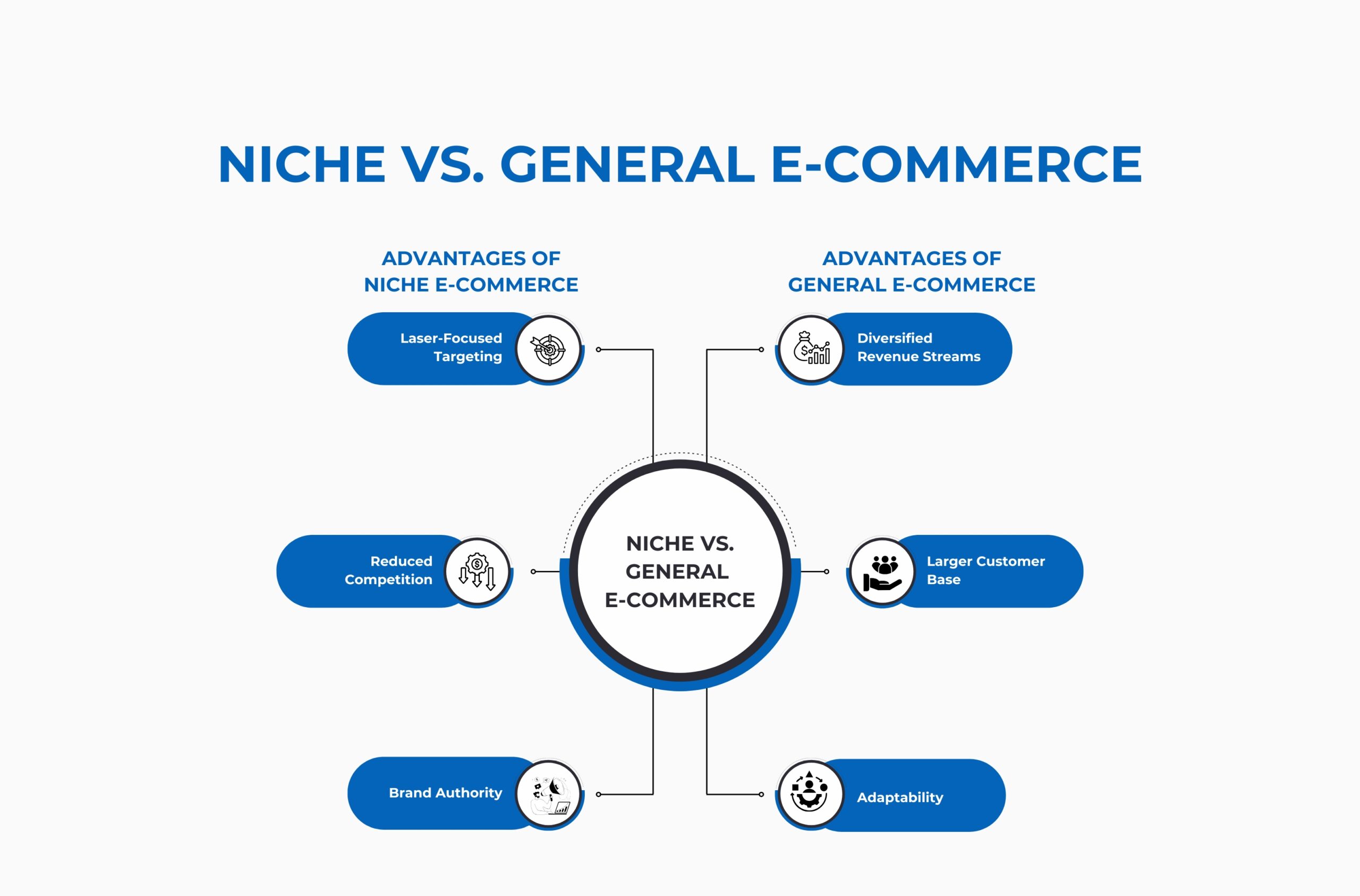
    Advantages of Niche E-commerce


    1. Laser-Focused Targeting:

    Niche businesses can tailor their marketing efforts to a specific audience, leading to higher engagement and conversion rates. This targeting can include personalized messaging, product recommendations, and specialized content that resonates with the audience’s interests.

    2. Reduced Competition:

    By focusing on a narrow market segment, niche businesses often face less competition compared to general e-commerce players. This can lead to higher visibility and a better chance of establishing themselves as industry experts.

    3. Brand Authority In Niche e-commerce

    Niche businesses can position themselves as authorities in their field, building a strong brand reputation and loyal customer base. This authority can translate into higher customer trust and long-term success.

    4. Personal Connection:

    Niche businesses have the opportunity to develop a personal connection with their customers. By understanding their specific needs and preferences, niche businesses can offer personalized experiences that foster customer loyalty.

    5. Product Differentiation:

    Niche products are often unique or specialized, allowing businesses to stand out based on the distinct value they provide. This differentiation can lead to higher perceived value and pricing flexibility.


    Niche E-commerce


    Advantages of General E-commerce


    General e-commerce, on the other hand, involves offering a wide range of products or services that cater to a broader audience. This approach has its own set of benefits:

    1. Diversified Revenue Streams: 

    General e-commerce businesses can tap into multiple product categories, reducing reliance on a single niche. This diversification can provide a safety net against market fluctuations.

    2. Larger Customer Base: 

    With a broader product range, general e-commerce businesses can attract a wider customer base. This increases the potential for higher sales volumes and revenue.

    3. Adaptability: 

    General e-commerce businesses can more easily adapt to changing market trends. If one product category experiences a decline, the business can shift its focus to other profitable areas.

    4. Economics of Scale: 

    With larger product volumes, general e-commerce businesses may benefit from economies of scale, leading to potential cost savings in areas such as inventory management and shipping.

    5. Cross-Selling and Upselling: 

    General e-commerce businesses have the advantage of cross-selling and upselling opportunities. Customers who purchase one product might be enticed to explore other offerings, leading to increased average order values.


    Factors to Consider


    The decision to pursue a niche or general e-commerce approach depends on various factors, including your business goals, resources, and market insights. Consider the following factors when making your choice:

    1. Expertise and Passion:

    If you’re deeply knowledgeable and passionate about a specific niche, it might be the ideal path for you. Niche businesses often require a deep understanding of the industry to deliver value and build trust.

    2. Market Demand:

    Conduct thorough market research to determine the demand for your chosen niche. Is there a sufficient audience interested in the products or services you plan to offer?

    3. Competition Analysis In Niche E-commerce

    Assess the level of competition in your chosen niche. High competition might require unique strategies to differentiate your business and gain a foothold.

    4. Long-Term Visibility:

    Consider whether your chosen niche is likely to remain relevant and profitable in the long run. Market trends and consumer preferences can evolve.

    5. Resource Allocation:

    Evaluate the resources you have available, including budget, time, and manpower. Niche businesses might require specialized marketing and product development efforts.

    6. Risk Tolerance:

    Niche businesses might have a more defined customer base, which could pose risks if that audience shrinks. General e-commerce might provide more stability due to a broader market.

    7. Scalability:

    Consider whether your chosen approach can scale as your business grows. Niche businesses might have limitations in terms of growth potential.


    Finding the Middle Ground: Hybrid Approach


    In some cases, entrepreneurs opt for a hybrid approach that combines elements of both niche and general e-commerce. This involves starting with a specific niche and gradually expanding the product range over time. This approach allows you to build a strong foundation within a niche while retaining the flexibility to diversify as your business gains traction.


    Conclusion


    The choice between niche and general e-commerce hinges on your strengths, resources, market insights, and business goals. Niche e-commerce offers the opportunity for specialization, authority, and a strong connection with a targeted audience. General e-commerce provides diversification, a larger customer base, and adaptability to market shifts.

    Ultimately, success in either approach relies on delivering value, understanding your customers, and staying agile in a dynamic e-commerce landscape. Whether you decide to carve a niche or embrace the breadth of possibilities, thorough research, and a clear business strategy will be your guiding lights on the path to e-commerce success.


    Frequently Asked Questions (FAQs)


    1. What are the advantages of niche e-commerce?

    Advantages include a focused customer base, less competition within the niche, the ability to build a strong brand identity, and the potential for higher profit margins.


    1. What are the advantages of general e-commerce?

    Advantages include a larger potential customer base, versatility in product offerings, and the ability to adapt to changing market trends.


    1. How do I choose between niche and general e-commerce for my business?

    Consider your expertise and passion, market research, competition, and your target audience’s needs and preferences when deciding which approach is best for your business.


    1. Which one is more profitable, niche or general e-commerce?

    Profitability depends on various factors, including market demand, competition, and the quality of your products. Niche e-commerce can be profitable if there’s a dedicated customer base, while general e-commerce may require more extensive marketing.  

  • What Role Does User Experience Play in E-Commerce Success?

    In the world of e-commerce, where countless options compete for consumer’s attention, the significance of user experience in E-commerce (UX) cannot be overstated. A seamless and enjoyable online shopping journey can make all the difference between a one-time visitor and a loyal customer. This article delves into the pivotal role that user experience plays in e-commerce success, exploring its impact on customer satisfaction, conversion rates, and brand loyalty.


    Defining User Experience in E-commerce

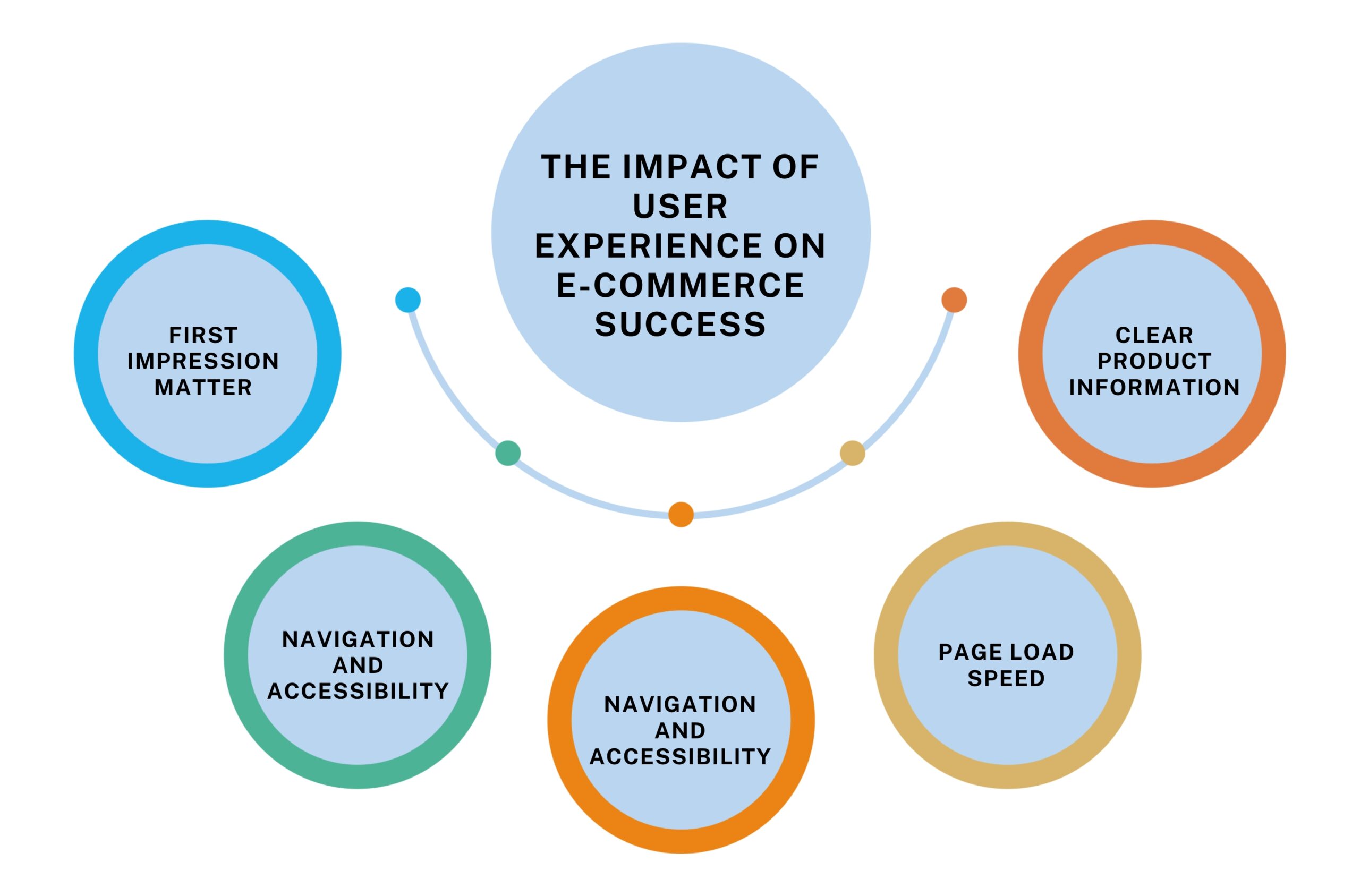
    User experience refers to the overall satisfaction and impression a user gains while interacting with a website or digital platform. In the context of e-commerce, UX encompasses every aspect of the online shopping process, from the initial website visit to the final purchase. It encompasses design, navigation, speed, responsiveness, product information, checkout process, and post-purchase support.


    The Impact of User Experience in E-commerce Success


    User Experience in E-Commerce.


    1. First Impression Matter: User Experience in E-commerce Success

    First impressions are often formed within seconds. A visually appealing and well-organized website immediately captures visitors’ attention and encourages them to explore further. A cluttered or confusing interface, on the other hand, can lead to high bounce rates and lost opportunities.


    2. Navigation and Accessibility: 

    Smooth navigation is crucial for guiding users through the site effortlessly. Intuitive menus, clear categorization, and effective search functionalities ensure that customers can find what they’re looking for quickly. A frustrating navigation experience can frustrate visitors, causing them to abandon the site in favor of competitors.


    3. Mobile Responsiveness:

    With mobile devices accounting for a significant portion of online traffic, mobile responsiveness is non-negotiable. Websites that are not optimized for mobile devices can lead to frustration and a subpar shopping experience, ultimately impacting conversion rates.


    4. Page Load Speed for User Experience in E-commerce

    Slow-loading pages are a major turn-off for online shoppers. In an era of instant gratification, delays in page loading can result in abandoned carts and missed sales opportunities. Optimizing page load speed enhances both user satisfaction and search engine rankings.


    5. Clear Product Information: 

    Detailed and accurate product information is essential for informed purchasing decisions. High-quality images, comprehensive descriptions, pricing details, and availability status provide users with the confidence to make a purchase.


    6. Seamless Checkout Process for User Experience in E-commerce

    The checkout process should be streamlined and frictionless. Lengthy forms, mandatory account creation, and unexpected fees can lead to cart abandonment. Offering guest checkout options, multiple payment methods, and clear shipping details contribute to a positive checkout experience.


    7. Personalization and Recommendations:

    User experience is enhanced when customers feel that a website understands their preferences. Personalized product recommendations based on browsing history and previous purchases can lead to increased cross-selling and upselling opportunities.


    8. Trust and Security: 

    Earning customer trust is paramount in e-commerce. Displaying security badges, using secure payment gateways, and offering transparent privacy policies reassure users that their personal and financial information is safe.


    9. Post-Purchase Support: 

    User experience doesn’t end with the purchase. Efficient order tracking, timely delivery, and responsive customer support contribute to a positive overall experience. Addressing post-purchase concerns promptly can turn customers into brand advocates.


    The Link between User Experience and Conversion Rates


    A seamless user experience directly influences conversion rates, which is the percentage of website visitors who complete a desired action, such as making a purchase. An enhanced UX increases the likelihood of visitors becoming paying customers. Intuitive navigation, clear calls to action, and a user-friendly checkout process all contribute to a smoother conversion journey.

    Furthermore, a positive user experience can decrease the rate of experience can decrease the rate of cart abandonment. Shopping cart abandonment occurs when users add items to their cart but do not complete the purchase. Factors such as unexpected fees, complex checkout procedures, and security concerns can lead to cart abandonment. By addressing these issues and ensuring a frictionless checkout experience, e-commerce businesses can recover potentially lost sales.


    Building Brand Loyalty through Exceptional User Experience


    User experience has a profound impact on brand loyalty. Customers who have a positive experience are more likely to return for future purchases and recommend the brand to others. Word-of-mouth referrals, positive online reviews, and social media mentions can all be attributed to a satisfying user experience. In contrast, negative reviews, damage a brand’s reputation and deter potential customers.

    Repeat customers are valuable assets for e-commerce business. Not only do they contribute to recurring revenues, but they also have a higher average order value and are more likely to explore other products offered by the brand. By consistently delivering exceptional user experiences, businesses can foster lasting relationships with customers and build a loyal customer base.


    Continuous Improvement and Adaptation


    User experience is not a static concept. It requires continuous monitoring, analysis, and adaptation to changing consumer behaviors and preferences. E-commerce businesses should gather user feedback, track metrics such as bounce rates and conversion rates, and implement changes based on insights gained. Regular updates to the website’s design, functionality, and features ensure that the user experience remains aligned with evolving expectations.


    Conclusion:User Experience in E-commerce

    User experience stands as a cornerstone of e-commerce success. From the initial website visit to the final checkout, every interaction shapes a customer’s perception of a brand. By prioritizing elements such as responsive design, intuitive navigation, informative product details, and seamless checkout processes, e-commerce businesses can create a positive, memorable, and trust-building experience. 

    This, in turn, leads to improved conversion rates, higher customer satisfaction, enhanced brand loyalty, and sustained business growth in the competitive world of online retail. 


    Frequently Asked Questions (FAQs)


    1. What is user experience (UX) in e-commerce?

    User experience in e-commerce refers to the overall quality of a customer’s interactions with an online store. It encompasses website design, navigation, ease of use, and how customers feel while browsing and making purchases.


    1. How does user experience impact e-commerce success?

    A positive user experience is critical for e-commerce success because it directly influences customer satisfaction, conversion rates, and brand loyalty. An excellent UX can lead to higher sales and repeat.


    1. How can I improve the user experience on my e-commerce website?

    To enhance UX, focus on mobile optimization, provide detailed product information, streamline the checkout process, offer multiple payment options, and ensure your website is easy to navigate. Regularly seek feedback from customers for continuous improvement.


    1. How can customer reviews and ratings influence e-commerce user experience?

    Customer reviews and ratings provide social proof and help shoppers make informed decisions. Positive reviews build trust, while negative reviews can provide insights for improvement. Encourage customers to leave honest feedback. 

  • How has E-commerce revolutionized the Retail Industry?

    [vc_row][vc_column][vc_column_text css=””] 

    The retail industry has undergone a seismic transformation in recent decades, driven primarily by the advent and rapid growth of e-commerce. Traditional brick-and-mortar stores are no longer the sole players in the retail game; online shopping has become an integral part of our consumer culture. 


    This digital revolution has not only reshaped the way we shop but has also brought about significant changes in the retail industry as a whole. In this blog, we will explore how e-commerce has revolutionized the retail industry.


    1. Accessibility and Convenience


    One of the most significant ways e-commerce has revolutionized retail is by making shopping more accessible and convenient than ever before. With just a few clicks or taps, consumers can browse through an extensive catalog of products, compare prices, read reviews, and make purchases from the comfort of their own homes or on the go. This convenience has completely changed the way people shop, eliminating the need to visit physical stores unless they prefer to do so.


    2. Global Reach


    E-commerce has transcended geographical boundaries, allowing businesses to reach a global audience with ease. Retailers are no longer limited to serving a local or regional market. Through online platforms, they can showcase their products to potential customers worldwide. This expanded reach has opened up new growth opportunities for businesses, irrespective of their size, and has fuelled the growth of international trade.


    3. Diverse Product Offerings


    E-commerce has led to an explosion of product diversity. Online marketplaces can offer an almost endless array of products, ranging from niche and specialized items to mass-market goods. Consumers now have access to an unparalleled variety of products, ensuring they can find precisely what they are looking for, even if it’s something unique or obscure.


    4. Personalized and Recommendations


    E-commerce platforms are equipped with sophisticated algorithms that track user behavior and preferences. This data allows retailers to offer personalized shopping experiences by recommending products tailored to each individual’s interests. This level of personalization not only enhances but also increases the likelihood of making a sale, as customers are more likely to purchase items they genuinely desire.


    E-commerce

    5. Cost-Efficiency


    For both consumers and businesses, e-commerce has introduced cost efficiencies. Retailers can operate with lower overhead costs compared to physical stores, which may require rent, utilities, and staff for in-store operations. As a result, e-commerce businesses can pass on these cost savings to customers in the form of lower prices or special promotions.


    6. 24/7 Accessibility


    Unlike physical stores with set operating hours, e-commerce websites are open 24/7, providing consumers with the flexibility to shop whenever it suits them. This has become especially relevant in today’s world, where many people have busy schedules and cannot always shop during traditional store hours.


    7. Customer Reviews and Trust


    E-commerce platforms facilitate the sharing of customer reviews and ratings. Shoppers can read about the experiences of others before making a purchase decision, which helps build trust and transparency in the retail industry. Positive reviews can boost sales, while negative feedback can prompt improvements in product quality and customer service.


    8. Seamless Payment and Security


    E-commerce has also made payment methods more convenient and secure. Online shoppers can choose from a variety of payment options, including credit cards, digital wallets, and even cryptocurrencies. Advanced encryption and security measures have made online transactions safer, reducing the risk of fraud and identity theft.


    9. Inventory Management and Analytics


    E-commerce platforms offer robust inventory management tools and analytics capabilities. Retailers can monitor stock levels in real-time, optimize product listings, and analyze customer behavior to make the data-driven approach to retail allow businesses to adapt quickly to changing market trends and customer preferences.


    10. The Rise of Mobile Commerce


    The proliferation of smartphones has given rise to mobile commerce, or m-commerce. Consumers can shop on the go using mobile apps, or mobile-friendly websites. Mobile commerce has become a significant driver of e-commerce growth, allowing retailers to engage with customers wherever they are.


    11. Reduced Overheads


    Operating a physical store involves significant overhead costs, such as rent, utilities, and in-store staff. E-commerce often requires fewer physical resources, allowing businesses to allocate more of their budget to improving the online shopping experience, marketing, and product quality.


    Conclusion


    E-commerce has undeniably revolutionized the retail industry, reshaping the way businesses operate and consumers shop. It has brought unparalleled convenience, accessibility, and choice to consumers while challenging traditional retail models. Businesses that adapt to these changes and embrace the opportunities offered by e-commerce are poised for success in this retail industry. The e-commerce revolution is far from over, and its potential to reshape retail is boundless.

    Frequently Asked Questions (FAQs)

    [/vc_column_text][vc_toggle title=”What is e-commerce, and how does it differ from traditional retail?” css=””]E-commerce, short for electronic commerce, refers to the buying and selling of goods and services over the Internet. It differs from traditional retail in that it doesn’t require physical stores; transactions occur online.[/vc_toggle][vc_toggle title=”How has e-commerce made shopping more convenient for consumers?” css=””]E-commerce offers 24/7 accessibility, allowing consumers to shop at any time from anywhere with an internet connection. This convenience eliminates the need to visit physical stores.[/vc_toggle][vc_toggle title=”What is personalized shopping, and how does e-commerce facilitate it?” css=””]Personalized shopping tailors product recommendations to individual preferences using data and algorithms. E-commerce platforms collect user data to offer personalized product suggestions, enhancing the shopping experience.[/vc_toggle][vc_toggle title=”How has e-commerce improved customer service in the retail industry?” css=””]E-commerce platforms offer various customer support options, including live chat, chatbots, and email support, available 24/7. Additionally, online reviews and ratings provide valuable information for shoppers.[/vc_toggle][vc_toggle title=”How does e-commerce contribute to cost efficiency for retailers?” css=””]E-commerce reduces overhead costs associated with physical stores, such as rent, utilities, and maintenance. Retailers can also employ efficient inventory management practices, minimizing storage expenses.[/vc_toggle][vc_toggle title=”How will e-commerce continue to shape the future of the retail industry?” css=””]E-commerce will likely continue to evolve with advancements in technology and changes in consumer behavior. The future may see innovations like augmented reality shopping experiences and increased automation in fulfillment.[/vc_toggle][/vc_column][/vc_row]

  • Data Security in E-commerce: A Comprehensive Guide

    Understanding E-commerce Data


    Understanding e-commerce data is very important for online businesses. Data serves as the lifeblood of e-commerce operations, providing insights, enabling personalization, and facilitating transactions. There are various types of data involved in e-commerce, let’s explore them:


    1. Customer Data:


    Customer data encompasses personal information such as names, email addresses, shipping addresses, and contact numbers.
    It’s essential for creating user accounts, processing orders, and providing customer support.
    Effective use of customer data enables businesses to offer personalized shopping experiences, recommend products, and engage in targeted marketing.


    2. Transaction Data:


    Transaction data includes details of purchases made by customers, such as product names, quantities, prices, and payment methods.
    It’s vital for order fulfillment, inventory management, and financial record-keeping.
    Analyzing transaction data helps e-commerce businesses optimize pricing, manage inventory efficiently, and identify popular products.


    3. Payment Data:


    Payment data consists of sensitive information like credit card numbers, CVVs, and billing addresses.
    Safeguarding payment data is topmost to protect customers from fraud and identity theft.
    Compliance with the Payment Card Industry Data Security Standard (PCI DSS) is mandatory for secure handling of payment data.


    4. Website Analytics:


    Website analytics data includes user behavior information, such as page views, click-through rates, and bounce rates.
    It helps e-commerce businesses track the performance of their websites, identify areas for improvement, and measure the success of marketing campaigns.
    Tools like Google Analytics provide valuable insights into user interactions.


    5. Customer Reviews and Feedback:


    Customer reviews and feedback data consist of user-generated content, including product reviews, ratings, and comments.
    It provides valuable social proof for products and helps businesses identify areas for improvement.
    Moderation and response to customer reviews can enhance brand reputation and customer trust.


    6. Marketing and Advertising Data:


    Marketing and advertising data includes information on ad campaigns, click-through rates, conversion rates, and customer demographics.
    This data guides marketing strategies, helping businesses allocate resources effectively and target the right audience.
    Marketing automation tools use this data to optimize advertising efforts.


    7. Inventory and Product Data:


    Inventory and product data encompass information about product availability, descriptions, images, and pricing.
    This data is vital for managing product listings, updating stock levels, and ensuring accurate product information on the website.
    Automation tools can help keep inventory data up-to-date and synchronized with e-commerce platforms.


    E-commerce Security Measures


    Protecting customer data requires a multi-layered approach that combines technology, processes, and awareness. Here are some essential security measures that e-commerce businesses should implement:


    1. Encryption:


    Data encryption is a cornerstone of e-commerce security. By converting sensitive information into unreadable code during transmission, encryption prevents unauthorized access. Secure Sockets Layer (SSL) and Transport Layer Security (TSL) protocols are widely used to encrypt data during online transactions.


    2. Payment Card Industry Data Security Standard (PCI DSS) Compliance:


    PCI DSS is a set of security standards designed to ensure the secure handling of credit card information during online transactions. E-commerce businesses that handle credit card data are required to comply with these standards to mitigate the risk of data breaches.


    3. Regular Software Updates:


    Outdated software can have vulnerabilities that hackers exploit. E-commerce platforms, content management systems, and plugins should be regularly updated to include the latest security patches.


    4. Secure Authentication:


    Implement strong authentication practices for both customers and employees. Two-factor authentication (2FA) adds an extra layer of security by requiring users to provide an additional form of verification beyond a password.


    5. Data Minimization:


    Collect only the data that is necessary for business operations. Storing excessive customer data increases the risk associated with a potential breach.


    6. Regular Security Audits and Penetration Testing:


    Conduct regular security audits and penetration testing to identify vulnerabilities and weaknesses in your systems. This proactive approach helps address potential threats before they can be exploited.


    7. Employee Training:


    Educate employees about the importance of data security and train them to recognize phishing attempts, social engineering, and other cyber threats.


    8. Third-Party Security:


    If you use third-party vendors or partners, ensure that they adhere to robust security practices. Weaknesses in third-party systems can become avenues for attacks.


    9. Data Backups:


    Regularly back up customer data to secure servers. This ensures that even in the event of a breach, data can be recovered without significant loss.


    10. Incident Response Plan:


    Have a well-defined incident response plan in place to handle data breaches effectively. This plan should outline steps to take in the event of a breach, including communication with affected parties and regulatory bodies.


    Data Security Threats in E-commerce


    To effectively combat data security threats in e-commerce, it’s essential to understand the various risks that businesses face:


    1. Phishing Attacks


    Phishing involves tricking individuals into revealing sensitive information, often through fraudulent emails or websites. E-commerce sites are frequently targeted as they handle valuable customer data.


    2. Malware and Ransomware


    Malicious software can infect e-commerce platforms, potentially stealing data or locking access until a ransom is paid.


    3. Insider Threats


    Employees or contractors with access to sensitive information can intentionally or unintentionally compromise security.


    4. SQL Injection


    Attackers exploit vulnerabilities in web applications to gain unauthorized access to data bases, potentially exposing customer data.


    Conclusion


    E-commerce security is not an option; it’s a necessity. The protection of customer data is not only a legal obligation but also a fundamental responsibility that underpins customer trust and business sustainability. Failing to protect customer data can lead to dire consequences for both individuals and businesses.


    Frequently Asked Questions (FAQs)


    1. What is data security in e-commerce, and why it is important?

    Data security in e-commerce refers to the protection of sensitive customer information, such as personal data and payment details, from unauthorized access or breaches. It is crucial it safeguards customer trust, prevents financial losses, and ensures compliance with data protection regulations.


    2. What are the common threats to data security in e-commerce?

    Common threats include phishing attacks, malware, ransomware, insider threats, SQL injection, and Distributed Denial of Service (DDoS) attacks.


    3. How can I build trust with my e-commerce customers regarding data security?

    Building trust involves transparent data handling practices, clear privacy policies, secure payment gateways, and demonstrating compliance with relevant regulations. Communicate your commitment to data security to reassure customers.


    4. What should I do if my e-commerce website experiences a data breach?

    If a data breach occurs, follow your incident response plan, notify affected customers promptly, report the breach to relevant authorities as required by law, and work to contain and mitigate the breach.

  • What are the key advantages of starting an E-commerce Business?

    In businesses, the emergence of e-commerce has redefined the way commerce is conducted. E-commerce, or Electronic commerce, involves buying and selling goods and services through the Internet. With its widespread reach and transformative capabilities, it has become a preferred avenue for entrepreneurs to establish their businesses.

    So, what are the advantages of starting an E-commerce business? In this article, we will discuss some of the key advantages of starting an E-commerce business.


    What is E-commerce?


    E-commerce or Electronic commerce, involves conducting business transactions electronically, without the need for physical presence. E-commerce encompasses a wide range of activities, including online shopping, electronic payments, online auction, and Internet banking. It has transformed the way businesses operate and how consumers shop by providing a convenient and accessible platform for conducting commercial activities online.


    Advantages of Starting an E-commerce Business


    1. Global Reach and Market Expansion


    One of the most significant advantages of e-commerce is the ability to transcend geographical boundaries. Traditional brick-and-mortar businesses are often limited to their local markets, but e-commerce offers a global platform. Entrepreneurs can tap into an international customer base, reaching consumers from various corners of the world.

    This global reach enables businesses to expand their market presence and connect with diverse audiences without the constraints of physical locations.


    2. Reduced Overhead Costs


    Compared to setting up and maintaining a physical store, launching an e-commerce business comes with considerably lower overhead costs. There’s no need for renting or owning a storefront, investing in elaborate interior designs, or employing a large number of staff.

    E-commerce businesses can be managed with a lean team, saving on labor expenses. Additionally, digital platforms streamline inventory management, reducing warehousing and storage costs.


    3. Scalability and Flexibility


    E-commerce businesses possess inherent scalability, which means they can easily accommodate growth. As demand increases, entrepreneurs can adjust their operations, expand product offerings, and integrate additional features without the challenges associated with physical expansion. This flexibility allows businesses to adapt swiftly to market trends and consumer demands, staying ahead of the competition.


    4. Lower Cost in Inventory Management


    Traditional businesses often struggle with inventory management, facing the dilemma of overstocking or understocking products. E-commerce businesses can take advantage of digital tools that provide real-time insights into inventory levels, helping entrepreneurs optimize stock and reduce wastage. This not only saves costs but also ensures that products are available when customers want.


    5. 24/7 Accessibility and Convenience


    E-commerce businesses operate around the clock, providing customers with unparalleled accessibility and convenience. Shoppers can browse and purchase products at any time, eliminating the restrictions of traditional store operating hours. This convenience factor resonates with busy individuals and those from different time zones. For entrepreneurs, this means the potential for continuous sales and revenue generation, even while they sleep.


    6. Environmental Sustainability


    E-commerce businesses inherently have a smaller carbon footprint compared to brick-and-mortar establishments. The elimination of physical storefronts and the associated energy consumption contribute to reduced environmental impact. Moreover, the shift towards digital receipts, online invoices, and paperless transactions aligns with sustainable practices, appealing to environmentally conscious consumers.


    7. Reduced Barrier to Entry


    Starting an e-commerce business is relatively easier and requires less capital compared to traditional ventures. With platforms like Shopify, WooCommerce, and Amazon Marketplace, entrepreneurs can set up online stores without extensive technical knowledge. This reduced barrier to entry encourages more individuals to explore their entrepreneurial ambitions, leading to a diverse range of products and services available to consumers.


    8. Direct Interaction with Customers


    E-commerce platforms offer opportunities for direct interaction between businesses and customers. Customer reviews, ratings, and feedback contribute to transparency and build trust. Entrepreneurs can promptly respond to inquiries, resolve issues, and gather insights for continuous improvement. This direct engagement fosters a sense of community and loyalty among customers, driving repeat purchases.


    9. Personalized Shopping Experience


    The digital nature of e-commerce allows businesses to gather and analyze customer data, enabling them to offer personalized shopping experiences. Through the use of cookies and browsing history, businesses can recommend products that align with individual preferences. This not only enhances customer satisfaction but also boosts the likelihood of upselling and cross-selling, contributing to increased revenue.


    10. Wider Product Visibility and Marketing Opportunities


    E-commerce businesses benefit from a variety of digital marketing tools that enhance product visibility. Search engine optimization (SEO), social media advertising, and email marketing strategies can be employed to attract and engage potential customers. Unlike physical stores that rely heavily on foot traffic, e-commerce businesses can leverage data-driven marketing techniques to target specific demographics and tailor promotions effectively.

    In conclusion, the advantages of starting an e-commerce business are numerous and impactful. From global market reach and cost efficiencies to personalized experience and environmental sustainability, e-commerce has revolutionized the way business is conducted. Entrepreneurs who harness the power of digital platforms can position themselves for success in the marketplace, where innovation reigns supreme.


    Frequently Asked Questions (FAQs)


    1. How can I reach customers globally with an e-commerce business?


    E-commerce allows you to reach customers worldwide through online marketing, international shipping options, and the ability to operate 24/7 to accommodate different time zones.


    2. What are the cost advantages of e-commerce compared to traditional retail?


    E-commerce typically has lower overhead costs, as you don’t need physical storefronts, extensive inventory, or as many staff members.


    3. Are there any disadvantages or challenges to starting an e-commerce business?


    Challenges may include intense competition, the need for effective online marketing, and staying update with changing technology and customer preferences.


    4. How can I ensure the security of customer data in an e-commerce business?


    Utilize secure payment gateways, implement encryption for customer data, and stay compliant with data protection regulations (e.g., GDPR) to ensure data security.


    5. What e-commerce platforms are suitable for beginners?


    Some beginner-friendly e-commerce platforms include Shopify, WooCommerce (for WordPress users), and BigCommerce, which offer user-friendly interfaces and support.


    6. What marketing strategies work well for e-commerce businesses?


    Effective digital marketing strategies include search engine optimization (SEO), social media marketing, email marketing, and pay-per-click advertising to drive traffic and sales.

  • Choosing the Right E-commerce Platform for Your Business

    In the world of e-commerce, selecting the right platform for your online business is crucial for success. The choice of an e-commerce platform impacts various aspects of your operations, including website functionality, scalability, payment gateways, inventory management, and marketing capabilities. This article aims to guide you through the process of selecting the ideal e-commerce platform for your business. We will discuss key considerations, explore popular platforms, and provide insights to help you make an informed decision that aligns with your business goals.


    Understanding Your Business Requirements:


    Before diving into the plethora of e-commerce platforms available, it is essential to understand your business requirements. Start by identifying the nature of your products, your target market, and your long-term goals. Consider factors such as the size of your product catalog, the need for customization, the level of scalability required, and any specific industry regulations or compliance standards.


    Evaluate the following aspects:


    1. Product Catalog and Inventory Management: 

    Determine the size and complexity of your product catalog and whether you require advanced inventory management features.


    2. Scalability and Growth Potential: 

    Consider your growth projections and ensure that the platform can handle increasing traffic and sales volumes without compromising performance.


    3. Payment Gateways and Integration: 

    Assess the availability of payment gateways and check if the platform integrates smoothly with your preferred payment providers.


    4. Design and Customization: 

    Evaluate the platform’s design flexibility and customization options to create a visually appealing and unique online store.


    5. Marketing and SEO Capabilities: 

    Look for features such as built-in SEO tools, content management systems, and integrations with marketing automation software to enhance your digital marketing.


    6. Customer Support and Security: 

    Consider the level of customer support offered by the platform provider, as well as the security measures in place to protect customer data.


    Exploring Popular E-commerce Platforms:


    1. Shopify: 

    Known for its user-friendly interface and extensive app store. Shopify is a popular choice for businesses of all sizes. It offers a wide range of themes, customizable design options, and seamless integration with various payment gateways. Shopify provides comprehensive support and is suitable for both beginners and established businesses.


    2. WooCommerce: 

    As a plugin for WordPress, WooCommerce is highly flexible and customizable. It is ideal for businesses already using WordPress as their Content Management System (CMS). WooCommerce offers a vast array of plugins and themes, making it easy to build and scale an e-commerce store.


    3. Magneto: 

    Known for its scalability and robust features, Magneto is suitable for large-scale enterprises. It provides advanced customization options, powerful SEO capabilities, and comprehensive inventory management features. However, Magneto requires technical expertise and is best suited for businesses with dedicated development resources.


    4. BigCommerce:

    With a focus on scalability and performance, BigCommerce offers a comprehensive set of features, including built-in SEO tools, responsive themes, and multi-channel selling capabilities. It is suitable for businesses aiming to grow rapidly and expand their reach across multiple sales channels.


    5. Squarespace: 

    Squarespace is a user-friendly platform known for its stunning design templates and ease of use. It offers a simple yet powerful e-commerce solution with features such as integrated blogging, email marketing, and social media integration. Squarespace is an excellent choice for small to medium-sized businesses seeking a visually appealing online presence.


    Making the Final Decision and Implementation:


    Once you have evaluated your business requirements and explored different e-commerce platforms, it’s time to make a decision. Consider factors such as cost, ease of use, scalability, and support. Choose a platform that aligns with your budget and offers the necessary features and functionalities to meet your present and future needs.


    Before implementing the chosen platform, take the following steps:


    1. Set up the development environment: 

    Create a test environment to explore the platform’s features and functionalities without affecting your live website.


    2. Migrate your data: 

    If you have an existing e-commerce store, plan the migration process carefully to ensure a smooth transition of data, including products, customer information, and order history.


    3. Customize and Optimize: 

    Tailor the chosen platform to match your brand identity and optimize the user experience. This includes customizing themes, configuring payment gateways, and setting up SEO-friendly URLs and metadata.


    4. Test thoroughly: 

    Perform comprehensive testing across different devices and browsers to ensure your online store is functioning seamlessly and providing an optimal user experience.


    5. Launch and Monitor: 

    Once everything is set up, launch your e-commerce store and closely monitor its performance. Continuously analyze metrics, user behavior, and sales data to identify areas for improvement and implement necessary optimizations.


    Conclusion:


    Choosing the right e-commerce platform is a critical decision that can significantly impact your online business’s success. By understanding your business requirements, exploring popular platforms, and considering factors such as scalability, customization, and support, you can make informed decisions. 


    Remember to evaluate platforms like Shopify, WooCommerce, Magneto, BigCommerce, and Squarespace based on your specific needs. Selecting the right platform and implementing it will lay the foundation for a successful and thriving e-commerce business. 


    Frequently Asked Questions (FAQs)


    1. How do I determine my budget for an e-commerce platform?

    Consider not only the initial setup costs but also ongoing fees for hosting, transaction fees, and any additional extensions or plugins you may need.


    1. Do I need to consider security for my e-commerce platform?

    Yes, security is very important. Ensure the platform offers SSL encryption, regular security updates, and PCI compliance if you handle credit card data.


    1. What are the ongoing maintenance requirements for an e-commerce platform?

    Regular updates, security checks, and backups are necessary. Ensure you have a plan for ongoing maintenance.


    1. Is it essential to test the platform before committing?

    Yes. Take advantage of free trials or demos to ensure the platform meets your needs and is user-friendly.


    1. Are there any restrictions on the types of products I can sell?

    Some platforms have restrictions on certain product categories, so make sure your products are allowed.

    If you are looking for the Best E-commerce Marketing Agency for your Business please contact Bliss Marcom.
    Office Address in Noida.

  • E-commerce Marketing Strategies to Drive Online Sales

    E-commerce has become an integral part of the retail industry. With the convenience of online shopping and the ever-expanding customer base on the Internet, businesses are continuously seeking effective marketing strategies to drive online sales and stay ahead of the competition. 


    In this blog, we will explore essential marketing strategies that can help businesses boost their online sales and thrive in the digital marketplace.


    Optimize Your E-commerce Website:


    A well-optimized e-commerce website forms the cornerstone of successful online sales. It is crucial to ensure that your website is user-friendly, visually appealing, and mobile-responsive. A clutter-free design with intuitive navigation will enhance the user experience and encourage visitors to explore your products.


    Moreover, prioritize website speed and performance, as slow-loading pages can lead to high bounce rates. Implement a secure and streamlined checkout process to reduce cart abandonment rates and instill confidence in customers when making transactions.


    Search Engine Optimization (SEO)


    SEO plays a pivotal role in driving organic traffic to your e-commerce marketing website. Conduct keyword research to identify relevant search terms that your target audience uses to find products similar to yours. Integrate these keywords strategically into your product descriptions, meta tags, and headings to improve your website’s search engine ranking.


    Regularly update your website with fresh, high-quality content, such as blog posts and product reviews, to enhance its authority and visibility in search engines. Additionally, focus on building backlinks from reputable websites to further boost your search rankings and drive more organic traffic.


    Leverage Social Media Marketing


    Social media platforms have become powerful marketing tools for e-commerce businesses. Identify the social media channels where your target audience is most active and create a strong presence on those platforms. Engage with your followers by responding to comments, addressing queries, and sharing valuable content.


    Invest in visually appealing and compelling visuals to showcase your products effectively. Social media influencers can also play a crucial role in promoting your products to their followers, amplifying your brand’s reach, and increasing online sales.


    Implement Email Marketing Campaigns


    Email marketing remains one of the most effective ways to nurture leads and convert them into loyal customers. Build an email subscriber list by offering incentives such as discounts or exclusive content in exchange for email sign-ups.


    Personalize your email campaigns based on customer preferences and past purchase behavior to deliver targeted and relevant content.


    Segment your email list to send tailored offers and recommendations to different customer segments. Regularly send newsletters, product updates, and special promotions to keep your audience engaged and encourage repeat purchases.


    Offer Discounts, Deals, and Promotions


    Everyone loves a good deal, and offering discounts and promotions can be a powerful driver of online sales. Rum limited-time offers, flash sales, and holiday discounts create a sense of urgency among shoppers. 


    Display these promotions prominently on your website and promote them through various marketing channels, including email and social media.


    Consider implementing loyalty programs to reward repeat customers and incentivize them to make more purchases. Special offers for referrals can also help expand your customer base through word-of-mouth marketing.


    Invest in Influencer Marketing 


    Influencer marketing has become a popular strategy for e-commerce businesses looking to expand their reach and credibility. Collaborate with influencers who align with your brand and have a substantial following in your niche. 


    These influencers can create engaging content featuring your products, providing authentic recommendations that resonate with their audience.


    Before partnering with influencers, conduct thorough research to ensure their authenticity and engagement levels. Micro-influencers, who have a smaller but highly engaged following, can often be more effective and cost-efficient for certain nice markets.


    Implement Retargeting Campaigns


    Retargeting, also known as remarketing, is an effective way to re-engage potential customers who have previously visited your website but didn’t complete a purchase. 


    By placing cookies on their browsers, you can show targeted ads to these prospects as they browse other websites, reminding them of your products and encouraging them to return to your site.


    Retargeting can significantly improve conversion rates by keeping your brand top-of-mind and providing gentle nudges to complete the purchase.


    User-Generated Content (UGC)


    Leverage the power of user-generated content to build trust and credibility. Encourage customers to share their experiences with your products by leaving reviews, and testimonials, or sharing photos and videos on social media. UGC serves as social proof, showing potential buyers that real people are enjoying and benefitting from your products.


    Highlight user-generated content on your website and social media channels to showcase the positive experiences of your customers. This approach fosters a sense of community around your brand and helps build lasting relationships with customers.


    Implement Live Chat Support


    Excellent customer service is essential for e-commerce success. Implement live chat support on your website to provide instant assistance to visitors who have questions or concerns. Prompt and helpful responses can lead to higher conversion rates and customer satisfaction.


    Additionally, consider providing multiple contact options, such as email and phone support, to cater to different customer preferences.


    Monitor and Analyze Performance


    Continuously monitor the performance of your e-commerce marketing strategies and make data-driven decisions. Utilize web analytics tools to track website traffic, conversion rates, and other key performance indicators (KPIs). Analyze customer behavior to identify patterns and preferences that can inform your marketing approach.


    Regularly A/B tests different elements of your marketing campaigns, such as email subject lines, ad copy, and website design, to optimize for better results. Stay adaptable and willing to experiment with new strategies based on the insights gained from performance analysis.


    Conclusion


    In the fiercely competitive world of e-commerce, implementing effective marketing strategies is crucial for driving online sales and achieving success. By optimizing your website, leveraging SEO, utilizing social media marketing, and implementing email campaigns, you can attract and retain customers. 


    Discounts, influencer marketing, retargeting, and user-generated content can further bolster your brand’s appeal and credibility. Regularly monitor and analyze performance to refine your strategies and stay ahead in the dynamic e-commerce landscape.


     By adopting these well-rounded e-commerce marketing strategies, businesses can attract, engage, and convert customers, ultimately leading to increased online sales and sustainable growth. 

    If you are looking for the Best E-commerce Marketing Agency for your Business please contact Bliss Marcom.
    Office Address in Noida.

  • Motives for Choosing eCommerce Development

    Today’s world has drastically changed, and individuals prefer shopping online over visiting their neighborhood shops.  Thanks to all these trends, every com organization has its retail site, which has completely transformed the online retail sector.  About sales and patrons, it has grown to be among the most prominent industries. 

    The business sector’s operations have significantly changed due to website maintenance services.  Therefore, this article includes information on the significance of websites for professional business owners or organizations.

    What exactly is web development?

    There is no reasonable suggestion for you to enter the website development company career and produce top-notch websites if you’ve recently earned an IT degree or finished your studies.  And besides, the industry that is now creating the most employment worldwide is information technology.  Web development is the number of actions necessary to develop a website to post on the Internet.  The following steps are likely to be involved if you intend to build websites as a profession:

    • Web design
    • Content improvement
    • Website navigation programme
    • Setting up security

    If you wish to pursue a profession in website maintenance services, you must be aware of these duties and responsibilities.  Because they are receiving assignments connected to them in the IT industry, many individuals are also learning about these positions in addition to their regular work.

    Regarding creating the best website for eCommerce, Bliss marron is currently the best website Development company in the world because it is so simple to create websites with Strikingly; many developers are reconsidering using this platform.

    What-exactly-is-web-development

    Ecommerce Web Development: What Is It? 

    With only approximately 2 million to 3.7 million online businesses worldwide, retailers and traders must invest in eCommerce to keep up with the competition. 

    However, what exactly is eCommerce creation, and how does a store establish a fruitful and revenue-generating best website for eCommerce?  In just this essay, we’ll go into great detail about everything.  Let’s start now!

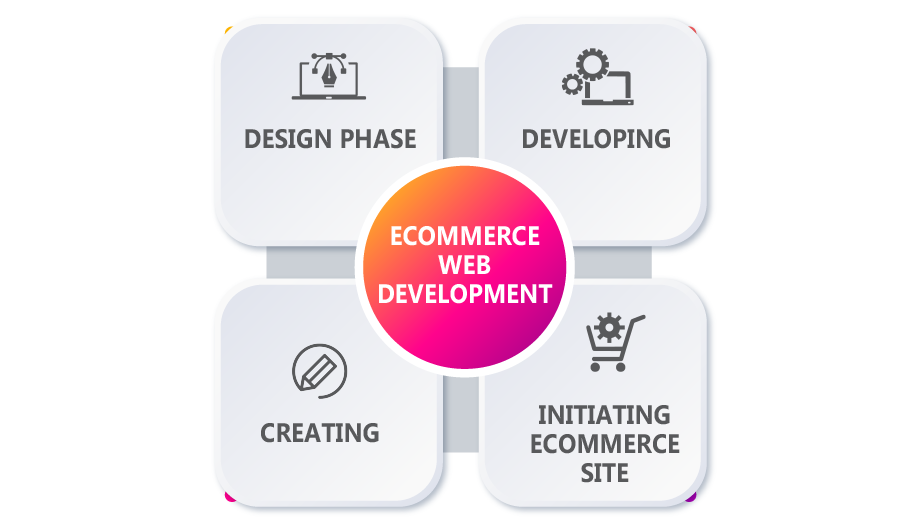
    The design phase, developing, creating, and initiating an eCommerce site so that customers can shop digitally, is known as eCommerce web development.  Even though customers love eCommerce development stores, developing a user-friendly, straightforward, and high-security eCommerce site could indeed help you increase the business’s revenue.

    Due to the enormous demand, best websites for eCommerce web development firms are under pressure to create eCommerce websites that are future-proof by utilising the latest advancements.  The best option for any company in the corporate world to grow its business today is through internet stores.  Therefore, if you choose the leading eCommerce development firm, you can receive a website that meets your needs.

    You’re losing many advantages if you’re unaware of how an internet development authority can offer your local retail company significant global visibility.  Keep reading to learn more about the benefits of e-commerce web development. 

    Ecommerce-Web-Development_

    Principal Advantages of E-Commerce Website Development 

    The current trend states that using eCommerce online portals is the best approach to generate cash and establish a brand.  As a result, businesses choose online retailers since they benefit from them in several ways.  For website maintenance services, WordPress is used.

    Businesses don’t need physical locations everywhere when they have internet stores.  Here are a few more ways that eCommerce web development benefits your company. 

    • Forms the initial impression of your firm. 

    Customers will likely advertise and promote for the first time through the website.  A positive first image of the brand from an eCommerce website developed effectively will persuade visitors to browse the page for longer.

    • Extends the reach of the company 

    They make it simple for your company to reach out to clients who cannot visit the actual store. 

    • Facilitates marketing 

    The company’s advertising becomes incredibly simple and can attract more devoted and returning customers. 

    • Aids in enhancing SEO tactics 

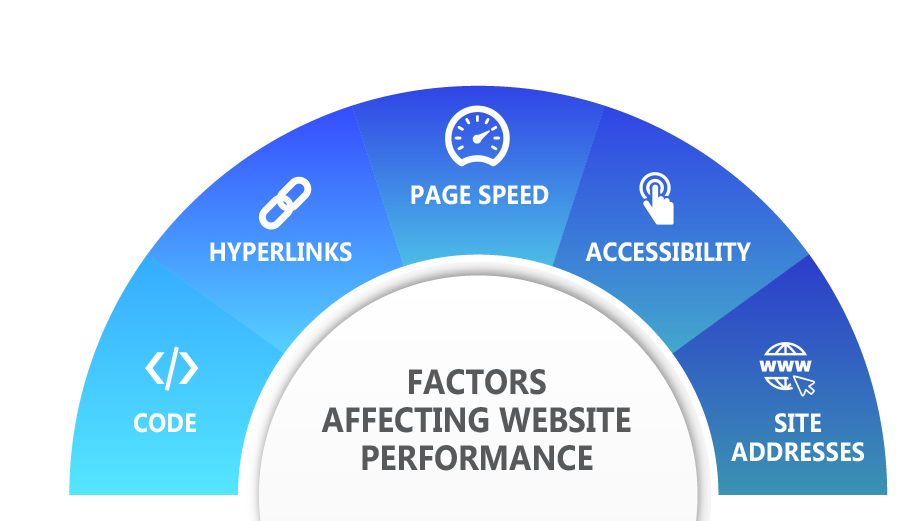
    The development of an e-commerce website is crucial to any SEO plan.  Page speed, code, accessibility, site Addresses, and hyperlinks are just a few examples of the variables that might affect how well the website performs in search engine results.

    • Bring purchasing convenience. 

    With only a few taps, customers can conveniently purchase their preferred products anywhere. 

    • Assists you in comprehending the clients 

    An eCommerce website enables business owners to learn about client interests, and utilising this knowledge, it is simple for them to persuade customers by making offers about their chosen products.

    • Aids in differentiating you from the competition 

    Building an e-commerce portal is a terrific method to remain in front of the competition.  It can assist you in creating a high-quality, up-to-date website which will outperform your rivals and attract more leads and visitors. 

    In the end, developing an eCommerce site is a valuable instrument that you may use to hasten the expansion and success of your eCommerce firm.  A website development company can assist you in creating a solid website which will bring in more visitors and high-quality leads, boost sales, and bring in more money for your company.

    How to take Consultancy Services for eCommerce Development? 

    WordPress offers the best website for eCommerce development resources to allow you if you wish to take advantage of the advantages of eCommerce web design.  They can create any form of an eCommerce site in the quickest time, whether a supplier site or even a multi-vendor eCommerce site. 

    Their skilled project team has decades of expertise in building customised eCommerce stores that increase the clients’ traffic and revenue.  For the international clientele, they have a history of creating multiple popular eCommerce websites.

    They genuinely want to demonstrate their incredible job, not simply tell people about it.  One can look at eCommerce’s outstanding achievements if you’re interested.  With new technologies, passing up the best available chances is straightforward.  When one lacks the knowledge to capitalise on these shifts, the situation worsens.  That’s the situation faced by companies with little experience in website creation and design. 

    Conclusion

    The dream of any web designer in the digital sector is to establish a presence online.  Bliss marron is the best website development company.  Individuals must study the current relevant website features and how you can incorporate them if you want to ensure that your site has a special place within the digital industry.  Nowadays, web designers compete against one another in a marathon run to create the most attractive website possible.

    If you are looking for the Best Digital Marketing Agency for your Business please contact Bliss Marcom.
    Office Address in Noida.