Category: Content Marketing

  • Content Marketing vs. Traditional Advertising: Which Approach is Right for You?

    Effective marketing is crucial for success. With a plethora of marketing strategies available, it can be challenging to determine the best approach for your business. Content marketing and traditional advertising are two popular methods, each with its unique strengths and weaknesses.

    This article aims to explore the key differences between content marketing and traditional advertising, highlighting their advantages and disadvantages to help you make an informed decision on which approach is right for your business.

    I. Understanding Content Marketing:

    Content marketing is a strategic marketing approach that focuses on creating and distributing valuable, relevant, and consistent content to attract and engage a target audience. It involves the creation and sharing of content, such as blog posts, articles, videos, social media posts, podcasts, and more, to drive profitable customer action.

    The main objective of content marketing is to provide valuable information, entertain, educate, or solve problems for the target audience rather than directly promoting a product or service. By delivering high-quality content that aligns with the interests and needs of the audience, businesses can build trust, establish themselves as industry experts, and ultimately drive customer engagement and loyalty.

    Content marketing is a long-term strategy that requires planning, creativity, and ongoing effort. When done effectively, it can drive organic traffic, increase brand awareness, enhance customer engagement, and generate leads and conversions for businesses.

    Content Marketing revolves around creating and distributing valuable, relevant, and consistent content to attract and engage a target audience. It focuses on building trust, establishing thought leadership, and nurturing long-term customer relationships. Key points to consider about content marketing include:

    1. Focus on storytelling and providing value
    2. Emphasis on educating, entertaining, or inspiring the audience
    3. Long-term strategy with cumulative benefits.
    4. Utilizes various formats such as blog posts, videos, podcasts, infographics, etc.
    5. Require consistent effort and effort and quality content creation
    6. Relies heavily on organic reach and audience engagement
    7. Generate brand awareness and thought leadership

    II. Unpacking Traditional Advertising:

    Traditional advertising refers to the conventional methods of promoting products, services, or brands to a wide audience. These methods have been used for many years and typically include print media, television, radio, billboards, direct mail, and telemarketing.

    Traditional marketing has been a cornerstone of marketing for decades, but it has faced challenges in recent years due to the rise of digital advertising. Digital platforms provide more targeted and measurable options, allowing businesses to reach specific audiences with precision. However, traditional advertising still holds value in certain contexts, particularly when combined with digital strategies in an integrated marketing campaign.

    Businesses need to consider their target audience, marketing objectives, budget, and the reach and effectiveness of different advertising channels when deciding on the most suitable mix of traditional and digital advertising methods.

    Traditional advertising involves paid promotions through channels like television, radio, print media, billboards, and direct mail. It aims to capture the attention of a broad audience and promote a specific product or service. Key points to consider about traditional advertising include:

    1. Focus on persuasive messaging and direct selling
    2. Often interrupts the audience’s attention to deliver a message
    3. Short-term strategy with immediate impact
    4. Utilizes traditional channels like TV, radio, billboards, etc.
    5. Require significant financial investment 
    6. Limited interaction with the audience
    7. Builds brand recognition and drives immediate sales

    III. Comparing Advantages and Disadvantages:

    To choose between content marketing and traditional advertising, it’s important to evaluate their respective advantage and disadvantages:

    A. Advantages of Content Marketing

    1. Establishes credibility and thought leadership within the industry
    2. Builds long-term relationships with the audience, leading to customer loyalty
    3. Improves search engine visibility and organic traffic
    4. Drives engagement and fosters a sense of community
    5. Cost-effective in the long run, particularly for small businesses
    6. Provide valuable insights into audience preferences and behaviors

    B. Disadvantages of Content Marketing

    1. Requires significant time and effort to produce high-quality content consistently
    2. Results may take time to manifest, requiring patience and persistence
    3. Relies on organic reach, which can be unpredictable and competitive

    C. Advantages of Traditional Advertising

    1. Offers immediate reach and exposure to a large audience
    2. Allows for precise targeting based on demographics and media selection
    3. Generates quick brand recognition and awareness
    4. Provides greater control over messaging and creative elements

    D. Disadvantages of Traditional Advertising

    1. Expensive, particularly for prime-time TV or radio slots
    2. Limited interaction and engagement with the audience
    3. Message fatigue due to saturation of traditional advertising channels

    IV. Determining the Right Approach

    To determine the right approach for your business, consider the following factors:

    1. Business goals and objectives
    2. Target audience and their preferences
    3. Available budget and resources
    4. Brand positioning and messaging requirements
    5. Long-term vs. short-term marketing strategy 

    Conclusion

    Choosing between content marketing and traditional advertising depends on several factors, such as your business goals, target audience, and available resources. Content marketing focuses on building trust, establishing thought leadership, and nurturing long-term customer relationships, while traditional advertising aims for immediate reach and brand recognition. 

    By understanding the advantages and disadvantages of each approach, you can make an informed decision that aligns with your business’s unique needs and objectives. Remember, it’s also possible to combine elements of both strategies for a comprehensive marketing approach.

    Frequently Asked Questions (FAQs)

    1. Which is more cost-effective: content marketing or traditional marketing?

    Content marketing is often more cost-effective than traditional marketing. Creating and distributing content online can be less expensive than running traditional advertising campaigns, especially for small businesses.

    1. Can content marketing and traditional marketing be used together?

    Yes, many businesses use a combination of both content marketing and traditional marketing to reach a broader audience and achieve their marketing goals. This approach is often referred to as integrated marketing.

    1. What are some examples of traditional marketing channels?

    Traditional marketing channels include television commercials, radio ads, print advertising (such as newspapers and magazines), billboards, direct mail, and telemarketing.

    1. How does content marketing help with SEO (Search Engine Optimization)?

    Content marketing can improve SEO by creating valuable and relevant content that attracts organic search traffic. High-quality content that answers questions and provides solutions is more likely to rank well in search engine results.
  • The Power of an Emotional Appeal in Content Marketing

    In content marketing, capturing the attention and engaging the emotions of your target audience is paramount. With so much content vying for people’s limited attention spans, it’s crucial to find a way to stand out from the crowd. One highly effective technique that has been proven time and again is the use of emotional appeal. 

    By tapping into the emotions of your audience, you can create a powerful connection that drives engagement, fosters brand loyalty, and ultimately leads to conversions. In this article, we will explore the power of emotional appeal in content marketing and how you can harness it to enhance your marketing efforts.

    What is Emotional Appeal?

    Emotional appeal, also known as pathos, is a persuasive technique that aims to evoke specific emotions in the audience. It is based on the understanding that humans are inherently emotional beings and that emotions play a significant role in our decision-making processes. By leveraging emotions, content marketers can establish a deeper connection with their audience, making their message more memorable and impactful.

    The Importance of Emotional Appeal in Content Marketing

    1. Capturing Attention: 

    In today’s digital world capturing the attention of your target audience is no easy task. However, emotional content stands a much higher chance of cutting through the noise and grabbing people’s attention. Emotional appeal triggers a visceral response, making it more likely for people to stop and pay attention to your message.

    2. Creating Engagement: 

    Emotional content is inherently more engaging. When people feel strong emotions while consuming content, they are more likely to react, comment, and share it with others. By creating emotionally resonant content, you can encourage active participation from your audience, generate discussions, and increase the reach of your brand.

    3. Building Trust and Connection: 

    Emotional appeal allows you to connect with your audience on a deeper level, fostering trust and building long-term relationships. When people feel understood and empathized with, they are more likely to develop a sense of loyalty toward a brand. By consistently delivering emotionally resonant content, you can establish yourself as a trusted authority in your industry.

    4. Enhancing Brand Recall: 

    Emotionally charged content is more likely to be remembered. When a piece of content elicits a strong emotional response, it leaves a lasting impression on the audience. This increased recall can significantly benefit your brand, as people will be more likely to remember and seek out your content, products, or services when the need arises.

    5. Driving Conversions: 

    Ultimately, the success of any marketing campaign is measured by its ability to drive conversions. Emotional appeal can be a powerful tool in persuading your audience to take action. When people feel emotionally connected to a brand or its message, they are more inclined to make a purchase, sign up for a newsletter, or engage in other desired actions.

    How to Harness the Power of Emotional Appeal

    1. Know Your Audience: 

    Effective emotional appeal starts with a deep understanding of your target audience. Research their needs, desires, and pain points. Identify the emotions that are most likely to resonate with them. By tailoring your content to address these emotions, you can create a more impactful and relevant message.

    2. Tell Compelling Stories: 

    Storytelling is a potent technique for eliciting emotions. Craft narratives that your audience can relate to and that evoke the desired emotional response. Whether it’s a heart-warming success story, a relatable anecdote, or a powerful testimonial, stories have the power to transport your audience, stir their emotions, and make your message more memorable.

    3. Use Visuals Effectively: 

    Visual content is highly effective in triggering emotions. Incorporate visually appealing elements such as images, videos, and infographics into your content. Visuals can amplify the emotional impact of your message and make it more shareable. Be intentional with your visual choices and ensure they align with the emotions you want to evoke.

    4. Evoke Positive Emotions: 

    While negative emotions can be powerful motivators, it’s generally advisable to focus on evoking positive emotions in content marketing. Emotions like joy, happiness, inspiration, and awe tend to have a more favorable impact on brand perception and can leave a lasting positive impression.

    5. Maintain Authenticity: 

    Emotional appeal should be genuine and authentic. People can quickly detect when a brand is trying to manipulate their emotions for purely commercial purposes. Ensure that your emotional content aligns with your brand values and resonates with your audience in an authentic way.

    6. Test and Analyze: 

    As with any marketing strategy, it’s crucial to test and analyze the effectiveness of your emotional appeal. Monitor metrics such as engagement rates, click-through rates, conversion rates, and social shares to gauge the impact of your emotional content. A/B Testing can help you refine your approach and identify what works best for your audience.

    In conclusion, emotional appeal is a powerful tool in content marketing. By tapping into the emotions of your audience, you can create a strong connection that captures attention, fosters engagement, builds trust, enhances brand recall, and ultimately drives conversions. 

    Understanding your audience, telling compelling stories, using visuals effectively, evoking positive emotions, maintaining authenticity, and analyzing results are essential steps in harnessing the power of emotional appeal. By integrating emotional appeal into your content marketing strategy, you can elevate your brand and create a lasting impact in the hearts and minds of your audience. 

    Frequently Asked Questions (FAQs)

    1. Are there ethical considerations when using emotional appeal?

    Yes, there are ethical consideration. Using emotional appeal should be done with integrity and respect for the emotions of the audience. Manipulative or deceptive emotional appeals can be unethical and harm trust.

    1. Why is emotional appeal important in communication?

    Emotional appeal is important in communication because it can make messages more memorable, persuasive, and relatable. It can foster stronger connections between communicators and their audiences.

    1. What are some examples of successful emotional appeal in advertising?

    Successful examples include Nike’s “Just Do It” campaign, which inspires determination and empowerment, and Budweiser’s emotional Super Bowl commercial featuring Clydesdale horses, which evoke feelings of nostalgia and warmth.

  • The Art of Repurposing Content: Making the Most of Your Existing Assets

    Today, businesses and individuals alike are constantly striving to produce fresh, engaging content to attract and retain audiences. However, creating new content from scratch can be a time-consuming and resource-intensive process. That’s where the art of repurposing content comes in. 

    Repurposing content allows you to maximize the value of your existing assets by presenting them in new and innovative ways. In this article, we’ll explore the benefits of repurposing content and provide practical tips on how to do it effectively.

    Extend the Lifespan of Your Content

    One of the primary advantages of repurposing content is that it enables you to extend the lifespan of your existing assets. Instead of letting a blog post, podcast episode, or video fade into obscurity, you can breathe new life into it by repurposing it into different formats.

     For example, you can turn a series of blog posts into an e-book, create an infographic summarizing a lengthy article, or transform a webinar into a series of bite-sized videos for social media. By repackaging your content, you give it a chance to reach new audiences and continue generating value long after its initial publication.

    Reach Different Audiences

    Not everyone consumes content in the same way. Some people prefer reading blog posts, while others enjoy watching videos or listening to podcasts. By repurposing your content into various formats, you can cater to different audience preferences and reach a wider range of individuals. This allows you to expand your reach and attract new followers or customers who may have missed your content in its original form. 

    Additionally, by tailoring your content to different platforms and mediums, you can tap into specific audience segments that may be more active or engaged on those channels.

    Improve SEO and Increase Traffic

    Repurposing content can also have a positive impact on your search engine optimization (SEO) efforts. When you repurpose content, you create additional opportunities for keywords, backlinks, and internal links. This can boost your website’s visibility in search engine results and increase organic traffic.

    Additionally, when you repurpose content across different platforms, you can attract visitors from various sources, such as social media, video-sharing sites, or podcast directories. By diversifying your content distribution, you enhance your chances of attracting a steady stream of traffic from different channels.

    Reinforce Key Messages and Ideas

    Repurposing content allows you to reinforce your key messages to ideas across different platforms and mediums. By presenting your core concepts in multiple ways, you increase the chances of them resonating with your audience. 

    For example, if you have a particularly insightful blog post, you can transform it into a visually appealing infographic, create an engaging podcast episode discussing the main points, or develop a webinar expanding on the topic. This multi-dimensional approach strengthens your brand’s messaging and helps solidify your position as an authority in your industry.

    Save Time and Resources

    Creating high-quality content from scratch is time-consuming and can require a significant investment of resources. However, when you repurpose content, you already have a foundation to build upon. This can save you time and effort, allowing you to focus on other aspects of your business or create additional content.

     For example, you can repurpose a series of blog posts into an email course, compile customer testimonials into a case study, or combine related articles into a comprehensive e-book. By repurposing content, you can maintain a consistent content production schedule without sacrificing quality or overwhelming your team.

    Tips for Effective Content Repurposing:

    1. Understand Your Audience: Before repurposing content, take the time to understand your target audience’s preferences, pain points, and preferred content formats. This will help you tailor repurposed content to their needs and ensure maximum engagement.
    2. Identify Evergreen Content: Look for evergreen content in your archives – pieces that are timeless and still relevant. These are ideal candidates for repurposing, as they will continue to provide value over time.
    3. Choose the Right Formats: Consider the nature of your content and select the formats that best suit its message and medium. Some content may lend itself well to visuals like infographics or videos, while others may work better as podcasts or interactive quizzes.
    4. Optimize for Each Platform: When repurposing content for different platforms, make sure to optimize it for each specific channel. Adjust the format, tone, and style to align with the platform’s best practices and audience expectations.
    5. Add a Fresh Perspective: Repurposing doesn’t mean duplicating content verbatim. Instead, add a fresh perspective, update statistics or examples, and provide new insights to make the repurposed content valuable even to those who have seen the original piece.

    6. Promote Across Channels:

     Once you’ve repurposed your content, make sure to promote it across various channels. Share links on social media, include them in your email newsletter and leverage your existing audience to drive traffic to the repurposed content.

    In conclusion, the art of repurposing content allows you to maximize the value of your existing assets by presenting them in new and innovative ways. By extending the lifespan of your content, reaching different audiences, improving SEO, reinforcing key messages, and saving time and resources, repurposing content marketing efforts. With careful planning and execution, you can unlock the full potential of your existing content and achieve greater impact and engagement across multiple platforms.

    Frequently Asked Questions (FAQs)

    1. What tools can help with content repurposing?

    Tools like Canva, Adobe Spark, and video editing software can be useful fot creating repurposed content. Content management systems can also streamline the process.

    1. How can I track the success of repurposed content?

    Monitor metrics like engagement, traffic, and conversion to assess the performance of repurposed content compared to the original.

    1. Is there such a thing as over-repurposing content?

    Yes, excessive repurposing without adding value can lead to content fatigue. Balance is key; focus on quality over quantity.

    1. How can I repurpose content for SEO benefits?

    By optimizing repurposed content with relevant keywords and links, you can improve its search engine visibility and attract more organic traffic.

  • Content Length & SEO: Striking the Right Balance per Topic

    In search engine optimization (SEO), the age-old question of content length continues to spark debates and discussions among digital marketers and content creators. How long should your content be for optimal SEO results? Is longer always better, or is brevity the key to success? The truth lies in finding the right balance, and understanding that content length isn’t a one-size-fits-all approach.

    In this blog, we’ll explore the relationship between content length and SEO, emphasizing the importance of tailoring your content to the specific needs of different topics.

    The Myths of “One Size Fits All” Content-Length

    There’s a common misconception that longer content always ranks better in search engine results. While it’s true that in-depth, comprehensive articles can perform well, it’s essential to recognize that content length isn’t the only factor at play. The key lies in understanding user intent, search intent, and the unique characteristics of each topic you’re addressing.

    The Impact of User Intent on Content-Length

    User intent, or the reason behind a user’s search query, is a critical consideration when determining content length. Different types of search intent call for different content formats:

    1. Information Intent: When users are seeking information, concise and informative content may be more appropriate. Answer the user’s question succinctly while providing valuable insights.
    2. Navigational Intent: For users looking to navigate to a specific website or page, short and to-the-point content that directs them appropriately is preferred.
    3. Transactional Intent: Users looking to make a purchase or take a specific action may require more detailed content, including product features, benefits, and calls to action.
    4. Commercial Intent: Content that bridges the gap between informational and transactional, offering insights while subtly guiding users toward a decision, can be of medium length.
    5. Educational Intent: In-depth guides, tutorials, and educational content often warrant longer articles to thoroughly cover the topic.

    Search Intent Dictates Content Depth

    The concept of search intent aligns closely with the idea that different topics require different content depths. Some topics are naturally complex and demand a more comprehensive approach, while others can be effectively addressed with concise content. Understanding your audience’s search intent and catering to it ensures that your content meets their expectations.

    Content-Length and Engagement

    User engagement is a crucial factor in SEO rankings. Longer content isn’t inherently better if it fails to engage your audience. Boring, overly verbose content can lead to higher bounce rates and diminished user satisfaction. On the other hand, shorter, engaging content that captures and retains users’ attention can be just as effective in conveying your message and achieving your goals.

    Is Content-Length Important for High Ranking on Search Engines?

    Content-length can be a factor for high rankings on search engines. Longer and more comprehensive content often has a better chance of addressing user queries and providing valuable information. However, it’s not the only factor; content quality, relevance, keywords, backlinks, and user engagement also play a crucial role in search engine ranking. Aim for a balance between content length and quality to create valuable resources for your audience. 

    Expertise, Authority, and Trustworthiness (E-A-T)

    Google’s E-A-T guidelines emphasize the importance of demonstrating expertise, authority, and trustworthiness in your content. While longer articles can allow you to showcase your expertise in-depth, shorter pieces can still establish your authority through focused, well-researched insights. 

    Content Quality over Quantity 

    Instead of fixating solely on content length, prioritize content quality. High-quality content is valuable, informative, and relevant to the user’s query. If a topic can be thoroughly covered in a shorter piece without sacrificing value, then brevity can be a strength.

    Using Data and Analytics

    Analyzing data from your website and using tools like Google Analytics can provide insights into user behavior. Track metrics such as time on page, bounce rates, and scroll depth to understand how users engage with your content. This data can help you tailor your content length to align with user preferences and behavior.

    Tailoring Content-Length for Different Platforms

    Content length considerations can also vary based on the platform you’re using. Social media platforms demand concise, attention-grabbing content, while blog posts and articles allow for more in-depth exploration.

    Conclusion

    In the field of content SEO, there is no one-size-fits-all approach to content length. Striking the right balance involves understanding user intent, the intricacies of your topic, and the preferences of your audience. Whether your content is short and impactful or long and comprehensive, what matters most is its ability to provide value, engage users, and meet their expectations.

    By focusing on delivering high-quality content that aligns with user needs, you’ll find that the right content length naturally emerges to enhance your SEO efforts.

    Frequently Asked Questions (FAQs)

    1. What is content length in SEO, and does longer content always rank better?

    Content length in SEO refers to the number of words or characters in a webpage’s content. Longer content can provide more in-depth information and may rank better for certain topics. However, content length should align with the user’s intent, and there’s no universal rule that longer content always ranks better. Quality, relevance, and user engagement also matter.

    1. Should I prioritize content length over content quality?

    Content quality should always be a priority. While longer content can be beneficial, it should not sacrifice quality. Focus on delivering valuable, well-researched, and engaging content that addresses the user’s needs and questions.

    1. Can shorter content rank well in search results?

    Yes, shorter content can rank well, especially for topics with straightforward answers or where brevity is preferred. Search engines prioritize content that directly addresses user queries, so concise and clear content can perform effectively.

    1. Is there an ideal word count for blog posts or articles?

    There is no ideal word count for blog posts or articles. It depends on the topic and user expectations. Some blog posts can be effective with 500-800 words, while others may requires 2,000 words or more to cover complex subjects thoroughly.

    1. Does content length impact social media engagement and sharing?

    On social media, shorter and visually appealing content often performs better due to the platform’s nature. However, long-form content can also be shared if it provides value or addresses a specific audience’s interests.

  • The Future of Content Consumption: Predictive Personalization

    [vc_row][vc_column][vc_column_text css=””]In digital content, the key to capturing and retaining audiences lies in “predictive personalization“. As technology advances and data analytics become more sophisticated, content consumption is undergoing a transformational shift toward predictive personalization. This paradigm shift is poised to revolutionize how individuals interact with content as it goes beyond mere customization to anticipate user preferences and needs.


    The Evolution of Predictive Personalization

    Personalized content has been a buzzword for some time, but it has traditionally relied on user-provided data and behavior patterns. With predictive personalization, a new era emerges – one where artificial intelligence and machine learning algorithms analyze vast amounts of data to anticipate user behavior before it happens. This anticipatory approach goes beyond reacting to user actions; it proactively tailors content to suit users’ tastes, interests, and even emotions.


    Understanding Predictive Personalization

    At the core of predictive personalization is data – big data, to be precise. By collecting, analyzing, and interpreting a user’s historical interactions with content, predictive algorithms can forecast what a user is likely to engage with in the future. This is achieved through a combination of machine learning techniques, including collaborative filtering, natural language processing, and sentiment analysis. The result is a highly curated content experience that caters to individual preferences.


    Anticipating User Needs

    One of the most fascinating aspects of predictive personalization is its ability to anticipate user needs. Imagine opening your favorite news app, and before you even search for a topic, relevant articles are already displayed based on your interests. Similarly, streaming platforms could queue up TV shows and movies aligned with your mood or past viewing habits. This anticipatory approach not only enhances user experience but also saves time and eliminates decision fatigue.


    Hyper-Relevant Recommendations

    Predictive personalization enables content creators to craft hyper-relevant recommendations that resonate with users on a deeper level. Brands can align their messaging with a user’s preferences, ensuring that the content is not only timely but also tailored to the user’s individual context. This level of relevance fosters a stronger connection between users and the content, leading to increased engagement and loyalty.


    Challenges and Considerations

    While the promise of predictive personalization is exciting, it comes with its own set of challenges and considerations. Privacy concerns remain at the forefront, as predictive algorithms rely heavily on user data. Striking the delicate balance between personalization and privacy is crucial to prevent overstepping ethical boundaries.

    Additionally, the potential for creating echo chambers – where users are only exposed to content that reinforces their existing beliefs – is a concern that must be addressed.


    The Role of AI and Machine Learning

    At the heart of predictive personalization lies artificial intelligence (AI) and machine learning (ML). These technologies power the algorithms that analyze data patterns, predict user behavior, and offer tailored recommendations. As AI and ML continue to evolve, their applications in predictive personalization will become even more refined, enhancing the accuracy of content predictions and ensuring a seamless user experience.


    Personalization in Various Industries

    Predictive personalization isn’t limited to a signal industry – it has the potential to transform various sectors. In e-commerce, for instance, online retailers can provide personalized product recommendations that align with a shopper’s preferences and browsing history.

    In education, learning platforms can predict which topics a student may struggle with and offer targeted resources in advance. Even healthcare could benefit, with predictive algorithms helping doctors anticipate patient needs and recommend treatments.


    The Future of Content Consumption

    The future of content consumption is undeniably tied to predictive personalization. As technology continues to evolve, we can expect more immersive and intuitive content experiences. However, this transformation will require a collective effort from content creators, technology developers, and policymakers to address challenges related to privacy, bias, and user autonomy. By navigating these challenges responsibly, the potential for predictive personalization to reshape content consumption is immense.


    Predictive Personalization

    Conclusion

    Predictive personalization represents a shift from reactive customization to proactive content curation. Through the power of AI and machine learning, content consumption is poised to become a more immersive, relevant, and engaging experience. 

    While challenges remain, the benefits of anticipatory content delivery are too significant to ignore. As we step into the future, content creators and consumers alike have the opportunity to embrace this new era and shape the landscape of predictive personalization for the better.


    Frequently Asked Questions (FAQs)

    [/vc_column_text][/vc_column][/vc_row][vc_row][vc_column][vc_toggle title=”What is content consumption?” css=””]Content consumption refers to the act of consuming or engaging with various types of digital or multimedia content, such as articles, videos, music, podcasts, and more, through various digital devices and platforms.[/vc_toggle][vc_toggle title=”What is personalized content consumption?” css=””]Personalized content consumption involves tailoring content recommendations and experiences to an individual’s preferences and behavior. This is often done using algorithms and AI to provide content that is most relevant to a specific user.[/vc_toggle][vc_toggle title=”How can I consume content responsibly?” css=””]Responsible content consumption involves being mindful of data usage, supporting sustainable practices, and being critical of the information you consume. It’s also important to respect copyright and intellectual property rights when engaging with digital content.[/vc_toggle][vc_toggle title=”What is the future of content consumption?” css=””]The future of content consumption includes trends like AI-driven personalization, AR and VR integration, interactive content, blockchain-based ownership, sustainability efforts, and globalized content experiences.[/vc_toggle][vc_toggle title=”How can I ensure responsible content consumption?” css=””]Responsible content consumption involves being mindful of the content you engage with. This includes fact-checking information, avoiding excessive screen time, and supporting ethical content creators. Additionally, consider the environmental impact of data consumption and strive for sustainable practices.[/vc_toggle][/vc_column][/vc_row]

  • The Psychology Behind Personalized Content: Why it Resonate With Audiences?

    In the era of information overload, capturing the attention of audiences has become an intricate art. Content creators are constantly seeking ways to connect with their target audience on a deeper level. Enter personalized content – an approach that goes beyond one-size-fits-all messaging. The allure of personalized content lies in its ability to tap into human psychology, creating a powerful resonance with individuals.

    This article explores the psychology behind personalized content and uncovers why it has become a cornerstone of effective communication in the digital age.


    Understanding Personalization

    Personalized content is about tailoring messages, recommendations, and experiences to suit the unique preferences and needs of individual consumers. Thanks to advances in technology and data analytics, brands now have the tools to curate content that speaks directly to each person, increasing engagement, brand loyalty, and ultimately, conversion rates.


    Psychological Principles of Personalized Content


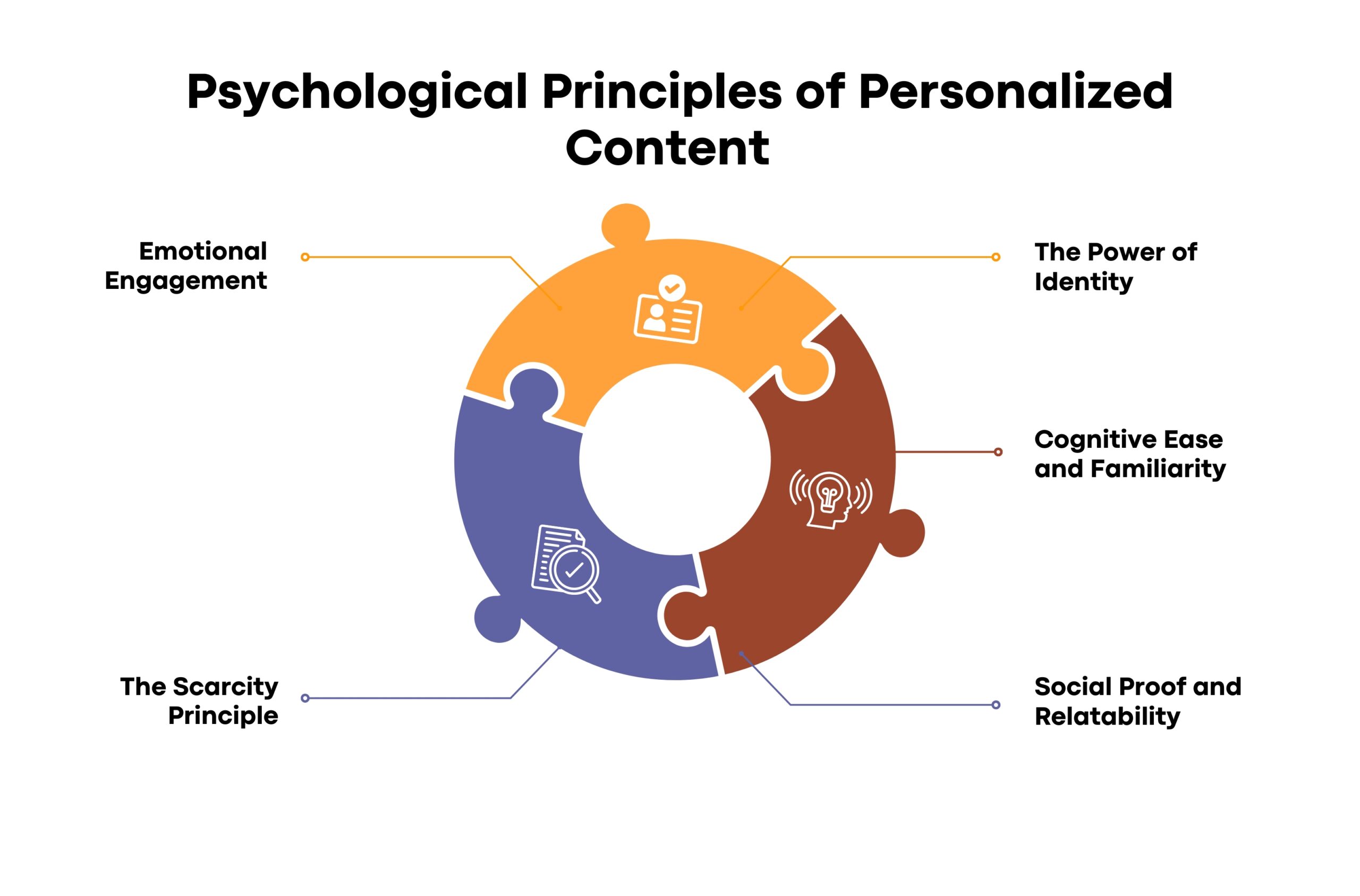
     Personalized Content1. The Power of Identity: 

    One of the primary reasons personalized content resonates with audiences is its ability to reinforce a person’s sense of identity. When individuals encounter content that aligns with their values, beliefs, and interests, they feel validated and understood. This alignment reinforces their identity and fosters a stronger connection with the brand.

    2. Cognitive Ease and Familiarity: 

    Personalized content feels familiar and relevant. This taps into the cognitive ease principles – our brains are naturally drawn to information that is easy to process. When content feels familiar due to personalization, audiences are more likely to engage with it.

    3. Social Proof and Relatability: 

    Human beings are inherently social creatures, and we often take cues from the behavior of others. Personalized content that showcases how others with similar profiles or preferences have engaged with a product or service provides social proof, making the content more relatable and credible.

    4. Emotional Engagement: 

    Personalized content has the ability to evoke emotions in audiences. Whether it’s nostalgia, joy, empathy, or excitement, content that speaks directly to an individual’s experiences triggers emotional responses. These emotions create a memorable connection with the brand.

    5. The Scarcity Principle: 

    When content is personalized, it creates a perception of scarcity. Audiences feel that the content is tailored specifically for them, which can trigger a sense of exclusivity and increase the perceived value of the message.


    Personalization Technique and Strategies

    1. Behavioral Data Analysis: 

    Brands use behavioral data such as browsing history, purchase behavior, and interaction patterns to predict what content a user might be interested in. This approach taps into the principle of familiarity and offers content that aligns with a user’s past behaviors.

    2. Segmentation and Audience Profiling: 

    Segmentation involves dividing an audience into smaller groups based on shared characteristics. Brands then create content that speaks to the unique needs and preferences of each segment, increasing the sense of identity and relatability.

    3. Dynamic Content Creation: 

    Dynamic content involves tailoring specific elements of a message to match the recipient’s profile. This could range from using their name in an email subject to showcasing products that match their previous purchases.

    4. Predictive Analytics: 

    Leveraging machine learning and predictive analytics, brands can anticipate user preferences before they even express them. This anticipatory approach taps into the psychology of surprise and delight.


    Benefits of Personalized Content

    1. Enhanced Engagement: 

    Personalized content drives higher engagement rates compared to generic content. When audiences feel that content speaks directly to them, they are more likely to interact, share, and comment.

    2. Increase Conversion Rates: 

    A personalized experience guides users through the buyer’s journey more effectively. Whether it’s tailored product recommendations or personalized email campaigns, content that aligns with user preferences increases the likelihood of conversions.

    3. Customer Loyalty and Advocacy: 

    When individuals feel understood and valued by a brand, they are more likely to become loyal customers and brand advocates. This word-of-mouth promotion can have a lasting impact on a brand’s reputation.

    4. Reduced Decision Fatigue: 

    The abundance of choices in the digital world can lead to decision fatigue. Personalized content streamlines choices, making it easier for audiences to make decisions that align with their preferences.


    Ethical Considerations

    While personalized content has its benefits, ethical considerations must not be overlooked. The collection and use of user data raise concerns about privacy and consent. Brands must be transparent about data usage and give users the ability to opt out of personalization. Additionally, the potential for algorithmic bias in content recommendations must be addressed to ensure fairness and inclusivity. 


    Conclusion

    The psychology behind personalized content is rooted in fundamental principles of human behavior and cognition. By aligning content with individual identities, preferences, and emotions, brands can create a deep resonance that goes beyond mere marketing. However, the responsible use of data and a keen awareness of ethical considerations are paramount as the world of personalized content continues to evolve. As technology advances and our understanding of psychology deepens, the possibilities for crafting content that truly speaks to each individual’s soul are boundless.

  • How Keyword Research Shapes Your Content Marketing Strategy

    [vc_row][vc_column][vc_column_text css=””]In the world of digital marketing, content creation plays a crucial role in attracting and engaging audiences. However, without a well-defined strategy, even the most well-crafted content can go unnoticed. This is where keyword research steps in as a fundamental aspect of content marketing. 

    Why Keyword Research Matters in Content Marketing

    By identifying the right keyword, content creators can optimize their materials to align with what their target audience is searching for online. This article explores the role of keyword research in content marketing strategy and highlights its importance in driving organic traffic, enhancing SEO efforts, and improving overall content effectiveness.


    What Is Keyword Research?


    Keyword research is the process of identifying and analyzing the specific words and phrases that people use in search engines when looking for information, products, or services online. It is an essential part of Search Engine Optimization (SEO) and content marketing strategies.


    The goal of keyword research is to understand the language and search behavior of your target audience so that you can optimize your website, blog posts, or other online content to align with those search queries. By incorporating relevant keywords into your content, you increase the likelihood of your website appearing in search engine results when users search for those specific terms. 


    Keyword research involves several steps, including:


    1. Brainstorming: Generating a list of potential keywords and phrases that are relevant to your business, industry, or topic.


    1. Keyword Analysis: Evaluating the search volume (how often a keyword is searched), competition (how many other websites are targeting the same keyword), and relevance of each keyword. Various tools, such as Google Keyword Planner, SEMrush, or Moz Keyword Explorer, can provide this data.


    1. Long-tail Keywords: Identifying long-tail keywords, which are more specific and less competitive keyword phrases that can target a particular niche or intent. These keywords often have lower search volume but can lead to higher conversion rates.


    1. Competitor Analysis: Analyzing the keywords your competitors are targeting and ranking for in search engine results. This can help you identify gaps or opportunities in your keyword strategy.


    1. Keyword Selection: Choosing the most relevant and valuable keywords based on search volume, competition, and relevance to your content.


    1. Content Optimization: Incorporate the selected keywords strategically into your website content, including titles, headings, meta-tags, and body text. However, it’s important to maintain a natural and user-friendly flow of your content rather than overstuffing keywords.


    1. Monitoring and Refinement: Regularly monitor the performance of your chosen keywords, analyze the impact on search rankings and organic traffic, and make adjustments as needed.


    Understanding Keyword Research


    Keyword Research is the process of identifying and analyzing the specific words and phrases that people use when searching for information on search engines. It involves researching the search volume, competition, and relevance of keywords to determine their potential impact on content performance. Effective keyword research goes beyond selecting popular keywords; it involves identifying long-tail keywords and considering user intent. 


    Long-tail keywords are more specific and have lower competition, allowing content creators to target niche audiences. Considering user intent helps content creators understand what the searcher hopes to achieve with their search query, enabling them to create content that fulfills those needs. 


    Driving Organic traffic


    Keyword research is the cornerstone of organic traffic generation. By incorporating relevant and high-performing keywords into content, marketers can increase their visibility in Search Engine Result Pages (SERPs). When a website ranks higher in the search results for relevant keywords, it attracts more organic traffic, resulting in improved brand exposure and potential conversions. 


    Keyword research helps content creators identify the most valuable keywords with high search volume and low competition, allowing them to optimize their content for better visibility and organic traffic acquisition.


    Enhancing SEO Efforts


    Search Engine Optimization (SEO) is crucial for content marketing success, and keyword research plays a pivotal role in optimizing content for search engines. By selecting relevant keywords, content creators can strategically incorporate them into titles, headings, meta-tags, and throughout the content itself. 


    This signals to search engines that the content is relevant to users’ queries, increasing the chances of higher rankings. Additionally, keyword research can help identify related keywords and topics to include in content, improving its overall relevance and SEO performance.  


    Improving Content Effectiveness


    Keyword research is not solely about increasing search engine visibility; it also helps content creators understand their target audience better. By analyzing keywords, content marketers gain insights into the language, preferences, and pain points of their audience. 


    This knowledge enables them to create content that resonates with their audience and addresses their specific needs. Additionally, keyword research can inspire content ideas, as it reveals the topics and questions people are actively searching for. By aligning content with the keywords and topics that are trending or in high demand, content creators can develop materials that are both valuable to the audience and have the potential to go viral.


    Conclusion


    In the realm of content marketing, keyword research is a vital component of any successful strategy. By understanding and implementing effective keyword research practices, content creators can drive organic traffic, enhance their SEO efforts, and improve the overall effectiveness of their content. 


    Keyword research not only helps optimize content for search engines but also enables marketers to connect with their target audience on a deeper level. It provides insights into user intent, language, and preferences, facilitating the creation of highly relevant and valuable content. 


    In a digital landscape that is constantly evolving, keyword research remains a foundational pillar of content marketing strategy, ensuring content reaches the right audience at the right time.

    If you are looking for the Best Digital Marketing Agency for your Business please contact Bliss Marcom.
    Office Address in Noida.

    FAQs

    [/vc_column_text][/vc_column][/vc_row][vc_row][vc_column][vc_toggle title=”What is keyword research?” css=””]Keyword research is the process of finding and analyzing search terms that people use on search engines, to help create relevant content.[/vc_toggle][vc_toggle title=”Why is keyword research important for content marketing?” css=””]It helps target the right audience, improves search engine rankings, and guides content creation for better engagement.[/vc_toggle][vc_toggle title=”How do I start keyword research?” css=””]Begin by brainstorming topics, then use keyword research tools to find popular and relevant search terms related to your niche.[/vc_toggle][vc_toggle title=”What tools can I use for keyword research?” css=””]Popular tools include Google Keyword Planner, Ahrefs, SEMrush, and Ubersuggest.[/vc_toggle][vc_toggle title=”How often should I update my keyword research?” css=””]Ideally, review and update your keyword research every few months to keep up with changing trends and search behavior.[/vc_toggle][/vc_column][/vc_row]

  • Content Marketing for B2B: Strategies for Generating Leads


    Content marketing has emerged as a powerful tool for generating leads and driving business growth. While B2C (business-to-consumer) content marketing often focuses on capturing the attention of individual consumers, B2B (business-to-business) content marketing requires a different approach. In this article, we will explore effective strategies for leveraging content marketing to generate high-quality leads in the B2B realm.


    Define your target audience:


    Before embarking on any content marketing campaign, it is crucial to clearly define your target audience. B2B marketing involves reaching out to specific decision-makers and stakeholders within organizations.


    Understanding their needs, pain points, and interests is essential for creating tailored content that resonates with them. Conduct thorough market research, analyze your existing customer base, and develop buyer personas to gain insights into your target audience’s preferences and behaviors.


    Create Valuable and Informative Content:


    B2B buyers are typically seeking solutions to complex problems or looking for ways to improve their business processes. Your content should focus on providing valuable insights, in-depth analyses, and actionable advice that addresses their pain points. 


    Develop a content strategy that includes a mix of formats such as blog posts, whitepapers, case studies, videos, and webinars. Aim to position your brand as a trusted industry thought leader by consistently delivering high-quality and informative content.


    Optimize for Search Engines:


    Search engine optimization (SEO) plays an essential function in content marketing fulfillment. Conduct keyword research the identify the terms and phrases your target audience is likely to use when searching for solutions in your industry. 


    Incorporate these keywords strategically into your content, including titles, headings, meta descriptions, and body text. Additionally, ensure your website has a solid technical foundation, with fast loading times and mobile responsiveness, to improve search engine rankings.


    Leverage Gated Content:


    Gated content refers to premium content assets such as e-books, industry reports, or research accessing them. This strategy allows you to capture leads and build your email marketing list.


     Develop high-value gated content that addresses specific pain points and offers practical solutions. Promote these gated assets through targeted landing pages, social media campaigns, and email marketing to maximize lead generation.


    Utilize Email Marketing:


    E-mail advertising is a powerful tool for B2B lead generation. Once you have captured leads through gated content or other means, nurture those leads through personalized email campaigns. 


    Develop a series of automated email sequences that deliver valuable content, address common objections, and showcase the benefits of your products or services. Tailor your emails to specific buyer personas and stages of the buyer’s journey to increase engagement and conversion rates.


    Guest Posting and Thought Leadership:


    Establishing yourself as a thought leader in your industry can significantly boost your B2B lead generation efforts. Identify reputable industry publications and websites that cater to your target audience and offer guest posting opportunities. 


    Develop well-researched and insightful articles that provide unique perspectives or solutions to industry challenges. By contributing valuable content to established platforms, you can expand your reach, drive traffic to your own website, and attract potential leads.


    Utilize Social Media Channels:


    Social media platforms offer valuable opportunities for B2B content marketing. Identify the platforms where your target audience is most active and create a strong presence there. Share your content, engage with industry influencers and thought leaders, and participate in relevant discussions. 


    Leverage paid advertising options like LinkedIn to target specific industries, job titles, or companies. Social media can help amplify your content, increase brand visibility, and generate leads by directing traffic to your website or gated content.


    Effective content marketing is vital for B2B lead generation. By defining your target audience, creating valuable content, optimizing for search engines, utilizing gated content, leveraging email marketing, establishing thought leadership, and utilizing social media, you can attract and engage high-quality leads. 


    Remember to monitor and analyze your content marketing strategy, you can drive meaningful business growth and establish your brand as a trusted authority in the B2B marketplace.


    Frequently Asked Questions (FAQs)


    1. How can I create compelling B2B content?


    Compelling content is created by understanding your audience, addressing their pain points, providing solutions, using engaging storytelling, and staying updated with industry trends.


    2. What are some B2B content distribution channels?


    B2B content can be distributed through your website, email marketing, social media, industry publications, guest posting, and partnerships with other businesses.


    3. What are some common mistakes to avoid in B2B content marketing?


    Common mistakes include not understanding the target audience, lack of consistency, neglecting SEO, and not measuring the effectiveness of content.


    4. What are some common challenges in B2B content marketing?


    Common challenges include creating high-quality content consistently, measuring ROI, aligning content with business goals, and effectively targeting and reaching the right audience.


    5. What’s the ideal content distribution strategy for B2B marketing?


    The distribution strategy should include sharing content through your website, email marketing, social media, industry publications, and partnerships with influencers or other businesses to maximize reach and engagement.


    6. What is the role of SEO in B2B content marketing?


    SEO (Search Engine Optimization) is crucial in B2B content marketing to ensure your content ranks well on search engines, making it easier for potential clients to find your solutions or services.

    If you are looking for the Best Digital Marketing Agency for your Business please contact Bliss Marcom.
    Office Address in Noida.

  • The Dos and Don’ts of content marketing

    Content marketing has become a fundamental aspect of modern marketing strategies. However, achieving success in content marketing requires a strategic approach and adherence to best practices.

    In this article, we will explore the dos and don’ts of content marketing, providing valuable insights and guidelines to help you create effective and impactful content that resonates with your target audience. By following these best practices, you can enhance your content marketing efforts, build brand credibility, engage your audience, and drive meaningful results.


    Dos of Content Marketing:


    1. Do Define Your Target Audience:

    One of the crucial steps in content marketing is identifying and understanding your target audience. By defining your target audience, you can tailor content to their specific needs, preferences, and pain points.

    Conduct thorough research, create buyer personas, and gather insights to gain a deep understanding of your audience’s demographics, interests, and behaviors. This knowledge will enable you to create content that is relevant, valuable, and resonates with your target
    audience.


    2. Do Set Clear Objectives:


    Before embarking on any content marketing campaign, clearly define your objectives. Whether your goal is to increase brand awareness, generate leads, drive website traffic, or boost conversions, setting specific and measurable objectives is essential.

    Clear objectives provide focus and direction, allowing you to align your content strategy and measure success against predetermined benchmarks.


    3. Do create High-Quality, Valuable Content:


    Content that is engaging, informative, and provides value to your audience is the cornerstone of successful content marketing. Strive to create high-quality content that educates, entertains, or solves problems for your audience. Use a mix of formats such as blog posts,
    videos, infographics, e-books, and podcasts to cater to different preferences. Incorporate storytelling techniques to captivate your audience and make your content memorable.


    4. Do Optimize for Search Engines:


    Optimize titles, headings, meta-tags, and descriptions to improve your content’s visibility in search engine results. Additionally, focus on creating content that is user-friendly, mobile-responsive, and loads quickly, as these factors contribute to better search engine rankings.


    5. Do Promote Your Content:


    Creating great content is just the first step; promoting it is equally important. Utilize various channels to distribute your content effectively.

    Share it across social media platforms, engage with influencers in your industry, participate in relevant communities and forums, and leverage email marketing to reach your audience by actively promoting your content. You can extend its reach, attract more visitors, and increase the chances of it being organically.


    6. Measure and Analyze Results:


    Use analytics tools to track the performance of your content. Monitor metrics such as website traffic, engagement rates, conversions, and social media reach to understand what content is resonating with your audience and make data-driven decisions for future content creation.


    Don’ts of Content Marketing:


    1. Don’t Be Overly Promotional:


    Content marketing should focus on providing value to your audience rather than being overly promotional. Avoid creating content that solely serves as a sales pitch for your products or services. Instead, aim to educate, inspire, or entertain your audience, building trust and establishing your brand as a thought leader in your industry. Strike a balance between promotional content and informative, non-sales-oriented content.

    Content Marketing

    2. Don’t Neglect Consistency:


    Consistency is key when it comes to content marketing. Irregular publishing schedules and sporadic content updates can lead to a loss of audience interest and engagement. Develop a content calendar and adhere to a consistent publishing frequency. This approach helps you stay organized, maintain a steady flow of content, and keep your audience engaged. Consistency also reinforces your brand’s credibility and reliability.


    3. Don’t Ignore Analytics and Data:


    Analytics and data provide valuable insights into the performance of your content marketing efforts. Don’t make the mistake of neglecting this information. Utilize tools like Google Analytics to track key metrics such as website traffic, engagement rates, conversions, and social media shares. Analyzing this data helps you understand what content resonates with your audience, identify areas for improvement, and optimize your strategy for better results.


    4. Don’t Underestimate the Power of Visuals:


    In Content marketing, visuals play a significant role in capturing attention and enhancing engagement. Avoid relying solely on text-based content. Incorporate compelling visuals, such as images, videos, infographics, and charts, to make your content more visually appealing and shareable. Visuals break up the text and make complex information more immersive and enjoyable experience for your audience.


    5. Don’t Forget to Interact with Your Audience:


    Content marketing is not a one-way communication channel. Encourage engagement by actively responding to comments, questions, and feedback from your audience. Engage in discussions on social media, reply to emails, and participate in relevant conversations. Building relationships with your audience fosters loyalty, increases brand advocacy, and helps you better understand their needs and preferences.


    6. Don’t Sacrifice Quality for Quality for Quantity:


    While consistency is important in content marketing, don’t compromise quality for the sake of quantity. Publishing low-quality or hastily produced content can harm your brand’s reputation and fail to engage your audience effectively.

    By following these dos and don’ts of content marketing, you can elevate your content strategy and achieve better results. Remember to define your target audience, create high-quality content that provides value, optimize for search engines, promote your content, and maintain consistency.

    Simultaneously, avoid being overly promotional, neglecting analytics, underestimating visuals, and ignoring audience engagement. By adhering to these best practices, you can strengthen your content marketing efforts, establish your brand’s authority, and foster long-term relationships with your audience.


     FAQ


    1. How often should I post content?

    The frequency of posting content depends on your audience and resources. It’s better to maintain a consistent schedule, whether it’s daily, weekly, or monthly, rather than posting sporadically, Quality should always be prioritized over quantity.


    2. Should I engage in controversial topics in my content?
    It depends on your brand’s identity and audience. While controversial topics can generate attention, they can also alienate some of your audience. If you decide to tackle controversial issues, do so thoughtfully and align them with your brand values.


    3. Should I always create long-form content?
    Long-form content can be valuable for in-depth topics, but not all content needs to be lengthy. It’s important to match content length with the topic’s complexity and your audience’s preferences.


    4. Can I outsource content creation?
    Yes, outsourcing content creation is common and can be a cost-effective way to produce quality content. However, ensure that the content aligns with your brand’s voice and values.


    For the best digital marketing agency for your business, reach out to Bliss Marcom.

    at their Noida office address.

  • Techniques To Boost Sales With Digital Marketing Company in Delhi

    As we all know, the COVID-19 pandemic affects every business to a great extent. These days’ people want everything in the comfort of their home. In this situation, digital marketing is a boon to every business as well as people. Many people shift their business to online mode with the help of digital marketing companies in Delhi and earn profits even in situations like the COVID-19 pandemic.

    A digital marketing company in Delhi helps a lot of people to grow their business online by developing different strategies for them. Strategies are built by taking into consideration the type of business it is and which type of people need to be attracted to that business. Services provided by Digital Marketing Company in Delhi are at reasonable prices and by following their strategies you can earn more than you invest. If you are worried about the fact that digital marketing increases your sales then you can talk to the people who used strategies provided by Digital Marketing Company in Delhi to expand their business.

    Here is a handful of reasons to choose Digital Marketing services in Delhi

    • Affordable prices
    • Provide 24*7 services
    • Close contact with their customers through various platforms
    • Professionals are hired to develop new strategies
    • Helps you to learn how to grow your business by developing your strategies
    • Provide services to both small-scale as well as large scale business

    Now let’s discuss how any company can boost their sales with the help of Digital marketing services in Delhi.

    Easily Opera-table Website

    Every business needs a user-friendly and SEO-optimized website for its business development. It helps you to connect to people and vice versa. People can get all the information about your business and products through your website and even they can purchase it through the links provided. 

    The website must be created by taking into the frame of user’s choices and Google terms and conditions. For this, you need a professional web designer who can create websites for you that will not easily get crashed with heavy traffic. If your website works better then sales will automatically increase. Digital marketing company in Delhi create websites for their customers and help them to build up their website so that it can grow in a better way and engage more customers.

    Social media strategies

    Social media plays a vital role in the growth of any business. Lots of people spend most of their time scrolling Instagram, Facebook, Twitter, and other social media apps. You must have great knowledge about these apps so that you can develop ads that will be helpful to increase your business.

    The ads developed must be attractive and helpful for users. All things in the ad should be explained in the form of quick points so the audience understands everything before losing interest. Promoting your business through these apps takes your business to another level. A digital marketing service in Delhi also helps its customers by building different strategies for business expansion through social media.

    Sell Consumer needs

    If you want to expand your business you must know your user’s choices and needs. You can get knowledge about users through the traffic on your website and quick surveys. After knowing your users’ needs you can build different strategies that attract users automatically to your products.

    You first have to create a strategy according to the way that customers feel the need to buy that product. Once the customer feels the need to sell it according to your convenience. Most of the large businesses and companies use this strategy to take their business to an upper level.

    Social Media Marketing plays an important role in this strategy. Digital Marketing builds a strong connection between the owner and the customer. If we focus more on our customers’ needs then we can build more trust in their minds for us. To build the relationship between the business owner and customers digital marketing services in Delhi plays a prominent role by building different strategies.

    Content Marketing Strategy

    Just creating an SEO-optimized website is not a solution to expand your business. Content Marketing strategy helps in business expansion a lot. Blog posts are created to play a vital role in customer engagement and increase the traffic on the site.

    If the content created is fully understandable, useful, and in quick points then it attracts more users towards it, and the chances of the site being reached on the first page increase dramatically. The content-creating strategy builds according to that if the customers read the content then he will make up their minds to purchase that product. The content created must be SEO-friendly and under the terms and conditions of Google. If you want any help to create SEO-friendly content for your website then a Digital marketing company in Delhi provides this service to their customers.

    Accessible to customers and over communication

    If you want to expand your business online then you must be available for your customers 24*7 to solve their queries in no time. This builds trust between the customer and the company. If the customer’s query is not solved on time then there are 99% chances that he will not come back to your website again.

     Sometimes customer care executive is not available then at this time Facebook messenger bot is helpful to answer the user’s general queries. These bots carry out human-like conversations with their customers and solve most of the queries before the reach the customer care executive. This service is provided by a digital marketing service in Delhi for the support of their clients.

    Business owners also have to maintain strong connections with their customers to build trust. If the customer has accessibility to the pros and cons of the products then it will build trust between the company and the customer. Customer reviews also play an important role in attracting users towards the products and the company owners must provide this facility to their users so they can make decisions according to that and easily trust the product.

    Remarketing strategies

    Most of the time customers add things to the cart but do not complete the purchase. The remarketing strategies play an important role in the sales increment of the company. Different offers are provided to the customers like discount coupons, gift cards, free shipping, and much more. By this, customers can easily be attracted towards these offers and 90% of the time buy the product. 

    Email marketing plays an important role in reaching customers again and again with all the discount coupons and offers contained in it. The links provided in the emails help the customers get easy access to the wanted product. You can also learn this strategy with the help of Digital marketing services in Delhi.

    Analyze the performance of the website and business

    There are numerous analytical tools provided to check the website’s performance from time to time. We can measure whether the strategies we applied work or not. 

    Google Analytics is the best tool to check out the performance of the website daily. Through this, we find out how many people are engaged with our website daily and new strategies developed to help grow the business or not to any extent. 

    Analytical tools are the fundamental tools to keep an eye on the daily website performance. It also helps to know about the time when we need to change the strategies to keep our business working.

    After applying new strategies we can find out the effectiveness of that strategy. If the applied strategy works well then you don’t need to change your strategy and work hard to expand your business. 

    If you are not able to find any strategy to enhance your growth then Digital marketing services in Delhi not only helps you to learn about analytic tools but also build new strategies for your business.

    Email marketing strategy

    Email marketing strategy is one of the most powerful and beneficial strategies to increase the growth of your business.

    You can send emails to numerous contacts with the feature named automation. With the help of this feature, you can share your content with many people at once. The emails sent to the customers contain all the information about the product, discount coupons, gift cards, and shipping details.

    This company gets profit if the customer engagement on site is less. This strategy always builds trust between customer and owner which always encourages the customer to come back to the site again.

    Conclusion

    We already discussed the best strategies and tools for sales increment provided by Digital marketing companies in Delhi to help their clients. With the help of these strategies, people introduce their business in different parts of the world just from the comfort of their homes through online mode. By this, he can earn more profits than in offline mode. By creating new strategies he can take up his business to another level.

    If you are looking for the Best Digital Marketing Agency for your Business please contact Bliss Marcom.
    Office Address in Noida.